Issue · Criminal Justice

Criminal Justice

Every criminal justice bill, vote, and legislator stance in Pennsylvania, automatically classified by Maddy, our AI policy reader.

Total bills
317
2025-2026 Regular Session
Top supporter
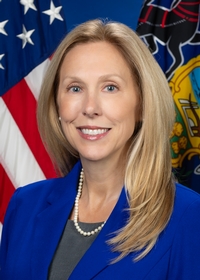
Lindsey Williams
85% support rate
Top opponent
Dawn Keefer
14% support rate
Ranked legislators
10
5 support · 5 oppose
Key legislators

Who's moving criminal justice in Pennsylvania

Legislators moving criminal justice in Pennsylvania
Legislator Party Stance Support rate Votes
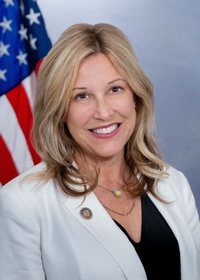
Lindsey Williams
Lindsey Williams Senate · District 38
D
Strong +
85% 36
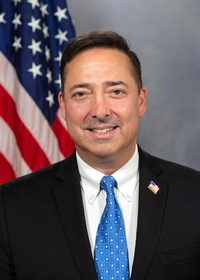
Chris Pielli
Chris Pielli House · District 156
D
Strong +
84% 203
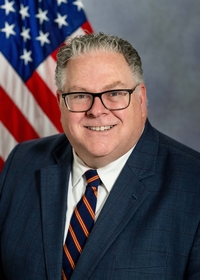
Tim Briggs
Tim Briggs House · District 149
D
Strong +
84% 199
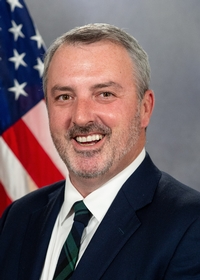
Kyle Donahue
Kyle Donahue House · District 113
D
Strong +
84% 237
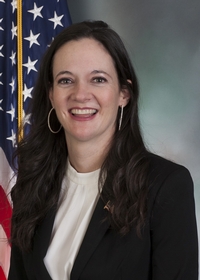
Melissa Shusterman
Melissa Shusterman House · District 157
D
Strong +
83% 220
Dawn Keefer
Dawn Keefer Senate · District 31
R
Strong −
14% 41
James Malone
James Malone Senate · District 36
D
Strong −
14% 23
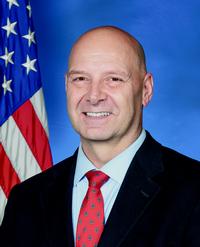
Doug Mastriano
Doug Mastriano Senate · District 33
R
Strong −
15% 53
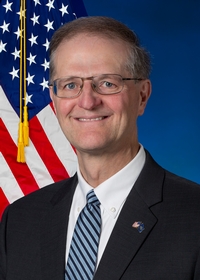
Scott Hutchinson
Scott Hutchinson Senate · District 21
R
Strong −
17% 31
Stephanie Borowicz
Stephanie Borowicz House · District 76
R
Strong −
17% 204
Showing 221–230 of 317 bills

All criminal justice bills

in committee · Pennsylvania · House Mar 19, 2025

HR 133: A Resolution directing the Joint State Government Commission to conduct a study of problem-solving courts in this Commonwealth.

HR 133 is a procedural resolution directing Pennsylvania's Joint State Government Commission to study problem-solving courts in the Commonwealth. It does not create new laws or directly affect individuals, but mandates a comprehensive analysis of existing courts (nearly 150 operate statewide). The study will examine court types, accreditation processes, case referrals, defendant demographics, funding comparisons to traditional courts, recidivism outcomes, and alignment with national best practices. The Commission must report findings on these key aspects by a specified deadline.
Sub-Topics Courts
in committee · Pennsylvania · Senate Apr 2, 2025

SB 113: An Act providing for guidelines and procedures governing certain investigations and interrogations of correctional and forensic employees; authorizing certain civil suits by correctional officers; and providing for impact of collective bargaining agreements and for summary suspensions.

SB 113 establishes new rules for investigating misconduct by Pennsylvania correctional and forensic employees (e.g., prison staff, forensic facility workers). It requires recorded interrogations, informs employees of their right to legal counsel, prohibits using polygraph tests or threatening job loss to compel statements, and mandates paid suspensions during investigations unless criminal charges are filed. The bill ensures union contracts cannot weaken these protections and prohibits retaliation against employees exercising these rights. It also clarifies that investigations must follow specific procedures to protect employee rights during disciplinary processes.
in committee · Pennsylvania · Senate Mar 26, 2025

SB 528: An Act amending Title 18 (Crimes and Offenses) of the Pennsylvania Consolidated Statutes, in assault, further providing for the offense of aggravated assault.

SB 528 amends Pennsylvania's aggravated assault law to explicitly include county commissioners, county council members, mayors, and municipal council members as protected individuals. This means assaulting these local government officials will now qualify as aggravated assault under state law, rather than potentially being charged as a lesser offense. The bill expands the existing list of protected persons in Section 2702(c) of Title 18 by adding four new categories of local officials. It takes effect 60 days after enactment. This is a straightforward criminal law update, not a policy change with broader implications.
Sub-Topics Violent Crime
in committee · Pennsylvania · House Feb 25, 2025

HB 731: An Act amending the act of April 14, 1972 (P.L.233, No.64), known as The Controlled Substance, Drug, Device and Cosmetic Act, further providing for probation without verdict.

HB 731 amends Pennsylvania's Controlled Substance Act to allow courts to grant probation without a conviction for nonviolent drug offenses. This applies when a person pleads guilty or no-contest to a nonviolent drug offense and proves drug dependency through testimony from a physician or psychologist. The bill caps the total fines and court costs for such probation at $300, setting a clear financial limit. It directly affects low-level drug offenders who qualify for this treatment-focused sentencing option.
in committee · Pennsylvania · House Feb 5, 2025

HB 496: An Act amending Title 61 (Prisons and Parole) of the Pennsylvania Consolidated Statutes, in miscellaneous provisions relating to inmate confinement, providing for voter registration.

HB 496 requires Pennsylvania prison inmates to complete a voter registration form or a written declination form before release. This applies to all inmates in state correctional facilities who are eligible to vote. The bill mandates that the Department of Corrections, in collaboration with the Department of State, administers the process through specific forms and rules. It does not automatically register inmates but provides a structured method for them to register or decline registration prior to discharge. The law takes effect 60 days after enactment.
in committee · Pennsylvania · House Apr 13, 2026

HB 1247: An Act amending Title 42 (Judiciary and Judicial Procedure) of the Pennsylvania Consolidated Statutes, in rules of evidence, providing for prohibition of deception during custodial interrogation of individual with intellectual disability or autism.

HB 1247 prohibits law enforcement officers from using deception - such as false promises of leniency or misleading information - during custodial interrogations of individuals with intellectual disabilities or autism. Any confession obtained through such deception would be presumed inadmissible in criminal or juvenile court cases for offenses that would be misdemeanors or felonies if committed by an adult. The state (Commonwealth) must prove the confession was voluntary by a preponderance of evidence to overcome this presumption, shifting the burden of proof from the defense to the prosecution. This applies to all custodial interrogations conducted at police stations or other detention facilities.
in committee · Pennsylvania · Senate Apr 21, 2025

SB 652: An Act amending Title 18 (Crimes and Offenses) of the Pennsylvania Consolidated Statutes, in general principals of justification, further providing for definitions.

SB 652 proposes to amend Pennsylvania's Crimes and Offenses law by changing the definition of "dwelling" within the general principles of justification. The bill expands the current definition, which includes a building, structure, or attached porch/deck/patio, to also encompass "the parcel of land to the property lines and any building or structure erected thereon." This change would broaden the legal scope of what constitutes a "dwelling" for individuals in self-defense or similar justification cases.
in committee · Pennsylvania · Senate Apr 14, 2025

SB 634: An Act amending Title 18 (Crimes and Offenses) of the Pennsylvania Consolidated Statutes, in assault, providing for the offense of hate crimes against law enforcement officers and first responders.

SB 634 creates a new hate crime offense in Pennsylvania law targeting attacks against law enforcement officers and first responders (firefighters and emergency medical personnel). It defines this as intentionally committing crimes like assault, property damage, or trespassing motivated by hatred toward someone's job in these roles. If the underlying crime is a misdemeanor, the hate crime charge raises it to a higher class (e.g., misdemeanor of the second degree), and courts must consider a sentencing enhancement. This bill directly affects individuals who commit such acts, increasing penalties for targeting public safety workers due to their employment.
in committee · Pennsylvania · House Mar 19, 2025

HB 970: An Act providing for guidelines and procedures governing certain investigations and interrogations of correctional and forensic employees; authorizing certain civil suits by correctional officers; and providing for impact of collective bargaining agreements and for summary suspensions.

HB 970 establishes clear procedures for investigating Pennsylvania correctional and forensic employees (those responsible for inmate or patient care). It requires recorded interrogations, informs employees of their rights (including the right to counsel and protection from polygraph coercion), and prohibits adverse actions for exercising these rights. The bill ensures suspensions during investigations are with pay and benefits unless criminal charges trigger specific rules, and clarifies that union contracts cannot reduce these protections. It directly affects correctional officers and forensic staff employed by the state's Department of Corrections or Department of Human Services. The law takes effect 60 days after enactment.
in committee · Pennsylvania · Senate Apr 28, 2025

SB 691: An Act amending Titles 35 (Health and Safety), 42 (Judiciary and Judicial Procedure) and 61 (Prisons and Parole) of the Pennsylvania Consolidated Statutes, establishing the Nonnarcotic Medication Substance Use Disorder Treatment Program; in organization and jurisdiction of courts of common pleas, providing for court assessments for substance use disorder treatment; in other criminal provisions, further providing for supervisory relationship to offenders; and, in Pennsylvania Board of Probation and Parole, further providing for supervisory relationship to offenders.

SB 691 establishes the Nonnarcotic Medication Substance Use Disorder Treatment Program within Pennsylvania's Department of Drug and Alcohol Programs. This program provides grants to local agencies, known as single county authorities, to offer comprehensive nonnarcotic medication-assisted treatment to offenders with substance use disorders. Eligible providers will assess offenders receiving various court-imposed sentences for drug-related offenses and offer individualized treatment plans, including FDA-approved nonnarcotic medication and counseling. The bill also allows courts to order substance use disorder assessments for these offenders and updates provisions related to their supervision by probation and parole.
Showing 221 to 230 of 317 bills
Previous 1 22 23 24 32 Next