Issue · Criminal Justice

Criminal Justice (Juvenile Justice)

Every criminal justice bill, vote, and legislator stance in Pennsylvania, automatically classified by Maddy, our AI policy reader.

Total bills
44
2025-2026 Regular Session
Top supporter
Kristine Howard
83% support rate
Top opponent
Stephanie Borowicz
13% support rate
Ranked legislators
10
5 support · 5 oppose
Key legislators

Who's moving juvenile justice in Pennsylvania

Legislators moving juvenile justice in Pennsylvania
Legislator Party Stance Support rate Decisive votes
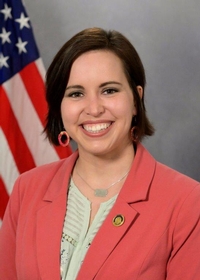
Kristine Howard
Kristine Howard House · District 167
D
Strong +
83% 18
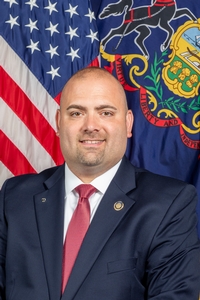
Ben Sanchez
Ben Sanchez House · District 153
D
Strong +
81% 16
Emily Kinkead
Emily Kinkead House · District 20
D
Strong +
81% 16
La'Tasha Mayes
La'Tasha Mayes House · District 24
D
Strong +
81% 16
Liz Hanbidge
Liz Hanbidge House · District 61
D
Strong +
80% 20
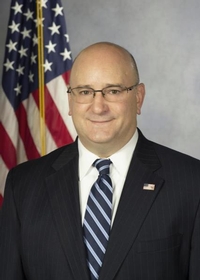
Stephanie Borowicz
Stephanie Borowicz House · District 76
R
Strong −
13% 15
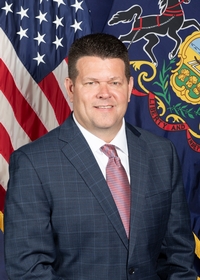
Joe Hamm
Joe Hamm House · District 84
R
Strong −
20% 15
Charity Krupa
Charity Krupa House · District 51
R
Oppose
21% 14
Jamie Walsh
Jamie Walsh House · District 117
R
Oppose
23% 13
Josh Kail
Josh Kail House · District 15
R
Oppose
25% 16
Showing 11–20 of 44 bills

All criminal justice bills

in committee · Pennsylvania · Senate Jan 20, 2026

SB 1140: An Act amending the act of October 25, 2012 (P.L.1618, No.197), known as the National Human Trafficking Resource Center Hotline Notification Act, further providing for definitions; providing for training requirements for public lodging establishments and for training requirements for third-party listing platforms and rental operators; further providing for enforcement, for violation, for affirmative defenses, for administrative penalties and for criminal penalties; and imposing duties on the Pennsylvania Commission on Crime and Delinquency.

SB 1140 amends Pennsylvania’s National Human Trafficking Resource Center Hotline Notification Act to expand training requirements for businesses directly involved in lodging or short-term rentals. It requires hotels, motels, and similar public lodging establishments (offering >10 rooms) to provide human trafficking awareness training to all employees and third-party contractors managing staff who access guest areas. Short-term rental operators and platforms listing such rentals must also implement training for their workers. The bill mandates training completion within 90 days of hire or the law’s effective date, with valid training lasting two years, while allowing prior training to count if completed within the past year.
in committee · Pennsylvania · Senate Jan 9, 2026

SB 1137: An Act amending Title 18 (Crimes and Offenses) of the Pennsylvania Consolidated Statutes, in firearms and other dangerous articles, further providing for Pennsylvania State Police.

SB 1137 allows individuals denied a firearm transaction due to their criminal, juvenile, or mental health records to challenge the accuracy of those records. The bill requires the Pennsylvania State Police to accept written challenges within 30 days of denial and permits the person to request subpoenas for documents supporting the denial. This process provides a formal mechanism for correcting potential errors in the records used during background checks. The bill directly affects anyone denied a firearm based on these records in Pennsylvania.
in committee · Pennsylvania · Senate Dec 9, 2025

SB 912: An Act amending Title 44 (Law and Justice) of the Pennsylvania Consolidated Statutes, in DNA data and testing, further providing for policy, for definitions, for State DNA Data Base, for State Police recommendation of additional offenses and annual report, for DNA sample required upon conviction, delinquency adjudication and certain ARD cases, for DNA data base exchange, for expungement and for mandatory cost; and making an editorial change.

SB 912 expands Pennsylvania's DNA collection requirements to include individuals convicted of or adjudicated for criminal homicide, felony sex offenses, and certain other specified offenses (like specific misdemeanors such as simple assault or indecent exposure). It establishes a statewide DNA database under the State Police to store forensic profiles from these individuals, as well as DNA from missing persons and unidentified decedents. The bill mandates annual reports tracking demographic data, costs, and processing times for DNA samples, and includes provisions for expunging DNA records. It directly affects people convicted of covered offenses by requiring DNA samples upon conviction or adjudication, with samples stored in the state database for forensic use.
signed · Pennsylvania · House Jul 20, 2026

HB 1286: An Act amending the act of October 25, 2012 (P.L.1618, No.197), known as the National Human Trafficking Resource Center Hotline Notification Act, further providing for definitions; providing for training requirements for public lodging establishments and for training requirements for third-party listing platforms and rental operators; further providing for enforcement, for violation, for affirmative defenses, for administrative penalties and for criminal penalties; and imposing duties on the Pennsylvania Commission on Crime and Delinquency.

HB 1286 requires human trafficking awareness training for employees at hotels, motels, and similar public lodging establishments (defined as facilities offering >10 rooms for rent) and for workers contracted by third-party providers serving these locations. It also mandates similar training for short-term rental operators (like Airbnb hosts) and platforms listing such rentals. The training must cover identifying trafficking signs, legal definitions, reporting procedures, and differences between labor and sex trafficking in lodging contexts, with records maintained for two years. The Pennsylvania Commission on Crime and Delinquency will approve and list free training programs online to meet these requirements.
passed · Pennsylvania · House Jun 30, 2025

HR 142: A Resolution directing the Joint State Government Commission to conduct a study and issue a report on the best practices and recommendations for the operation of juvenile detention centers within this Commonwealth.

HR 142 requires the Joint State Government Commission to study how juvenile detention centers operate in our state and issue a report with best practices and recommendations. The study will assess current management approaches to identify effective strategies for running these facilities. This resolution directly affects juvenile detention centers by mandating a formal review of their operational standards.
Sub-Topics Juvenile Justice
in committee · Pennsylvania · House Apr 29, 2026

HB 973: An Act amending Title 53 (Municipalities Generally) of the Pennsylvania Consolidated Statutes, in general provisions relating to area government and intergovernmental cooperation, providing for Municipal Police Enhancement and Consolidation Grant Program and establishing the Municipal Police Enhancement and Consolidation Grant Program Fund.

HB 973 creates a grant program to support municipal police departments in Pennsylvania. It provides funding for police department consolidation, achieving accreditation standards, officer training, and community outreach programs. Grants range from $5,000 to $100,000 per department depending on the purpose, with special provisions for small departments (under 10 officers). The program, administered by the Pennsylvania Commission on Crime and Delinquency, is funded through a new Municipal Police Enhancement Consolidation Grant Program Fund. This directly affects cities, boroughs, and townships with their own police departments.
passed · Pennsylvania · House Feb 13, 2026

HB 144: An Act amending Title 42 (Judiciary and Judicial Procedure) of the Pennsylvania Consolidated Statutes, in juvenile matters, further providing for informal adjustment; and making an editorial change.

HB 144 amends Pennsylvania's juvenile justice laws to adjust the process for "informal adjustment" in court cases involving minors. It directly affects youth and families involved in juvenile court by changing how cases can be resolved without formal court proceedings. The bill modifies specific provisions related to informal adjustment procedures within juvenile matters, while also making minor editorial corrections to the statute. This is a procedural change focused on streamlining court handling of certain juvenile cases, not a major policy shift.
in committee · Pennsylvania · House May 28, 2025

HB 1383: An Act amending Title 42 (Judiciary and Judicial Procedure) of the Pennsylvania Consolidated Statutes, in juvenile matters, further providing for definitions, for scope of chapter, for inspection of court files and records, for transfer from criminal proceedings, for place of detention and for conduct of hearings and repealing provisions relating to transfer to criminal proceedings; and making editorial changes.

HB 1383 amends Pennsylvania's juvenile justice laws to clarify definitions, expand access to court records for certain parties, and adjust rules for transferring youth from juvenile to criminal court. It specifically removes outdated provisions about transferring cases to criminal proceedings and updates procedures for detention locations and court hearings. The bill directly affects juvenile courts, youth involved in juvenile cases, and legal representatives navigating these proceedings. These changes aim to modernize court processes while maintaining procedural safeguards for minors.
in committee · Pennsylvania · Senate Jan 22, 2025

SB 143: An Act amending Titles 18 (Crimes and Offenses), 23 (Domestic Relations) and 42 (Judiciary and Judicial Procedure) of the Pennsylvania Consolidated Statutes, in human trafficking, further providing for definitions, for victim protection during prosecution and for safe harbor for sexually exploited children; in sex trafficking and missing and abducted children, further providing for county responsibilities; in juvenile matters, further providing for dependency in lieu of delinquency; and making an editorial change.

SB 143 redefines "sexually exploited child" in Pennsylvania law to include minors involved in sex trafficking or prostitution under specific circumstances. It creates a "safe harbor" that prevents prosecution for offenses like prostitution or obstruction if a child is determined to be sexually exploited, instead requiring county agencies to assess the child’s situation and connect them with support services. The bill mandates law enforcement to notify county agencies when a child may be exploited, and courts must pause delinquency proceedings to verify if the child’s actions resulted from exploitation. These changes directly affect minors under 18 involved in sex trafficking or commercial sexual exploitation, shifting responses from criminal penalties to victim support.
in committee · Pennsylvania · House Mar 24, 2025

HB 1021: An Act amending Title 16 (Counties) of the Pennsylvania Consolidated Statutes, in grounds and buildings, repealing provisions relating to room or building for juvenile offenders awaiting trial and providing for rooms or buildings for juveniles; and repealing provisions relating to special provisions for temporary county buildings and for rooms in county buildings in counties of the second class A.

HB 1021 replaces Pennsylvania's current requirement for separate rooms for juvenile offenders awaiting trial with a new system mandating counties to provide dedicated rooms or buildings exclusively for juvenile confinement, detention, and care. It requires county commissioners to establish a board of managers for each facility, composed of county officials and six private citizens with expertise in juvenile development, mental health, and substance use disorders. The board oversees operations, appoints a superintendent, and reports annually to county officials, while counties fund all expenses through annual appropriations. This bill directly affects all Pennsylvania counties, particularly those previously governed by the repealed provisions for second-class A counties. The law focuses on structural changes to juvenile detention facilities rather than altering sentencing or legal procedures.
Showing 11 to 20 of 44 bills
Previous 1 2 3 … 5 Next