Issue · Criminal Justice

Criminal Justice

Every criminal justice bill, vote, and legislator stance in Pennsylvania, automatically classified by Maddy, our AI policy reader.

Total bills
317
2025-2026 Regular Session
Top supporter
Lindsey Williams
85% support rate
Top opponent
Dawn Keefer
14% support rate
Ranked legislators
10
5 support · 5 oppose
Key legislators

Who's moving criminal justice in Pennsylvania

Legislators moving criminal justice in Pennsylvania
Legislator Party Stance Support rate Decisive votes
Lindsey Williams
Lindsey Williams Senate · District 38
D
Strong +
85% 13
Chris Pielli
Chris Pielli House · District 156
D
Strong +
84% 85
Tim Briggs
Tim Briggs House · District 149
D
Strong +
84% 85
Kyle Donahue
Kyle Donahue House · District 113
D
Strong +
84% 91
Melissa Shusterman
Melissa Shusterman House · District 157
D
Strong +
83% 89
Dawn Keefer
Dawn Keefer Senate · District 31
R
Strong −
14% 14
James Malone
James Malone Senate · District 36
D
Strong −
14% 7
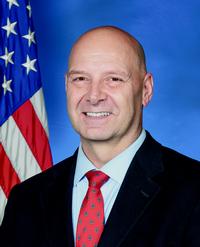
Doug Mastriano
Doug Mastriano Senate · District 33
R
Strong −
15% 26
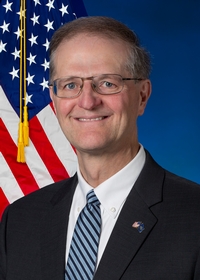
Scott Hutchinson
Scott Hutchinson Senate · District 21
R
Strong −
17% 12
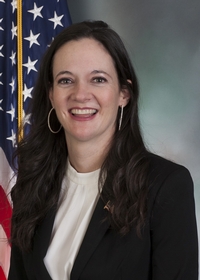
Stephanie Borowicz
Stephanie Borowicz House · District 76
R
Strong −
17% 87
Showing 161–170 of 317 bills

All criminal justice bills

in committee · Pennsylvania · House Jan 23, 2025

HB 293: An Act amending Title 16 (Counties) of the Pennsylvania Consolidated Statutes, providing for electronic device licenses; and imposing penalties.

HB 293 requires dealers who buy electronic devices (like phones or tablets) from the public for resale to obtain a $50 annual license from their county sheriff. It mandates dealers to verify sellers' identities with photo ID, keep detailed transaction records for 180 days, and share copies with the district attorney within 24 hours. Dealers must also retain purchased devices unaltered for five business days to allow law enforcement inspections. The bill directly affects pawn shops, thrift stores, and other resellers of used electronics, not new-device retailers or charities. Violations may result in penalties, though specific penalties are not detailed in the provided text.
Sub-Topics Law Enforcement
in committee · Pennsylvania · House Jan 17, 2025

HB 210: An Act amending the act of October 25, 2012 (P.L.1618, No.197), known as the National Human Trafficking Resource Center Hotline Notification Act, further providing for required posting.

HB 210 requires businesses (such as restaurants, hotels, and retail stores) to post signs in visible restroom locations - including stalls, mirrors, and above hand dryers - with the National Human Trafficking Resource Center Hotline number (1-888-373-7888) and a statement about legal protections for trafficking victims. The signs must be at least 8.5x11 inches, feature the hotline number in bold and large font, and be available in English, Spanish, and any other language required by the Voting Rights Act in the business's county. The Department of Labor and Industry will design and provide the sign template online for businesses to print. This law takes effect 60 days after enactment.
passed · Pennsylvania · House May 7, 2026

HB 558: An Act amending the act of April 6, 1951 (P.L.69, No.20), known as The Landlord and Tenant Act of 1951, in creation of leases, statute of frauds and mortgaging of leaseholds, providing for rental applications.

HB 558 caps residential rental application fees at $20 per applicant and restricts landlords from charging more for background checks that must include criminal history and credit score checks. It directly affects residential landlords and tenants in Pennsylvania by limiting fee amounts and specifying how fees may be used. The bill exempts commercial or nonresidential properties from these fee limits. The law takes effect 60 days after enactment.
in committee · Pennsylvania · House Mar 3, 2025

HR 94: A Resolution designating February 28, 2025, as "HIV is Not a Crime Awareness Day" in Pennsylvania.

This House Resolution designates February 28, 2025, as "HIV is Not a Crime Awareness Day" in Pennsylvania. It does not create new laws but formally recognizes the issue of HIV criminalization - where individuals with HIV face criminal charges for non-disclosure or conduct that would not be prosecuted if they did not have HIV. The resolution highlights how such laws increase stigma, disproportionately impact marginalized groups (including people of color, women, and LGBTQ+ individuals), and contradict current public health knowledge that undetectable HIV cannot be transmitted. The designation aims to raise awareness and encourage education about HIV treatment, prevention, and the need to address outdated criminal laws.
in committee · Pennsylvania · Senate May 22, 2025

SB 768: An Act amending Title 18 (Crimes and Offenses) of the Pennsylvania Consolidated Statutes, in firearms and other dangerous articles, providing for safe storage of firearm when residing with a person not to possess a firearm; and imposing penalties.

Pennsylvania's SB 768 requires firearm owners living with someone who cannot legally possess a firearm (such as a convicted felon or someone under a restraining order) to store their guns securely. This means using a lockable device, built-in firearm lock, or locked container - except when the gun is carried on the person or within immediate reach. Violating this rule is a minor offense for a first violation, a misdemeanor for repeat offenses, and a felony if the improperly stored gun is used in a crime causing injury or death. The law directly affects households with gun owners and prohibited individuals, aiming to prevent unauthorized access. It takes effect 60 days after passage.
in committee · Pennsylvania · Senate Jan 22, 2025

SB 75: An Act amending the act of April 14, 1972 (P.L.233, No.64), known as The Controlled Substance, Drug, Device and Cosmetic Act, further providing for prohibited acts and penalties.

SB 75 amends Pennsylvania's Controlled Substance Act to decriminalize minor marijuana offenses. It removes criminal penalties for possessing up to 30 grams of marijuana (or 8 grams of hashish) for personal use, distributing small amounts without intent to sell, or smoking small amounts in public spaces. Instead of misdemeanor charges, these violations now carry only minor fines: $25 for possession or non-sale distribution, and $100 for public smoking. The bill explicitly states these offenses will not trigger license suspensions under Pennsylvania law. This change directly affects individuals caught with small amounts of marijuana for personal use or non-commercial distribution.
Sub-Topics Drug Policy
in committee · Pennsylvania · House Mar 3, 2025

HB 742: An Act amending Title 44 (Law and Justice) of the Pennsylvania Consolidated Statutes, in DNA data and testing, further providing for policy, for definitions, for DNA sample required upon conviction, delinquency adjudication and certain ARD cases, for collection from persons accepted from other jurisdictions, for expungement and for mandatory cost.

HB 742 amends Pennsylvania law to expand DNA collection requirements beyond felony sex offenses. It defines "other specified offenses" for adults (including certain felonies, misdemeanors like assault, and offenses requiring sex offender registration) and for juveniles (such as murder, aggravated assault, or terrorism when tried as an adult). The bill mandates DNA sampling upon conviction, delinquency adjudication, or certain ARD cases for these offenses, applies to individuals transferred from other jurisdictions, and includes provisions for expungement and mandatory costs. This affects individuals convicted of specified crimes who may now have DNA collected for the state database.
in committee · Pennsylvania · House May 1, 2025

HB 1363: An Act amending Title 18 (Crimes and Offenses) of the Pennsylvania Consolidated Statutes, in assault, providing for the offense of assault of emergency responder.

This bill creates new felony offenses for assaulting emergency responders (like police, EMTs, or firefighters) by exposing them to fentanyl or its derivatives. Intentionally throwing fentanyl at a responder while they are on duty (and knowing they are a responder) is a felony of the second degree. Unlawfully possessing fentanyl and causing a responder to come into contact with it is a felony of the third degree. The law defines "emergency responder" using existing Pennsylvania law and takes effect 60 days after enactment.
in committee · Pennsylvania · Senate Jan 29, 2025

SB 192: An Act amending the act of June 3, 1937 (P.L.1333, No.320), known as the Pennsylvania Election Code, in preliminary provisions, further providing for definitions; in qualifications of electors, further providing for rules for determining residence; in voting by qualified absentee electors, further providing for qualified absentee electors and providing for voting by absentee electors in correctional institutions; and imposing duties on the Department of State.

SB 192 amends Pennsylvania's Election Code to improve voting access for two specific groups: homeless residents and individuals confined in correctional facilities for non-felony offenses (including misdemeanors, pretrial detainees, and those awaiting sentencing). It defines "homeless" using federal standards, allowing voters without a physical address to register using geographic descriptions like maps or coordinates. The bill also requires correctional facilities to designate staff to assist inmates with voter registration, absentee ballots, and civic education, while mandating data collection on inmate voting participation. These changes aim to streamline voting procedures for these populations without altering eligibility criteria.
Sub-Topics Corrections Sentencing Tags Elections
in committee · Pennsylvania · House Mar 20, 2025

HB 983: An Act amending Title 18 (Crimes and Offenses) of the Pennsylvania Consolidated Statutes, in firearms and other dangerous articles, further providing for persons not to possess, use, manufacture, control, sell or transfer firearms and for sale or transfer of firearms and providing for Gun Violence Task Force in cities of the first class.

HB 983 establishes a Gun Violence Task Force in each of Pennsylvania's cities of the first class (such as Philadelphia and Pittsburgh), under the Attorney General's authority. The task force will investigate and prosecute violations of state laws prohibiting illegal firearm possession and sales. It will include members from local district attorneys, city police, state police, and other law enforcement agencies. The task force will be funded through state appropriations and requires member agencies to notify it of relevant arrests within 48 hours.
Showing 161 to 170 of 317 bills
Previous 1 16 17 18 32 Next