Issue · Criminal Justice

Criminal Justice (Courts)

Every criminal justice bill, vote, and legislator stance in Pennsylvania, automatically classified by Maddy, our AI policy reader.

Total bills
59
2025-2026 Regular Session
Top supporter
Ben Sanchez
94% support rate
Top opponent
John Lawrence
0% support rate
Ranked legislators
10
5 support · 5 oppose
Key legislators

Who's moving courts in Pennsylvania

Legislators moving courts in Pennsylvania
Legislator Party Stance Support rate Votes
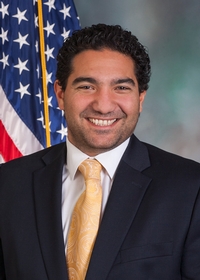
Ben Sanchez
Ben Sanchez House · District 153
D
Strong +
94% 17
Emily Kinkead
Emily Kinkead House · District 20
D
Strong +
94% 17
Kristine Howard
Kristine Howard House · District 167
D
Strong +
94% 17
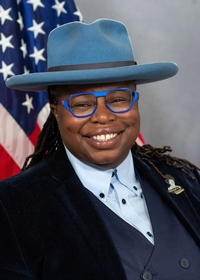
La'Tasha Mayes
La'Tasha Mayes House · District 24
D
Strong +
94% 17
Liz Hanbidge
Liz Hanbidge House · District 61
D
Strong +
94% 17
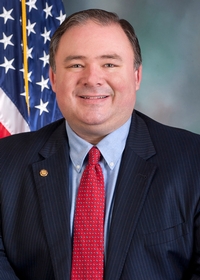
John Lawrence
John Lawrence House · District 13
R
Strong −
0% 6
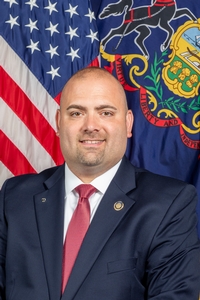
Josh Kail
Josh Kail House · District 15
R
Strong −
6% 17
Joe Hamm
Joe Hamm House · District 84
R
Strong −
7% 15
Stephanie Borowicz
Stephanie Borowicz House · District 76
R
Strong −
7% 15
Tim Bonner
Tim Bonner House · District 17
R
Strong −
7% 15
Showing 1–10 of 59 bills

All criminal justice bills

in committee · Pennsylvania · House Aug 7, 2026

HB 2729: An Act amending Titles 18 (Crimes and Offenses) and 42 (Judiciary and Judicial Procedure) of the Pennsylvania Consolidated Statutes, in riot, disorderly conduct and related offenses, providing for the offense of animal hoarding; and, in sentencing, providing for sentencing for animal hoarding.

Pennsylvania House Bill 2729 creates a new misdemeanor of the third degree for animal hoarding, defined as keeping animals in conditions that are unsanitary, unhealthful, malodorous, or dangerous to people, animals, or property. The bill specifies that each animal kept in violation constitutes a separate offense, but it excludes animals classified as agricultural commodities from this definition. For sentencing, the law requires a mental health evaluation of the defendant before any sentence is scheduled. If the court finds that the defendant suffered from a psychological or psychiatric disability at the time of the offense, it must order treatment and stay legal action pending a report on that treatment. Upon successful completion of treatment, the court must order the forfeiture of the animals, prohibit future ownership, reverse the conviction, and expunge the arrest record.
Sub-Topics Courts Sentencing
in committee · Pennsylvania · House Jun 2, 2026

HB 2589: An Act amending Title 75 (Vehicles) of the Pennsylvania Consolidated Statutes, in miscellaneous provisions relating to operation of vehicles, further providing for homicide by vehicle while driving under influence.

This bill, known as the Legacy Law, amends Pennsylvania's homicide statutes to mandate financial restitution for parents or guardians when a child under 18 or a dependent dies due to a parent driving under the influence. If a court convicts a driver of this offense and the victim was a minor or dependent, the defendant must pay reasonable financial support to the victim's family until the child turns 18 or 19, depending on their education status. The law requires courts to consider various factors, such as the child's needs and the surviving parent's resources, when calculating these payments, which can be made directly to the family or held in a court trust. Additionally, the bill specifies that if a surviving parent has already won a civil lawsuit for damages, the criminal restitution order will be adjusted to avoid double compensation. The new provisions take effect 60 days after the bill is enacted.
in committee · Pennsylvania · Senate May 1, 2026

SR 294: A Resolution recognizing the month of May 2026 as "National Treatment Court Month" in Pennsylvania.

This Senate Resolution designates May 2026 as "National Treatment Court Month" in Pennsylvania to raise awareness about specialized courts that address substance use and mental health issues. The measure highlights the work of judges, prosecutors, treatment providers, and other professionals who operate these courts to help individuals recover rather than face traditional punishment. By acknowledging these programs, the resolution aims to educate the public and encourage continued support for initiatives that focus on rehabilitation and community safety.
in committee · Pennsylvania · House May 13, 2026

HB 2510: An Act amending Title 42 (Judiciary and Judicial Procedure) of the Pennsylvania Consolidated Statutes, in juvenile matters, further providing for release or delivery to court and for place of detention.

This bill updates Pennsylvania laws to restrict how juvenile suspects are held in police lockups and defines where they can be detained before a court hearing. It generally prohibits keeping children in adult police facilities, allowing it only for short periods under six hours for tasks like identification or processing, provided the child is separated from adults and under constant supervision. For longer-term detention, the law requires judges to confirm that no less restrictive option exists and mandates that children be placed in approved juvenile facilities rather than adult prisons. Additionally, the bill clarifies that children facing serious charges are entitled to an immediate bail hearing if they are held before trial.
passed · Pennsylvania · House Jun 8, 2026

HR 480: A Resolution designating July 15, 2026, as "Court Appointed Special Advocates Day" in Pennsylvania.

This resolution designates July 15, 2026, as "Court Appointed Special Advocates Day" in Pennsylvania to honor the work of the state's Court Appointed Special Advocates (CASA) program. The bill directly affects CASA volunteers and staff who provide free advocacy for abused and neglected children within the court system. By officially recognizing the date of the program's incorporation, the measure aims to highlight the contributions of these trained volunteers who help ensure the safety and well-being of vulnerable youth. The resolution serves as a commemorative gesture rather than establishing new laws or funding requirements.
Sub-Topics Courts
in committee · Pennsylvania · House Mar 31, 2026

HB 2346: An Act amending Title 23 (Domestic Relations) of the Pennsylvania Consolidated Statutes, in property rights, further providing for equitable division of marital property; and, in alimony and support, further providing for alimony.

This bill amends Pennsylvania laws to restrict financial support and asset division in divorce cases involving domestic violence. Specifically, it prevents a spouse convicted of a personal injury crime against their partner from receiving alimony or a share of marital property, unless the court determines that denying these benefits would cause a significant injustice. The legislation also clarifies that marital misconduct occurring after the final separation is generally not a factor in alimony decisions, with the notable exception of abuse. These changes take effect 60 days after the bill is enacted.
in committee · Pennsylvania · Senate May 20, 2026

SB 1338: An Act amending Title 42 (Judiciary and Judicial Procedure) of the Pennsylvania Consolidated Statutes, in governance of the system, further providing for fee increases and automation fee.

This bill allows Pennsylvania courts in specific counties to charge an additional $10 automation fee when starting a legal case. The collected money must be used exclusively to fund and maintain automated systems within the clerk of courts offices. The fee can be raised once every three years, but only by an amount matching the recent inflation rate as measured by the Consumer Price Index. This change aims to provide dedicated funding for court technology updates while limiting how often and how much the fee can increase.
Sub-Topics Courts
in committee · Pennsylvania · Senate Mar 20, 2026

SR 252: A Resolution recognizing March 18, 2026, as "Gideon's Day" in Pennsylvania to honor the hard and selfless work of public defenders across this Commonwealth.

This Senate Resolution designates March 18, 2026, as "Gideon's Day" in Pennsylvania to honor public defenders and the 1963 Supreme Court ruling that guarantees legal counsel to those who cannot afford it. The measure is symbolic and does not create new laws or funding; it simply recognizes the importance of public defenders in protecting constitutional rights during criminal proceedings. The resolution highlights the role public defenders play in representing indigent clients and acknowledges the challenges they face, though it stops short of mandating specific policy changes or resource allocations.
Sub-Topics Courts
in committee · Pennsylvania · House Mar 3, 2026

HB 2259: An Act amending Title 42 (Judiciary and Judicial Procedure) of the Pennsylvania Consolidated Statutes, providing for actions not permissible in a courthouse; and imposing penalties.

This bill establishes rules for law enforcement actions on courthouse grounds in Pennsylvania, primarily restricting civil arrests related to immigration enforcement without a judicial warrant. It directly affects law enforcement officers, courthouse staff, and individuals seeking access to court proceedings. The key provisions prohibit detaining or arresting people on courthouse property for immigration violations unless the officer holds a valid judicial warrant and must show documentation to any court employee who asks. The law also defines who qualifies as a "court companion" to protect individuals accompanying parties to court and includes penalties of up to $10,000 for violations while providing immunity to courthouse employees acting in good faith.
Sub-Topics Courts Law Enforcement
in committee · Pennsylvania · House Mar 3, 2026

HB 2258: An Act amending Title 42 (Judiciary and Judicial Procedure) of the Pennsylvania Consolidated Statutes, in juvenile matters, providing for trauma-informed screening for human trafficking victimization.

This bill requires juvenile probation officers in Pennsylvania to administer a trauma-informed screening to children involved in delinquency cases to check for human trafficking victimization. The screening is designed to identify whether a child is currently being exploited or is at risk of becoming a victim of sexual servitude. If the screening indicates trafficking involvement or risk, the officer must connect the child with specialized support services for sexually exploited minors. The Department of Human Services and the Juvenile Court Judges' Commission will work together to develop and implement this screening process.
Showing 1 to 10 of 59 bills
1 2 3 6 Next