

Issue · Budget & Taxes
Budget & Taxes (State Budget)
Every budget & taxes bill, vote, and legislator stance in Pennsylvania, automatically classified by Maddy, our AI policy reader.
Total bills
91
2025-2026 Regular Session
Top supporter
Abigail Salisbury
100% support rate
Top opponent
Barb Gleim
0% support rate
Ranked legislators
10
5 support · 5 oppose
Key legislators
Who's moving state budget in Pennsylvania
| Legislator | Party | Stance | Support rate | Votes |
|---|---|---|---|---|
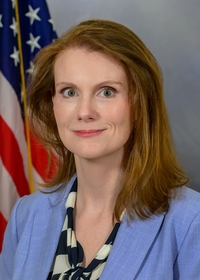
Abigail Salisbury
House · District 34
|
D |
Strong +
|
100% | 24 |

Aerion Abney
House · District 19
|
D |
Strong +
|
100% | 24 |
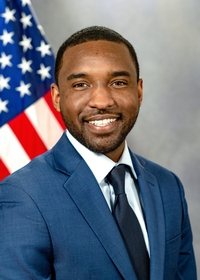
Anthony Bellmon
House · District 203
|
D |
Strong +
|
100% | 24 |
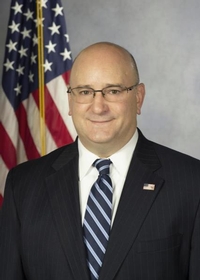
Ben Sanchez
House · District 153
|
D |
Strong +
|
100% | 24 |
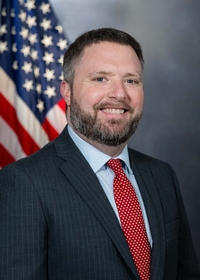
Ben Waxman
House · District 182
|
D |
Strong +
|
100% | 24 |
Barb Gleim
House · District 199
|
R |
Strong −
|
0% | 15 |

Dallas Kephart
House · District 73
|
R |
Strong −
|
0% | 15 |
David Maloney
House · District 130
|
R |
Strong −
|
0% | 15 |
Eric Weaknecht
House · District 5
|
R |
Strong −
|
0% | 15 |
Jamie Walsh
House · District 117
|
R |
Strong −
|
0% | 15 |
Showing 31–40 of 91
bills
All budget & taxes bills
HB 2079: An Act amending the act of April 9, 1929 (P.L.343, No.176), known as The Fiscal Code, establishing the Budget Impasse Reimbursement Program.
Topics
✓ Budget & TaxesSupports Budget & TaxesReimburses entities for budget delay costs using impasse-generated interest, promoting fiscal responsibility by mitigating financial impacts of delayed appropriations.
✓ EducationSupports EducationReimburses school districts, Pre-K, and Head Start programs for budget delay costs, directly funding education entities affected by fiscal impasses.
HB 416: An Act amending the act of April 9, 1929 (P.L.343, No.176), known as The Fiscal Code, providing for Child Care Staff Recruitment and Retention Program; in 911 Emergency Communication Services, further providing for surcharge; in Department of Revenue, further providing for exclusion from classes of income and providing for research and experimental expenditures and qualified production property, for report to General Assembly and for interest expense; in joint underwriting association, further providing for findings and for definitions, repealing provisions relating to sunset and providing for risk-based capital certification, for fund transfers, for association oversight and additional duties, for Joint Underwriting Association Board, for board meetings, for construction, for dissolution, for appropriations and for reports and hearings; in State Health Insurance Exchange Affordability Program, further providing for Exchange Affordability Assistance Account; providing for Rural Health Transformation Program; in Treasury Department, providing for waiver of interest, costs and fees; in procedure for disbursement of money from the State Treasury, further providing for use and appropriation of unused Commonwealth funds; in oil and gas wells, further providing for Oil and Gas Lease Fund; providing for advanced air mobility sites and for public transportation vehicles; in human services, further providing for resident care and related costs; in Attorney General, providing for home improvement contractor registration fee; providing for Rare Disease Advisory Council, for affordable housing tax credit and for working Pennsylvanians tax credit; in additional keystone opportunity expansion zones, providing for additional keystone opportunity expansion zones for certain counties of the fourth class; providing for additional extensions of keystone opportunity zones; in special funds, further providing for funding, for expiration and for other grants; in additional special funds and restricted accounts, further providing for establishment of special fund and account, for use of fund and for distributions from Pennsylvania Race Horse Development Fund and providing for refund of 2003 assessment by Insurance Department; in additional special funds and restricted accounts relating to Service and Infrastructure Improvement Fund, further providing for deposits and providing for Property Tax Relief Fund; in general budget implementation, further providing Executive Offices, for Department of Community and Economic Development, for Department of Environmental Protection, for Pennsylvania Fish and Boat Commission, for Pennsylvania Higher Education Assistance Agency and for Commonwealth Financing Authority, providing for stenography services, further providing for surcharges, for Federal and Commonwealth use of forest land and for Multimodal Transportation Fund and providing for State Sexual Offenders Assessment Board, for interest transfers, for fund transfers and for miscellaneous provisions; in 2024-2025 budget implementation, further providing for Department of Education, for Department of Environmental Protection and for Department of Human Services; in Streamlining Permits for Economic Expansion and Development Program, further providing for scope of article, for definitions and for the Streamlining Permits for Economic Expansion and Development Program, providing for review and determination of specific permits and for State agency permits and further providing for construction; providing for electricity load forecast accountability, for 2025-2026 budget implementation and for 2025-2026 restrictions on appropriations for funds and accounts; making repeals; and making editorial changes.
Topics
✓ Budget & TaxesSupports Budget & TaxesBill funds essential programs (Child Care, Rural Health) and provides tax credits (affordable housing, working Pennsylvanians), supporting budget allocation and tax relief.
✓ HealthcareSupports HealthcareBill establishes Rural Health Transformation Program to improve healthcare access in underserved areas, directly advancing healthcare services and access.
✓ HousingSupports HousingBill explicitly includes 'affordable housing tax credit' as a direct funding mechanism for affordable housing programs.
✓ TransportationSupports TransportationBill explicitly mentions 'public transportation vehicles' and 'advanced air mobility sites' in title, directly supporting transportation infrastructure expansion.
Sub-Topics
Fees & Licensing
Property Tax
State Budget
Insurance
Substance Abuse
Affordable Housing
Property Development
Property Taxes
Vehicle Registration
SB 614: An Act amending the act of April 9, 1929 (P.L.343, No.176), known as The Fiscal Code, providing for primary care workforce initiative; and making an appropriation.
Topics
✓ Budget & TaxesSupports Budget & TaxesBill creates dedicated state appropriation for FQHC workforce development, directly increasing budgeted spending on essential healthcare services for underserved communities.
✓ HealthcareSupports HealthcareFunds FQHC workforce development to address staff shortages in community health centers serving underserved areas, directly strengthening primary care access.
✓ Labor & EmploymentSupports Labor & EmploymentFunds recruitment/retention for FQHC primary care staff, directly addressing workforce shortages in underserved healthcare settings, advancing employment standards.
SB 286: An Act making appropriations from a restricted revenue account within the General Fund and from Federal augmentation funds to the Pennsylvania Public Utility Commission for the fiscal year July 1, 2025, to June 30, 2026.
Topics
✓ Budget & TaxesSupports Budget & TaxesAllocates $95.3M in state/federal funds to PUC for operations, safety enforcement, and energy programs, strengthening public utility oversight funding within state budget framework.
✓ EnergySupports EnergyAllocates $2.5M for energy transmission program under Inflation Reduction Act, directly funding clean energy infrastructure as part of federal climate initiative.
✓ EnvironmentSupports EnvironmentAllocates $2.5M for Inflation Reduction Act energy transmission program and $4.7M for natural gas pipeline safety, aligning with environmental protection goals.
✓ TransportationSupports TransportationAllocates $500K for motor carrier safety (vehicle regulations) and $4.7M for pipeline safety, directly enhancing transportation safety standards.
SB 168: An Act making appropriations from a restricted revenue account within the General Fund and from Federal augmentation funds to the Pennsylvania Public Utility Commission for the fiscal year July 1, 2025, to June 30, 2026.
Topics
✓ Budget & TaxesSupports Budget & TaxesAllocates $88M state and $7.7M federal funds to PUC for operations/safety programs, directly funding public utility regulation under Budget & Taxes.
✓ EnergySupports EnergyAllocates federal funds for IRA - Transmission Siting, supporting clean energy infrastructure and renewable energy development through PUC programs.
✓ TransportationSupports TransportationAllocates $88M state + $7.7M federal funds to PUC for Motor Carrier Safety and pipeline safety programs, directly enhancing transportation safety infrastructure.
HB 455: An Act providing for grants to organizations that host or offer education, workforce training or skills development to young adults; establishing the Building a Better Future Grant Program; imposing duties on the Department of Labor and Industry; and making an appropriation.
Topics
✓ Budget & TaxesSupports Budget & TaxesBill creates new state appropriation for youth workforce training grants, explicitly increasing public funding for essential services targeting vulnerable populations.
✓ EducationSupports EducationCreates grant program funding education/workforce training for underserved youth (16-24), expanding access and support for disconnected students.
✓ Labor & EmploymentSupports Labor & EmploymentEstablishes grants for youth workforce training and education, directly advancing employment opportunities for vulnerable populations through skills development programs.
HB 2025: An Act amending the act of March 10, 1949 (P.L.30, No.14), known as the Public School Code of 1949, in reimbursements by Commonwealth and between school districts, providing for reimbursements for borrowing costs during budget impasse; and establishing the School District Impasse Recovery Fund.
Topics
✓ Budget & TaxesSupports Budget & TaxesRequires state reimbursement for school district borrowing during budget disputes, ensuring continued public education funding without district debt or fiscal strain.
✓ EducationSupports EducationBill requires Commonwealth reimbursement for school district borrowing costs during budget impasse, preventing financial strain and ensuring stable school funding. Directly advances district financial stability through the new Recovery Fund.
HB 700: An Act amending the act of April 9, 1929 (P.L.343, No.176), known as The Fiscal Code, in general budget implementation, further providing for Department of Human Services.
SB 161: An Act making appropriations from the Professional Licensure Augmentation Account and from restricted receipts accounts within the General Fund to the Department of State for use by the Bureau of Professional and Occupational Affairs in support of the professional licensure boards assigned thereto.
Topics
✓ Budget & TaxesSupports Budget & TaxesAllocates $72.8M from dedicated accounts to fund professional licensing boards' operations, advancing state budget appropriations for essential government services.
✓ HealthcareSupports HealthcareFunds State Board of Medicine licensing board, supporting medical professionals' regulatory process essential for healthcare delivery.