

Issue · Budget & Taxes
Budget & Taxes (Property Tax)
Every budget & taxes bill, vote, and legislator stance in Pennsylvania, automatically classified by Maddy, our AI policy reader.
Total bills
51
2025-2026 Regular Session
Top supporter
Elder Vogel
100% support rate
Top opponent
Jarrett Coleman
0% support rate
Ranked legislators
10
5 support · 5 oppose
Key legislators
Who's moving property tax in Pennsylvania
| Legislator | Party | Stance | Support rate | Votes |
|---|---|---|---|---|

Elder Vogel
Senate · District 47
|
R |
Strong +
|
100% | 4 |

Joe Picozzi
Senate · District 5
|
R |
Strong +
|
100% | 4 |

Kim Ward
Senate · District 39
|
R |
Strong +
|
100% | 4 |

Amanda Cappelletti
Senate · District 17
|
D |
Strong +
|
100% | 3 |
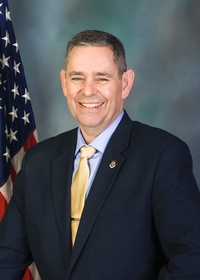
Cris Dush
Senate · District 25
|
R |
Strong +
|
100% | 3 |

Jarrett Coleman
Senate · District 16
|
R |
Strong −
|
0% | 4 |
|
AT
Ana Tiburcio
House · District 22
|
D |
Strong −
|
20% | 5 |
|
JM
Jen Mazzocco
House · District 42
|
D |
Strong −
|
20% | 5 |
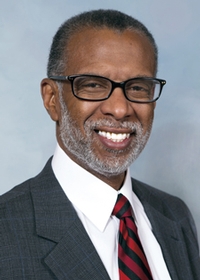
Art Haywood
Senate · District 4
|
D |
Oppose
|
33% | 3 |

Andre Carroll
House · District 201
|
D |
Oppose
|
38% | 8 |
Showing 11–20 of 51
bills
All budget & taxes bills
HB 2092: An Act amending the act of March 10, 1949 (P.L.30, No.14), known as the Public School Code of 1949, in school finances, providing for reduction of school district debt.
HB 416: An Act amending the act of April 9, 1929 (P.L.343, No.176), known as The Fiscal Code, providing for Child Care Staff Recruitment and Retention Program; in 911 Emergency Communication Services, further providing for surcharge; in Department of Revenue, further providing for exclusion from classes of income and providing for research and experimental expenditures and qualified production property, for report to General Assembly and for interest expense; in joint underwriting association, further providing for findings and for definitions, repealing provisions relating to sunset and providing for risk-based capital certification, for fund transfers, for association oversight and additional duties, for Joint Underwriting Association Board, for board meetings, for construction, for dissolution, for appropriations and for reports and hearings; in State Health Insurance Exchange Affordability Program, further providing for Exchange Affordability Assistance Account; providing for Rural Health Transformation Program; in Treasury Department, providing for waiver of interest, costs and fees; in procedure for disbursement of money from the State Treasury, further providing for use and appropriation of unused Commonwealth funds; in oil and gas wells, further providing for Oil and Gas Lease Fund; providing for advanced air mobility sites and for public transportation vehicles; in human services, further providing for resident care and related costs; in Attorney General, providing for home improvement contractor registration fee; providing for Rare Disease Advisory Council, for affordable housing tax credit and for working Pennsylvanians tax credit; in additional keystone opportunity expansion zones, providing for additional keystone opportunity expansion zones for certain counties of the fourth class; providing for additional extensions of keystone opportunity zones; in special funds, further providing for funding, for expiration and for other grants; in additional special funds and restricted accounts, further providing for establishment of special fund and account, for use of fund and for distributions from Pennsylvania Race Horse Development Fund and providing for refund of 2003 assessment by Insurance Department; in additional special funds and restricted accounts relating to Service and Infrastructure Improvement Fund, further providing for deposits and providing for Property Tax Relief Fund; in general budget implementation, further providing Executive Offices, for Department of Community and Economic Development, for Department of Environmental Protection, for Pennsylvania Fish and Boat Commission, for Pennsylvania Higher Education Assistance Agency and for Commonwealth Financing Authority, providing for stenography services, further providing for surcharges, for Federal and Commonwealth use of forest land and for Multimodal Transportation Fund and providing for State Sexual Offenders Assessment Board, for interest transfers, for fund transfers and for miscellaneous provisions; in 2024-2025 budget implementation, further providing for Department of Education, for Department of Environmental Protection and for Department of Human Services; in Streamlining Permits for Economic Expansion and Development Program, further providing for scope of article, for definitions and for the Streamlining Permits for Economic Expansion and Development Program, providing for review and determination of specific permits and for State agency permits and further providing for construction; providing for electricity load forecast accountability, for 2025-2026 budget implementation and for 2025-2026 restrictions on appropriations for funds and accounts; making repeals; and making editorial changes.
Topics
✓ Budget & TaxesSupports Budget & TaxesBill funds essential programs (Child Care, Rural Health) and provides tax credits (affordable housing, working Pennsylvanians), supporting budget allocation and tax relief.
✓ HealthcareSupports HealthcareBill establishes Rural Health Transformation Program to improve healthcare access in underserved areas, directly advancing healthcare services and access.
✓ HousingSupports HousingBill explicitly includes 'affordable housing tax credit' as a direct funding mechanism for affordable housing programs.
✓ TransportationSupports TransportationBill explicitly mentions 'public transportation vehicles' and 'advanced air mobility sites' in title, directly supporting transportation infrastructure expansion.
Sub-Topics
Fees & Licensing
Property Tax
State Budget
Insurance
Substance Abuse
Affordable Housing
Property Development
Property Taxes
Vehicle Registration
SB 407: An Act amending Title 51 (Military Affairs) of the Pennsylvania Consolidated Statutes, in disabled veterans' real estate tax exemption, further providing for definitions and for duty of commission.
Topics
✓ Budget & TaxesSupports Budget & TaxesProvides automatic real estate tax exemption for disabled veterans with income ≤$75k (adjusted annually), reducing tax burden for lower-income group per tax relief indicators.
✓ VeteransSupports VeteransAutomatically exempts low-income disabled veterans from real estate taxes, expanding financial relief and strengthening tax benefit accessibility for veterans.
HB 465: An Act amending the act of March 10, 1949 (P.L.30, No.14), known as the Public School Code of 1949, in school finances, providing for commercial property tax redistribution.
Topics
✓ Budget & TaxesSupports Budget & TaxesRedirects commercial property tax revenue from larger districts to redistribute funds, strengthening equitable school funding through fiscal reallocation within the tax system.
✓ EducationSupports EducationRedirects commercial property taxes to redistribute funds among school districts, aiming to balance school funding resources per bill's redistribution mechanism.
HB 1072: An Act amending the act of June 27, 2006 (1st Sp.Sess., P.L.1873, No.1), known as the Taxpayer Relief Act, in senior citizens property tax and rent rebate assistance, further providing for definitions and for filing and payment of claim. Amending the act of August 26, 1971 (P.L.351, No.91), known as the State Lottery Law, in State Lottery, further providing for disposition of funds.
Sub-Topics
Property Tax
SB 393: An Act authorizing senior citizens to claim an exemption from tax increases as to certain real property; and providing for termination of the exemption.
HB 702: An Act amending the act of June 27, 2006 (1st Sp.Sess., P.L.1873, No.1), known as the Taxpayer Relief Act, in senior citizens property tax and rent rebate assistance, further providing for definitions.
Topics
✓ Budget & TaxesSupports Budget & TaxesClarifies eligibility for senior/disabled tax rebates, expanding access to existing relief program. Directly provides tax benefit to vulnerable groups, aligning with tax relief indicators.
✓ HousingSupports HousingClarifies eligibility for senior/disabled rent/property tax rebates, directly reducing housing costs for vulnerable groups under existing assistance program.
HB 1668: An Act amending the act of April 9, 1929 (P.L.343, No.176), known as The Fiscal Code, in Water Assistance Program, providing for retrofitting residential high-rise buildings with automatic fire sprinkler systems.
Sub-Topics
Property Tax
HB 1394: An Act amending the act of March 4, 1971 (P.L.6, No.2), known as the Tax Reform Code of 1971, repealing provisions relating to inheritance tax; in procedure and administration, further providing for petition for reassessment; and, in governmental obligations, further providing for taxability of government obligations.
Sub-Topics
Property Tax