



Issue · Budget & Taxes

Budget & Taxes

Every budget & taxes bill, vote, and legislator stance in Pennsylvania, automatically classified by Maddy, our AI policy reader.

Total bills
71
2025-2026 Regular Session
Top supporter
Camera Bartolotta
94% support rate
Top opponent
Katie Muth
23% support rate
Ranked legislators
10
5 support · 5 oppose
Key legislators

Who's moving budget & taxes in Pennsylvania

Legislators moving budget & taxes in Pennsylvania
Legislator Party Stance Support rate Votes
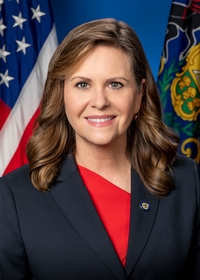
Camera Bartolotta
Camera Bartolotta Senate · District 46
R
Strong +
94% 74
Lisa Baker
Lisa Baker Senate · District 20
R
Strong +
93% 61
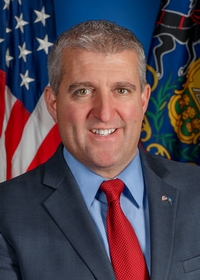
Joe Picozzi
Joe Picozzi Senate · District 5
R
Strong +
92% 83
Frank Farry
Frank Farry Senate · District 6
R
Strong +
92% 67
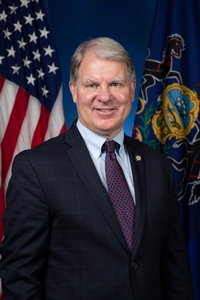
Dave Argall
Dave Argall Senate · District 29
R
Strong +
91% 80
Katie Muth
Katie Muth Senate · District 44
D
Oppose
23% 74
Art Haywood
Art Haywood Senate · District 4
D
Oppose
29% 83
Lindsey Williams
Lindsey Williams Senate · District 38
D
Oppose
30% 74
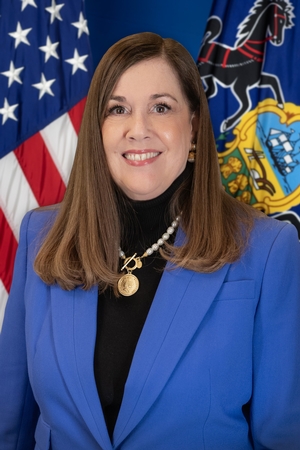
Charity Krupa
Charity Krupa House · District 51
R
Oppose
31% 292
Steve Santarsiero
Steve Santarsiero Senate · District 10
D
Oppose
32% 68
Showing 41–50 of 71 bills

All budget & taxes bills

signed · Pennsylvania · Senate Nov 12, 2025

SB 315: An act amending the act of March 10, 1949 (P.L.30, No.14), entitled "An act relating to the public school system, including certain provisions applicable as well to private and parochial schools; amending, revising, consolidating and changing the laws relating thereto," in preliminary provisions, further providing for Special Education Funding Commission and for minimum number of days or hours; in duties and powers of boards of school directors, providing for admission fees for school-sponsored activities; in intermediate units, further providing for staff; in certification of teachers, further providing for certificates qualifying persons to teach and for instructional certificate grade spans and age levels and duties of department, providing for instructional certificate grade spans and age levels and for State certificate fee reduction, further providing for standard employment application, for career and technical instructional certificate, for program of continuing professional and paraprofessional education and for postbaccalaureate certification, providing for assessment of basic skills, further providing for professional educator discipline fee and providing for career and technical administrative director certification flexibility; in pupils and attendance, further providing for attendance policy at charter, regional charter and cyber charter schools, for procedure when child is truant, for procedure by school when child habitually truant, for procedure upon filing of citation, for penalties for violating compulsory school attendance requirements and for study of truancy procedure, providing for department supports to prevent truancy and further providing for reports to Superintendent of Public Instruction and for exceptional children and education and training; in student supports, further providing for definitions; in school safety and security, further providing for definitions, for School Safety and Security Committee, for school safety and security assessment providers, for School Safety and Security Grant Program, for school safety and security coordinator and for school safety and security training, providing for school safety and mental health grants for 2025-2026 school year and further providing for reporting and memorandum of understanding; in school security, further providing for training, for school resource officers, for school security guards and for duties of commission; in Safe2Say Program, further providing for intent, for definitions, for Safe2Say Program and for annual report; in threat assessment, further providing for definitions, for threat assessment teams and for threat assessment guidelines, training and information materials; in Drug and Alcohol Recovery High School Program, further providing for scope of program and selection of students and for enrollment of students; in evidence-based reading instruction, further providing for definitions and providing for school entity duties related to evidence-based reading instruction, for school entity duties related to reading screening, for reading deficiency identification and parental notification, for reading intervention plans, for grant program, for funding, for reporting, for accountability and for construction; in high schools, further providing for attendance in other districts and providing for Free Application for Federal Student Aid; in interscholastic athletics accountability, further providing for council recommendations and standards; in charter schools, further providing for funding for cyber charter schools, for enrollment and notification and for enrollee wellness checks; in career and technical education, further providing for capital reserve fund for approved purchases of equipment and facility maintenance, for career and technical education equipment grants, for Cosmetology Training through Career and Technical Center Pilot Program and for Barber Training through Career and Technical Center Pilot Program; providing for Nursing Shortage Assistance Program; in community colleges, further providing for financial program and reimbursement of payments; in the State System of Higher Education, further providing for definitions and for Grow Pennsylvania Merit Scholarship Program; in educational tax credits, further providing for limitations; in higher education accountability and transparency, further providing for exit counseling; in miscellaneous provisions relating to institutions of higher education, repealing provisions relating to State-related university performance-based funding model, further providing for prohibition on scholarship displacement at public institutions of higher education and providing for cooperation and for State scholarship renewals; in institutions of higher education, further providing for powers and duties of State Board of Higher Education, for definitions, for Performance-based Funding Council and for public institution of higher education reporting, providing for State-related University Performance Fund, for performance-based funding formula and for public accountability and further providing for agency duties, for grant priority and for report; in Ready-to-Succeed Scholarship, further providing for agency; in funding for public libraries, providing for State aid for fiscal year 2025-2026; in reimbursements by Commonwealth and between school districts, further providing for student-weighted basic education funding beginning with 2023-2024 school year, for extraordinary special education program expenses, for assistance to school districts declared to be in financial recovery status or identified for financial watch status and for Ready-to-Learn Block Grant; in construction and renovation of buildings by school entities, further providing for applicability; abrogating regulations; and making an editorial change.

SB 315 amends Pennsylvania's 1949 education code to update school funding, safety, and instructional requirements. It establishes new school safety grants, updates teacher certification standards, and strengthens truancy prevention measures for all public and charter schools. The bill adds funding for career and technical education equipment, expands mental health support through school safety programs, and modifies higher education scholarship rules. As Act No. 47 of 2025, it became law on November 12, 2025, affecting students, teachers, school districts, and higher education institutions statewide.
passed · Pennsylvania · Senate Oct 30, 2025

SR 89: A Resolution directing the Joint State Government Commission to conduct an assessment, inventory and analysis of State-owned aircraft and aviation assets and provide recommendations for increased efficiency and cost savings.

This resolution directs Pennsylvania's Joint State Government Commission to study the state's aircraft and aviation assets (like planes, helicopters, and hangars) owned by departments including Transportation, the Attorney General's office, and State Police. The study must inventory all assets, review operational needs, costs (including maintenance and storage), insurance, and compare leasing versus ownership to identify savings. It requires the Commission to examine best practices from other states and the private sector, then provide cost-saving recommendations to the legislature within 12 months. The goal is to improve efficiency and transparency in managing these resources for taxpayer savings.
passed · Pennsylvania · House Oct 29, 2025

HB 157: An Act providing for grant awards to entities in rural counties and designated medically underserved areas to pay for the education debt of practitioners employed at the entity.

HB 157 creates state grants to help healthcare entities in rural counties or designated medically underserved areas cover the student loan debt of their employed healthcare practitioners. The grants would be paid directly to the healthcare facilities (like clinics or hospitals), not to individual providers, to offset the cost of practitioners' education debt. This aims to support recruitment and retention of healthcare workers in areas with limited access to medical services. The program would be funded through state appropriations, targeting facilities serving communities with significant healthcare access challenges.
passed · Pennsylvania · Senate Oct 8, 2025

SB 1040: An Act authorizing the State Treasurer to waive interest on budgetary impasse investment loans.

SB 1040 allows the State Treasurer to stop charging interest on loans taken by the state during a budget disagreement (budgetary impasse). It directly affects the State Treasurer's office, which would have the authority to waive interest on these specific investment loans. The key provision is the Treasurer's ability to eliminate interest charges on funds borrowed to maintain state operations when a budget isn't approved on time. This bill creates a concrete administrative change to how the state handles short-term borrowing costs during budget standoffs.
passed both · Pennsylvania · House Sep 9, 2025

HB 257: An Act amending Titles 4 (Amusements), 74 (Transportation) and 75 (Vehicles) of the Pennsylvania Consolidated Statutes, in interactive gaming, further providing for interactive gaming tax; in sustainable mobility options, further providing for definitions, for fund and for operating program and providing for annual performance evaluation and for operating a controlled substance injection site near infrastructure of a local transportation organization; in metropolitan transportation authorities, further providing for special prosecutor for mass transit; in public-private transportation partnerships, providing for metropolitan transportation authority projects; in licensing of drivers, further providing for persons ineligible for licensing, license issuance to minors and junior driver's license, for learners' permits, for application for driver's license or learner's permit by minor and for examination of applicant for driver's license; in miscellaneous provisions relating to operation of vehicles, providing for the offense of interference with operation or movement of a public transit vehicle and for sentencing enhancement for drug delivery on transit; in lighting equipment, further providing for use and display of illuminated signs; in taxes for highway maintenance and construction, providing for supplemental funding for three and four digit highway construction; and establishing the Supplemental Funding for Three and Four Digit State Routes Account in the Motor License Fund.

HB 257 updates Pennsylvania laws across multiple transportation and gaming areas. It creates new rules for minor driver licensing (including junior licenses and learners' permits), adds penalties for drug delivery on transit, and allows operating controlled substance injection sites near public transit infrastructure. The bill also adjusts interactive gaming taxes, establishes a new highway funding account for state routes, and defines terms for sustainable mobility programs. These changes directly affect drivers (especially minors), transit operators, gaming businesses, and local transportation authorities.
signed · Pennsylvania · House Jul 21, 2025

HB 1058: An Act amending the act of August 26, 1971 (P.L.351, No.91), known as the State Lottery Law, in State Lottery, further providing for statement of purpose and for powers and duties of secretary.

HB 1058 amends Pennsylvania's State Lottery Law to adjust the minimum percentage of lottery revenues dedicated to senior programs. It reduces the required allocation from 20% (for fiscal years 2019-2025) to 10% for fiscal years beginning after June 30, 2025. This directly affects seniors aged 65+ who receive property tax relief and reduced-fare transit services funded by lottery revenues. The change modifies Section 303(a)(11)(iv) of the law, specifying the new funding percentage starting in 2026. The bill became law on July 21, 2025, as Act No. 37 of 2025.
in committee · Pennsylvania · Senate Jul 17, 2025

SB 811: An Act establishing the Pennsylvania SBIR/STTR Matching Funds Program to provide technology grants to small businesses.

SB 811 establishes Pennsylvania's SBIR/STTR Matching Funds Program to support small businesses with federal research grants. It provides state matching funds (up to $50,000) to Pennsylvania-based businesses that receive Phase I awards under the federal Small Business Innovation Research (SBIR) or Small Business Technology Transfer (STTR) programs. To qualify, businesses must conduct at least 51% of their Phase II research in Pennsylvania, submit a Phase I report, and avoid duplicate state funding. The program aims to foster economic growth by helping small businesses advance federal-funded research projects.
signed · Pennsylvania · House Jun 30, 2025

HB 640: An Act amending the act of April 9, 1929 (P.L.177, No.175), known as The Administrative Code of 1929, in powers and duties of the Department of Public Welfare and its departmental administrative and advisory boards and commissions, providing for managed care organization assessment, for intermediate care facilities for persons with an intellectual disability assessments, for hospital assessments, for Statewide quality care assessments and for nursing facility assessment; in powers and duties of the Department of Drug and Alcohol Programs, further providing for powers and duties; in judicial administration, further providing for surcharge and fee; and making repeals .

HB 640 creates new assessment fees for specific healthcare providers, including managed care organizations, intermediate care facilities for people with intellectual disabilities, hospitals, and nursing facilities. These fees fund state oversight programs under the Department of Public Welfare and the Department of Drug and Alcohol Programs. The law amends the 1929 Administrative Code to establish these funding mechanisms and adjust related administrative duties. It directly affects healthcare providers that must pay these assessments and state agencies managing the funds. The bill became law on June 30, 2025.
signed · Pennsylvania · House Jun 27, 2025

HB 1339: An Act making appropriations from a restricted revenue account within the General Fund and from Federal augmentation funds to the Pennsylvania Public Utility Commission for the fiscal year July 1, 2025, to June 30, 2026.

HB 1339 allocates specific funds to the Pennsylvania Public Utility Commission (PUC) for the 2025-2026 fiscal year. It uses money from a restricted revenue account within the state's General Fund and Federal augmentation funds to cover the PUC's operational costs. This bill, now law as Act No. 8A of 2025, directly affects the PUC's budget and ensures funding for its regulatory activities during the specified fiscal period.
signed · Pennsylvania · House Jun 27, 2025

HB 1420: An Act making an appropriation from a restricted revenue account within the General Fund to the Office of Consumer Advocate in the Office of Attorney General.

HB 1420 provides funding from a designated restricted revenue account within the state's General Fund to the Office of Consumer Advocate, which operates under the Office of the Attorney General. This bill directly supports the Office of Consumer Advocate’s existing work representing consumers in disputes with utilities, insurance, and other regulated services. The key provision is a specific financial appropriation to ensure the office has resources to handle consumer complaints and investigations. As a funding measure, it does not create new laws or alter consumer rights but allocates existing state funds to a specific agency. (This is a procedural funding bill, so the summary is concise as required.)
Showing 41 to 50 of 71 bills
Previous 1 4 5 6 8 Next