Issue · Budget & Taxes

Budget & Taxes

Every budget & taxes bill, vote, and legislator stance in Pennsylvania, automatically classified by Maddy, our AI policy reader.

Total bills
13
2025-2026 Regular Session
Top supporter
Camera Bartolotta
94% support rate
Top opponent
Katie Muth
23% support rate
Ranked legislators
10
5 support · 5 oppose
Key legislators

Who's moving budget & taxes in Pennsylvania

Legislators moving budget & taxes in Pennsylvania
Legislator Party Stance Support rate Decisive votes
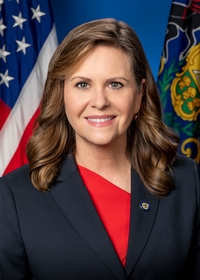
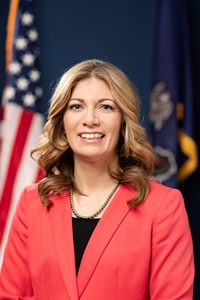
Camera Bartolotta
Camera Bartolotta Senate · District 46
R
Strong +
94% 31
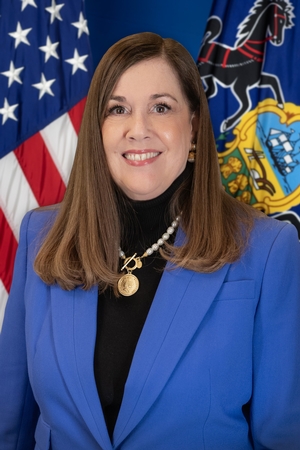
Lisa Baker
Lisa Baker Senate · District 20
R
Strong +
93% 28
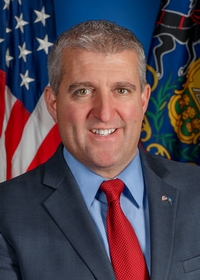
Joe Picozzi
Joe Picozzi Senate · District 5
R
Strong +
92% 39
Frank Farry
Frank Farry Senate · District 6
R
Strong +
92% 36
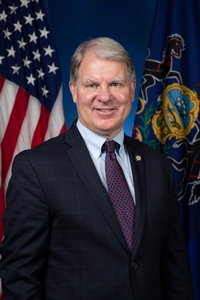
Dave Argall
Dave Argall Senate · District 29
R
Strong +
91% 32
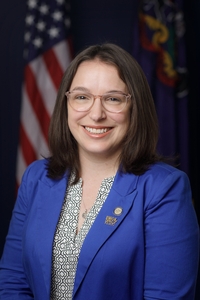
Katie Muth
Katie Muth Senate · District 44
D
Oppose
23% 35
Art Haywood
Art Haywood Senate · District 4
D
Oppose
29% 41
Lindsey Williams
Lindsey Williams Senate · District 38
D
Oppose
30% 30
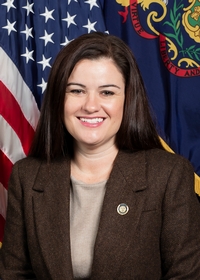
Charity Krupa
Charity Krupa House · District 51
R
Oppose
31% 179
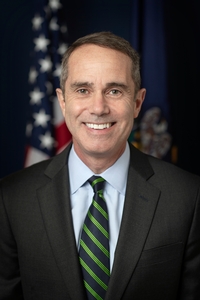
Steve Santarsiero
Steve Santarsiero Senate · District 10
D
Oppose
32% 28
Showing 1–10 of 13 bills

All budget & taxes bills

signed · Pennsylvania · House Jul 12, 2026

HB 2413: An Act making appropriations to the Trustees of the University of Pennsylvania.

This bill allocates $31.56 million to the University of Pennsylvania for veterinary activities and an additional $1.793 million for its Center for Infectious Diseases during the 2026-2027 fiscal year. The funding is distributed quarterly by the Department of Agriculture and comes with conditions requiring at least four non-elected board members appointed by legislative leaders to have full voting rights on the university's board. The university must also provide financial reports and explain how state funds were used to benefit Pennsylvania residents by September 2027.
signed · Pennsylvania · House Jul 12, 2026

HB 2400: An Act to provide appropriations from the General Fund for the expenses of the Executive, Legislative and Judicial Departments of the Commonwealth, the public debt and the public schools for the fiscal year July 1, 2026, to June 30, 2027, and for the payment of bills incurred and remaining unpaid at the close of the fiscal year ending June 30, 2026; to provide appropriations from special funds and accounts to the Executive and Judicial Departments for the fiscal year July 1, 2026, to June 30, 2027, and for the payment of bills remaining unpaid at the close of the fiscal year ending June 30, 2026; to provide for the appropriation of Federal funds to the Executive and Judicial Departments for the fiscal year July 1, 2026, to June 30, 2027, and for the payment of bills remaining unpaid at the close of the fiscal year ending June 30, 2026; and to provide for the additional appropriation of Federal and State funds to the Executive, Legislative and Judicial Departments for the fiscal year July 1, 2025, to June 30, 2026, and for the payment of bills incurred and remaining unpaid at the close of the fiscal year ending June 30, 2025.

This bill allocates state and federal funding to Pennsylvania government agencies for the fiscal year 2026-2027, including money for the Executive, Legislative, and Judicial branches, public schools, and unpaid bills from the previous fiscal year. It distributes funds from the General Fund, special funds, and federal sources to specific departments such as the Governor's office, courts, schools, health services, and transportation agencies. The legislation also includes additional appropriations for the 2025-2026 fiscal year to cover remaining unpaid bills from that period.
signed · Pennsylvania · House Jul 12, 2026

HB 2401: An Act providing for the capital budget for fiscal year 2026-2027.

This bill establishes Pennsylvania's capital budget for fiscal year 2026-2027, setting specific spending limits on public infrastructure projects. It authorizes up to $1.2 billion for building and structure improvements, $20 million for furniture and equipment, $100 million for transportation assistance, and $325 million for redevelopment assistance, with no funding allocated for flood control projects. The bill directly affects state agencies responsible for managing these capital projects and requires repayment of any debt incurred through the General Fund or applicable special funds. It takes effect immediately upon introduction.
signed · Pennsylvania · House Jul 12, 2026

HB 2412: An Act providing for funding for State-related universities for the fiscal year beginning July 1, 2026, and ending June 30, 2027, for costs basis, for frequency of payments and for recordkeeping requirements; imposing a duty on the Auditor General; providing for financial statements, for the Agricultural College Land Scrip Fund and for restrictions; and making appropriations.

This bill allocates state funding to four Pennsylvania universities - the Pennsylvania State University, University of Pittsburgh, Temple University, and Lincoln University - for the fiscal year 2026-2027. It establishes that payments will be made monthly based on estimated costs submitted by each university, and requires these institutions to maintain detailed records of how funds are spent. The Auditor General is tasked with reviewing expenditure reports, auditing spending against permitted purposes, and recovering any misused funds. Additionally, the bill places specific restrictions on how the University of Pittsburgh may use its appropriation, prohibiting funds for an environmental law clinic and limiting usage to instruction and student-related services.
signed · Pennsylvania · House Jul 12, 2026

HB 1505: An Act amending the act of March 10, 1949 (P.L.30, No.14), known as the Public School Code of 1949, in preliminary provisions, providing for standardized testing study; in grounds and buildings, repealing provisions relating to lead testing and providing for lead testing; providing for school facilities; in certification of teachers, further providing for special education certificate grade spans and age levels and duties of department, for program of continuing professional and paraprofessional education, for continuing professional education for school or system leaders and for Pennsylvania school leadership standards, repealing provisions relating to permit for classroom monitors and providing for permit for classroom monitors; in pupils and attendance, further providing for attendance policy at charter, regional charter and cyber charter schools, providing for school district enrollee wellness checks and further providing for procedure when child is truant and for procedure upon filing of citation; in student supports, further providing for policy relating to bullying; in school safety and security, further providing for definitions, for School Safety and Security Grant Program, for school safety and security coordinator and for school safety and security training, providing for school safety and mental health grants for 2026-2027 school year, further providing for school safety and security coordinator training and for reporting and memorandum of understanding and providing for school mapping services; in school health services, further providing for health services and for reports and providing for eating disorder awareness and education; in terms and courses of study, providing for use of funds for implementing later school start times, further providing for flexible instructional days and for physical education, providing for recess periods, further providing for economic education and personal financial literacy programs and providing for social media literacy education; in early learning programs, further providing for definitions and for duties of approved providers; in high schools, further providing for attendance in other districts; in charter schools, further providing for enrollment, for cyber charter school requirements and prohibitions, for enrollment and notification and for enrollee wellness checks; in disability inclusive curriculum, further providing for pilot program; in career and technical education, providing for temporary waiver; in community colleges, further providing for financial program and reimbursement of payments; in Thaddeus Stevens College of Technology, further providing for individuals eligible for admission; in the State System of Higher Education, further providing for definitions and for Grow Pennsylvania Tuition Waiver Program; in institutions of higher education, further providing for definitions and for agency duties, providing for institution duties and further providing for report; in Ready-to-Succeed Scholarship, further providing for agency; in funding for public libraries, providing for State aid for fiscal year 2026-2027; in reimbursements by Commonwealth and between school districts, further providing for student-weighted basic education funding beginning with 2023-2024 school year and for extraordinary special education program expenses, providing for temporary assistance program and further providing for assistance to school districts declared to be in financial recovery status or identified for financial watch status and for Ready-to-Learn Block Grant; and, in construction and renovation of buildings by school entities, further providing for applicability.

HB 1505 amends Pennsylvania's Public School Code of 1949 to clarify definitions related to early learning programs. The bill specifically updates terminology used in the existing law to better define what constitutes early learning programs within the state's educational framework. This change directly affects school districts, early learning providers, and state education agencies by providing clearer standards for program classification and reporting under the Public School Code. The bill focuses solely on refining definitions, not creating new programs or funding mechanisms.
passed · Pennsylvania · Senate Jun 10, 2026

SB 1105: An Act amending Title 16 (Counties) of the Pennsylvania Consolidated Statutes, in hotel tax, further providing for hotel room rental tax in third through eighth class counties.

SB 1105 amends Pennsylvania's hotel tax rules for third through eighth class counties, requiring hotels and booking agents to report detailed transaction data to counties. The bill mandates monthly or quarterly reporting of specific information, including hotel names, fees collected (like accommodation fees and taxes), guest details, and payment amounts. Counties may impose penalties up to $250 per day for late or incomplete reporting. This directly affects hotels and booking agents operating in smaller Pennsylvania counties by adding new administrative requirements for tax compliance.
passed · Pennsylvania · Senate Apr 21, 2026

SB 998: An Act providing for the Nurse Education Capacity Expansion Grant Program; and imposing duties on the Department of Community and Economic Development.

SB 998 would create a grant program to fund expansions of nursing education programs at colleges and universities. It requires the Department of Community and Economic Development to administer grants for institutions aiming to increase nursing program capacity, directly affecting nursing schools and future nursing students. Key provisions include establishing grant criteria, application processes, and reporting requirements for funded programs. The bill is currently pending in the Appropriations committee after committee review.
signed · Pennsylvania · House Dec 22, 2025

HB 1425: An Act amending the act of April 9, 1929 (P.L.343, No.176), known as The Fiscal Code, in cigarette sales and licensing, further providing for definitions and providing for presumed cost of doing business by retailer; providing for tobacco products; and making repeals.

HB 1425 amends Pennsylvania's 1971 Tax Reform Code to update taxes on tobacco products and establish a new online directory for electronic nicotine delivery systems (e.g., e-cigarettes). It directly affects tobacco manufacturers, dealers, and e-liquid producers by changing tax rates and requiring manufacturers to submit product information to the new directory. The bill's key provisions include adjusting tax incidence and rates for traditional tobacco products while creating a mandatory, publicly accessible registry for e-liquid products. These changes aim to modernize tax collection and improve product transparency for regulatory oversight.
passed · Pennsylvania · Senate Dec 9, 2025

SB 1070: An Act amending Title 58 (Oil and Gas) of the Pennsylvania Consolidated Statutes, in unconventional gas well fee, further providing for Statewide initiatives.

This bill modifies Pennsylvania's oil and gas fee structure to redirect 40% of remaining revenue from unconventional gas well fees (after 2011) into the Marcellus Legacy Fund. Specifically, 25% of this portion will fund county bridge repairs through the Highway Bridge Improvement Restricted Account. Counties and municipalities can use these funds to repair deteriorated bridges, regardless of federal aid eligibility, by submitting approved repair plans. The funds are distributed proportionally based on county population, and first- or second-class counties may also use them for public transportation authority bridges. This changes how oil and gas fee revenue is allocated to support local infrastructure.
signed · Pennsylvania · House Nov 24, 2025

HB 1359: An Act amending Title 12 (Commerce and Trade) of the Pennsylvania Consolidated Statutes, in Entertainment Economic Enhancement Program, further providing for definitions, for procedure and for limitations; providing for regulation of self-service storage facilities; and making a repeal.

HB 1359 amends Pennsylvania's entertainment tax incentive program by updating its definitions, procedures, and limitations, directly affecting entertainment businesses seeking tax benefits. It also adds new regulatory requirements for self-service storage facilities, including operational standards. The bill clarifies how the entertainment program operates while creating a new framework for overseeing storage facility safety and business practices. These changes became law on November 24, 2025, after approval by the governor. The legislation focuses on administrative updates and new oversight without altering tax rates or funding levels.

Showing 1 to 10 of 13 bills
1 2 Next