







Issue · Budget & Taxes

Budget & Taxes

Every budget & taxes bill, vote, and legislator stance in Pennsylvania, automatically classified by Maddy, our AI policy reader.

Total bills
32
2025-2026 Regular Session
Top supporter
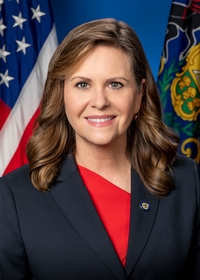
Camera Bartolotta
94% support rate
Top opponent
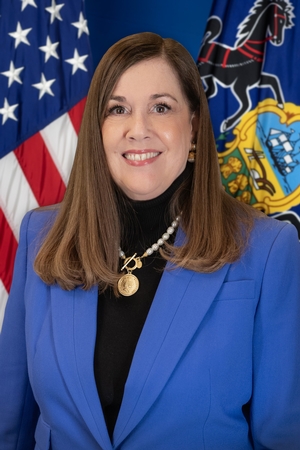
Katie Muth
23% support rate
Ranked legislators
10
5 support · 5 oppose
Key legislators

Who's moving budget & taxes in Pennsylvania

Legislators moving budget & taxes in Pennsylvania
Legislator Party Stance Support rate Votes
Camera Bartolotta
Camera Bartolotta Senate · District 46
R
Strong +
94% 74
Lisa Baker
Lisa Baker Senate · District 20
R
Strong +
93% 61
Joe Picozzi
Joe Picozzi Senate · District 5
R
Strong +
92% 83
Frank Farry
Frank Farry Senate · District 6
R
Strong +
92% 67
Dave Argall
Dave Argall Senate · District 29
R
Strong +
91% 80
Katie Muth
Katie Muth Senate · District 44
D
Oppose
23% 74
Art Haywood
Art Haywood Senate · District 4
D
Oppose
29% 83
Lindsey Williams
Lindsey Williams Senate · District 38
D
Oppose
30% 74
Charity Krupa
Charity Krupa House · District 51
R
Oppose
31% 292
Steve Santarsiero
Steve Santarsiero Senate · District 10
D
Oppose
32% 68
Showing 1–10 of 32 bills

All budget & taxes bills

signed · Pennsylvania · House Jul 12, 2026

HB 1505: An Act amending the act of March 10, 1949 (P.L.30, No.14), known as the Public School Code of 1949, in preliminary provisions, providing for standardized testing study; in grounds and buildings, repealing provisions relating to lead testing and providing for lead testing; providing for school facilities; in certification of teachers, further providing for special education certificate grade spans and age levels and duties of department, for program of continuing professional and paraprofessional education, for continuing professional education for school or system leaders and for Pennsylvania school leadership standards, repealing provisions relating to permit for classroom monitors and providing for permit for classroom monitors; in pupils and attendance, further providing for attendance policy at charter, regional charter and cyber charter schools, providing for school district enrollee wellness checks and further providing for procedure when child is truant and for procedure upon filing of citation; in student supports, further providing for policy relating to bullying; in school safety and security, further providing for definitions, for School Safety and Security Grant Program, for school safety and security coordinator and for school safety and security training, providing for school safety and mental health grants for 2026-2027 school year, further providing for school safety and security coordinator training and for reporting and memorandum of understanding and providing for school mapping services; in school health services, further providing for health services and for reports and providing for eating disorder awareness and education; in terms and courses of study, providing for use of funds for implementing later school start times, further providing for flexible instructional days and for physical education, providing for recess periods, further providing for economic education and personal financial literacy programs and providing for social media literacy education; in early learning programs, further providing for definitions and for duties of approved providers; in high schools, further providing for attendance in other districts; in charter schools, further providing for enrollment, for cyber charter school requirements and prohibitions, for enrollment and notification and for enrollee wellness checks; in disability inclusive curriculum, further providing for pilot program; in career and technical education, providing for temporary waiver; in community colleges, further providing for financial program and reimbursement of payments; in Thaddeus Stevens College of Technology, further providing for individuals eligible for admission; in the State System of Higher Education, further providing for definitions and for Grow Pennsylvania Tuition Waiver Program; in institutions of higher education, further providing for definitions and for agency duties, providing for institution duties and further providing for report; in Ready-to-Succeed Scholarship, further providing for agency; in funding for public libraries, providing for State aid for fiscal year 2026-2027; in reimbursements by Commonwealth and between school districts, further providing for student-weighted basic education funding beginning with 2023-2024 school year and for extraordinary special education program expenses, providing for temporary assistance program and further providing for assistance to school districts declared to be in financial recovery status or identified for financial watch status and for Ready-to-Learn Block Grant; and, in construction and renovation of buildings by school entities, further providing for applicability.

HB 1505 amends Pennsylvania's Public School Code of 1949 to clarify definitions related to early learning programs. The bill specifically updates terminology used in the existing law to better define what constitutes early learning programs within the state's educational framework. This change directly affects school districts, early learning providers, and state education agencies by providing clearer standards for program classification and reporting under the Public School Code. The bill focuses solely on refining definitions, not creating new programs or funding mechanisms.
passed · Pennsylvania · House Jul 9, 2026

HB 2644: A Supplement to the act of December 8, 1982 (P.L.848, No.235), known as the Highway-Railroad and Highway Bridge Capital Budget Act for 1982-1983, itemizing additional State and local bridge projects.

This bill updates Pennsylvania's 1982 highway and bridge funding law to authorize $4.77 billion in repairs and replacements for state and local bridges during the 2026-2027 fiscal year. It allocates approximately $3.8 billion for state-owned projects managed by the Department of Transportation and about $962 million for local municipal projects, with the state providing grants covering up to 80% of non-federal costs. The legislation specifically lists individual bridge projects across various counties, detailing their estimated costs and purposes such as replacement, restoration, or preservation.
in committee · Pennsylvania · House Jun 30, 2026

HB 2083: An Act amending Title 16 (Counties) of the Pennsylvania Consolidated Statutes, in hotel tax, further providing for hotel room rental tax in third through eighth class counties and for hotel room rental tax in second class and second class A counties and providing for uniform hotel tax report and forms.

HB 2083 updates Pennsylvania's hotel tax rules for third through eighth class counties, requiring hotels and booking agents to submit monthly reports detailing room rates, discounts, and taxes collected. It mandates that counties keep these records confidential (exempt from public disclosure under the Right-to-Know Law) and allows counties to impose penalties up to $250 per day for non-compliance, with fines funding tax administration. The bill also directs the state to create uniform tax reporting forms for counties, developed with input from county associations and state agencies. This standardizes reporting while clarifying county authority over hotel tax collection.
in committee · Pennsylvania · House Jun 30, 2026

HB 2082: An Act amending the act of March 4, 1971 (P.L.6, No.2), known as the Tax Reform Code of 1971, in hotel occupancy tax, further providing for imposition of tax.

HB 2082 amends Pennsylvania's 1971 Tax Reform Code to clarify how hotel occupancy taxes are collected and distributed. It requires booking agents to collect and remit both the standard 6% state hotel tax (under Section 210(a)) and additional local taxes from specific county or authority laws (like the Community and Economic Improvement Act or county convention center taxes) when processing bookings. Revenue from the standard tax goes to the state Tourism Promotion Fund, while additional local taxes are deposited per county ordinance. The bill also mandates counties to receive monthly transaction details (including fees and taxes) from operators, with these records exempt from public disclosure under the Right-to-Know Law.
passed · Pennsylvania · House Jun 26, 2026

HB 2550: An Act amending the act of March 4, 1971 (P.L.6, No.2), known as the Tax Reform Code of 1971, providing for Small Business Health Care Premiums Contribution Tax Credit.

This bill creates a new tax credit for small businesses in Pennsylvania that help employees pay for health insurance purchased through the state exchange. To qualify, a business must have 50 or fewer employees and make contributions toward health reimbursement arrangements for their workers. The credit is calculated based on the first $1,000 of contributions per employee and can be applied to reduce the business's state tax liability. Companies claiming the credit must submit detailed forms to the Department of Revenue listing employee information and insurance provider details.
passed · Pennsylvania · House Jun 25, 2026

HB 2437: An Act amending Title 58 (Oil and Gas) of the Pennsylvania Consolidated Statutes, in unconventional gas well fee, further providing for Statewide initiatives.

This bill modifies how Pennsylvania distributes fees collected from unconventional gas wells, specifically directing 25% of those funds to a state account for bridge improvements. The legislation allows counties and municipalities to use these monies to repair or upgrade bridges regardless of whether they qualify for federal funding assistance. Additionally, it permits larger counties to allocate these funds toward improving bridges owned by public transportation authorities. The changes take effect 60 days after the bill becomes law.
passed · Pennsylvania · House Jun 25, 2026

HB 2234: An Act amending the act of March 4, 1971 (P.L.6, No.2), known as the Tax Reform Code of 1971, in malt beverage tax, further providing for limited tax credits and providing for spent grain donation tax credit.

HB 2234 creates a tax credit for Pennsylvania breweries that donate spent grain byproduct (leftover grain from brewing) to local farms. Breweries can claim a credit of $0.16 per pound of dry weight donated, up to $30,000 annually or their total tax liability, if the grain is delivered to farms within 100 miles. The credit applies to donations made to "eligible agricultural operations" engaged in normal farming activities under Pennsylvania law. Applications must be submitted by February 1 each year for the prior year's donations, with the Department of Revenue reviewing eligibility and coordinating with the Liquor Control Board. This directly benefits breweries and farms participating in the program by reducing brewery tax bills while repurposing brewing waste.
passed · Pennsylvania · House Jun 22, 2026

HB 2307: An Act amending the act of March 10, 1949 (P.L.30, No.14), known as the Public School Code of 1949, in reimbursements by Commonwealth and between school districts, further providing for extraordinary special education program expenses.

This bill creates a new funding mechanism for Pennsylvania school districts and charter schools to cover extraordinary special education expenses for students with disabilities. It allocates one percent of the state special education appropriation annually from 2016-2017 through 2025-2026, then increases this to two percent starting in 2026-2027, with specific rules for how funds are distributed based on student enrollment duration and expense levels. The legislation covers costs for specialized services including transportation, therapy, and mobility training, while establishing caps and prioritization rules to ensure equitable distribution across districts.
passed · Pennsylvania · House Jun 18, 2026

HB 2305: An Act amending the act of March 4, 1971 (P.L.6, No.2), known as the Tax Reform Code of 1971, in sales and use tax, further providing for exclusions from tax.

This bill amends Pennsylvania's Tax Reform Code to clarify and strengthen tax exemptions for charitable, religious, volunteer fire, and nonprofit educational organizations. It requires these groups to use tax-exempt purchases only for their qualified purposes, excluding unrelated business activities and major construction projects from the exemption. The legislation also establishes a process for the Department of Revenue to issue conditional tax-exempt status to new organizations and allows for the revocation of exemptions if an organization no longer meets public charity requirements.
passed · Pennsylvania · House Jun 11, 2026

HB 2266: An Act amending Title 75 (Vehicles) of the Pennsylvania Consolidated Statutes, in taxes for highway maintenance and construction, further providing for allocation of proceeds.

This bill modifies Pennsylvania's tax system for highway maintenance and construction by establishing a new annual payment rate of $6,000 per mile for state highways transferred to local municipalities. The law requires these funds to be deposited into a restricted account specifically designated for paying restoration costs and ongoing maintenance payments to affected municipalities. Additionally, the bill mandates automatic adjustments to these annual payments every 24 months starting February 1, 2028, based on changes in the Consumer Price Index for All Urban Consumers. The Department of Transportation will calculate these inflation-based adjustments and notify the Legislative Reference Bureau for official publication. The changes take effect 60 days after the bill is enacted.
Showing 1 to 10 of 32 bills
1 2 3 4 Next