Issue · Budget & Taxes

Budget & Taxes

Every budget & taxes bill, vote, and legislator stance in Pennsylvania, automatically classified by Maddy, our AI policy reader.

Total bills
49
2025-2026 Regular Session
Top supporter
Camera Bartolotta
94% support rate
Top opponent
Katie Muth
23% support rate
Ranked legislators
10
5 support · 5 oppose
Key legislators

Who's moving budget & taxes in Pennsylvania

Legislators moving budget & taxes in Pennsylvania
Legislator Party Stance Support rate Decisive votes
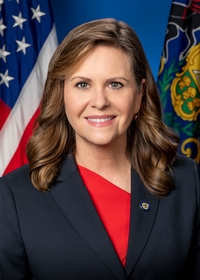
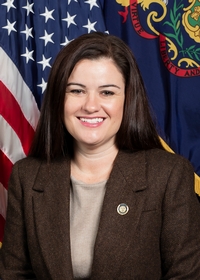
Camera Bartolotta
Camera Bartolotta Senate · District 46
R
Strong +
94% 31
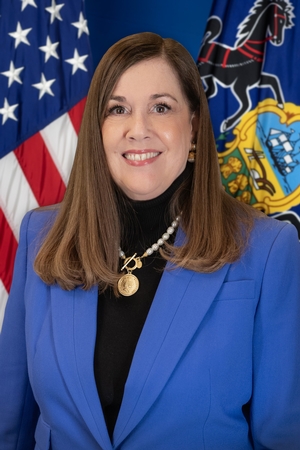
Lisa Baker
Lisa Baker Senate · District 20
R
Strong +
93% 28
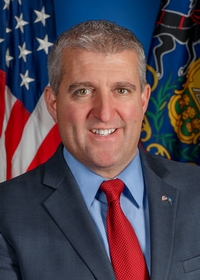
Joe Picozzi
Joe Picozzi Senate · District 5
R
Strong +
92% 39
Frank Farry
Frank Farry Senate · District 6
R
Strong +
92% 36
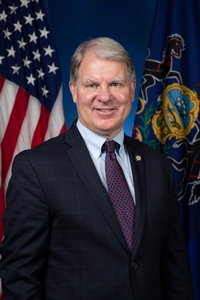
Dave Argall
Dave Argall Senate · District 29
R
Strong +
91% 32
Katie Muth
Katie Muth Senate · District 44
D
Oppose
23% 35
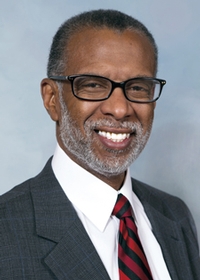
Art Haywood
Art Haywood Senate · District 4
D
Oppose
29% 41
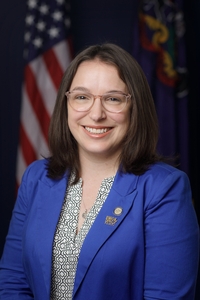
Lindsey Williams
Lindsey Williams Senate · District 38
D
Oppose
30% 30
Charity Krupa
Charity Krupa House · District 51
R
Oppose
31% 179
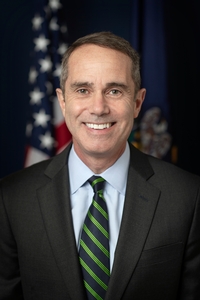
Steve Santarsiero
Steve Santarsiero Senate · District 10
D
Oppose
32% 28
Showing 11–20 of 49 bills

All budget & taxes bills

in committee · Pennsylvania · House Jun 9, 2026

HB 1113: An Act establishing the Office of New Pennsylvanians and providing for its powers and duties; establishing the Office of New Pennsylvanians Restricted Account; and establishing the Advisory Committee to Office of New Pennsylvanians and providing for its powers, duties and membership.

HB 1113 proposes creating a new state office dedicated to supporting immigrants and newcomers in Pennsylvania, along with a dedicated funding account to support its work. The bill also establishes an advisory committee to guide the office's efforts, specifying its membership and responsibilities. This office would directly assist new residents, including immigrants, by providing resources and coordination. Key provisions include defining the office's duties, managing the restricted funding account, and outlining the committee's role in advising state officials. The bill aims to create a centralized state resource for newcomers but remains in early committee stages with no voting action taken.
passed · Pennsylvania · House Apr 1, 2026

HB 200: An Act establishing family and medical leave benefits, the Paid Family and Medical Leave Account and the Paid Family and Medical Leave Grant Program; conferring powers and imposing duties on the Department of Labor and Industry; and imposing penalties.

This bill would create a state-funded paid family and medical leave program for eligible workers needing time off for health issues, childbirth, or family care. It establishes a dedicated state fund to cover leave costs, creates an advisory board to guide implementation, and assigns oversight to the Department of Labor. The program would directly affect employees in the state who qualify for these leave types, requiring employers to provide the benefits. The bill also specifies penalties for businesses failing to comply with the new requirements.
passed · Pennsylvania · House Mar 31, 2026

HB 1834: An Act providing for the regulation of commercial data centers; imposing duties on the Pennsylvania Public Utility Commission, the Department of Human Services and the Pennsylvania Energy Development Authority; establishing the Data Center Low-Income Home Energy Assistance Program Enhancement Account and the Pennsylvania Energy Independence Account; providing for clean firm energy requirements, contract filing, commission review, disclosure requirements, backup generation standards, curtailment standards and certification and expedited interconnection for commercial data centers bringing incremental clean firm energy resources; and imposing penalties.

HB 1834 requires commercial data centers in Pennsylvania to pay fees to the state. These fees fund a new Data Center LIHEAP Enhancement Fund, which boosts assistance for low-income households struggling with energy costs. The bill also mandates that data centers meet specific renewable energy targets and allows them to recover certain operational costs through regulated rates. The Pennsylvania Public Utility Commission (PUC) and Department of Human Services are tasked with implementing these requirements and managing the fund.
passed · Pennsylvania · House Mar 30, 2026

HB 1260: An Act providing for solar-ready projects involving a warehouse or distribution center; authorizing tax exemptions and special tax provisions; imposing duties on the Department of Environmental Protection; and imposing penalties.

HB 1260 would allow businesses owning warehouses or distribution centers to install solar energy systems by providing tax exemptions for "solar-ready" projects. It directly affects commercial property owners in the state by reducing their tax burden for qualifying solar installations. Key provisions include authorizing special tax breaks, requiring the Department of Environmental Protection to establish guidelines for these projects, and imposing fines for non-compliance with solar-ready construction standards. The bill aims to incentivize renewable energy adoption in large commercial facilities through concrete tax policy changes.
passed · Pennsylvania · House Feb 13, 2026

HB 1556: An Act amending the act of March 4, 1971 (P.L.6, No.2), known as the Tax Reform Code of 1971, in Pennsylvania Economic Development for a Growing Economy (PA EDGE) tax credits, providing for an advanced clean manufacturing project and further providing for definitions.

HB 1556 amends Pennsylvania's Tax Reform Code of 1971 to add new tax credits under the PA EDGE program specifically for "advanced clean manufacturing projects." This bill directly affects businesses constructing or expanding facilities that produce clean energy technology, such as solar panels or battery components. The key change expands the existing PA EDGE tax credit program to include these advanced clean manufacturing projects, providing financial incentives for qualifying investments. The bill does not alter other existing PA EDGE provisions or create new tax credit categories beyond this specific addition.
passed · Pennsylvania · House Dec 17, 2025

HR 382: A Resolution urging the Congress of the United States to retain expanded health insurance subsidies that enable consumers to purchase health insurance through Pennie.

This Pennsylvania House resolution (HR 382) urges Congress to extend expanded health insurance subsidies that currently help Pennsylvanians purchase coverage through Pennie, the state's health insurance marketplace. Without extension, these subsidies expire December 31, 2025, causing average premium increases of 102% for Pennie customers - projected to push 150,000 people to lose coverage. The resolution highlights that without the expanded credits, a couple earning $85,000 annually would pay $25,776 yearly for insurance (31% of their income), compared to lower costs under current subsidies. It cites Pennie's 2025 enrollment of nearly 500,000 customers and a 16% drop in new sign-ups since Open Enrollment 2026 as evidence of the need for continued support. The resolution has no legal force but requests congressional action to maintain affordability.
in committee · Pennsylvania · House Dec 15, 2025

HB 1446: An Act authorizing local taxing authorities to provide for tax exemptions for improvements and redevelopment of certain underutilized property ; establishing the Economic Development and Mixed-Use Redevelopment Advisory Committee within the State Planning Board; and conferring powers and imposing duties on the Department of Community and Economic Development.

HB 1446 allows local governments to grant tax exemptions for improvements and redevelopment of vacant or underused properties, directly affecting property owners and developers who redevelop sites like abandoned lots or outdated buildings. It establishes a state-level Economic Development and Mixed-Use Redevelopment Advisory Committee within the State Planning Board to advise on eligible projects and guide implementation. The Department of Community and Economic Development is given authority to manage the program, including setting eligibility rules and overseeing tax exemption approvals. The bill aims to incentivize revitalization of neglected properties by reducing financial barriers for redevelopment. This policy change focuses on concrete tax incentives and administrative structure, not speculative economic outcomes.
passed · Pennsylvania · House Nov 24, 2025

HB 1811: An Act amending Title 34 (Game) of the Pennsylvania Consolidated Statutes, in property and buildings, further providing for price paid for acquisitions and improvements.

HB 1811 sets a $400 per acre maximum limit for the Pennsylvania Game Commission when purchasing land for game conservation in counties classified as sixth, seventh, or eighth class. This directly affects the Game Commission’s land acquisition costs for wildlife management in smaller counties. The bill clarifies that this price limit applies exclusively to these specific county classifications, ensuring purchases align with local market values while controlling expenses.
in committee · Pennsylvania · House Nov 19, 2025

HB 1664: An Act providing for the redevelopment of older buildings; and establishing the Older Building Redevelopment Assistance Grant Program and the Older Building Redevelopment Fund.

HB 1664 establishes a state grant program and a dedicated fund to provide financial assistance for renovating or redeveloping older buildings. The Older Building Redevelopment Assistance Grant Program would offer grants to property owners and developers to update aging commercial or residential structures, with funding sourced from the newly created Older Building Redevelopment Fund. This bill directly affects owners of older buildings seeking to redevelop properties that may lack modern infrastructure. The program aims to support local revitalization efforts through state-funded grants, though the bill remains pending after being laid on the table.
signed · Pennsylvania · Senate Nov 12, 2025

SB 315: An act amending the act of March 10, 1949 (P.L.30, No.14), entitled "An act relating to the public school system, including certain provisions applicable as well to private and parochial schools; amending, revising, consolidating and changing the laws relating thereto," in preliminary provisions, further providing for Special Education Funding Commission and for minimum number of days or hours; in duties and powers of boards of school directors, providing for admission fees for school-sponsored activities; in intermediate units, further providing for staff; in certification of teachers, further providing for certificates qualifying persons to teach and for instructional certificate grade spans and age levels and duties of department, providing for instructional certificate grade spans and age levels and for State certificate fee reduction, further providing for standard employment application, for career and technical instructional certificate, for program of continuing professional and paraprofessional education and for postbaccalaureate certification, providing for assessment of basic skills, further providing for professional educator discipline fee and providing for career and technical administrative director certification flexibility; in pupils and attendance, further providing for attendance policy at charter, regional charter and cyber charter schools, for procedure when child is truant, for procedure by school when child habitually truant, for procedure upon filing of citation, for penalties for violating compulsory school attendance requirements and for study of truancy procedure, providing for department supports to prevent truancy and further providing for reports to Superintendent of Public Instruction and for exceptional children and education and training; in student supports, further providing for definitions; in school safety and security, further providing for definitions, for School Safety and Security Committee, for school safety and security assessment providers, for School Safety and Security Grant Program, for school safety and security coordinator and for school safety and security training, providing for school safety and mental health grants for 2025-2026 school year and further providing for reporting and memorandum of understanding; in school security, further providing for training, for school resource officers, for school security guards and for duties of commission; in Safe2Say Program, further providing for intent, for definitions, for Safe2Say Program and for annual report; in threat assessment, further providing for definitions, for threat assessment teams and for threat assessment guidelines, training and information materials; in Drug and Alcohol Recovery High School Program, further providing for scope of program and selection of students and for enrollment of students; in evidence-based reading instruction, further providing for definitions and providing for school entity duties related to evidence-based reading instruction, for school entity duties related to reading screening, for reading deficiency identification and parental notification, for reading intervention plans, for grant program, for funding, for reporting, for accountability and for construction; in high schools, further providing for attendance in other districts and providing for Free Application for Federal Student Aid; in interscholastic athletics accountability, further providing for council recommendations and standards; in charter schools, further providing for funding for cyber charter schools, for enrollment and notification and for enrollee wellness checks; in career and technical education, further providing for capital reserve fund for approved purchases of equipment and facility maintenance, for career and technical education equipment grants, for Cosmetology Training through Career and Technical Center Pilot Program and for Barber Training through Career and Technical Center Pilot Program; providing for Nursing Shortage Assistance Program; in community colleges, further providing for financial program and reimbursement of payments; in the State System of Higher Education, further providing for definitions and for Grow Pennsylvania Merit Scholarship Program; in educational tax credits, further providing for limitations; in higher education accountability and transparency, further providing for exit counseling; in miscellaneous provisions relating to institutions of higher education, repealing provisions relating to State-related university performance-based funding model, further providing for prohibition on scholarship displacement at public institutions of higher education and providing for cooperation and for State scholarship renewals; in institutions of higher education, further providing for powers and duties of State Board of Higher Education, for definitions, for Performance-based Funding Council and for public institution of higher education reporting, providing for State-related University Performance Fund, for performance-based funding formula and for public accountability and further providing for agency duties, for grant priority and for report; in Ready-to-Succeed Scholarship, further providing for agency; in funding for public libraries, providing for State aid for fiscal year 2025-2026; in reimbursements by Commonwealth and between school districts, further providing for student-weighted basic education funding beginning with 2023-2024 school year, for extraordinary special education program expenses, for assistance to school districts declared to be in financial recovery status or identified for financial watch status and for Ready-to-Learn Block Grant; in construction and renovation of buildings by school entities, further providing for applicability; abrogating regulations; and making an editorial change.

SB 315 amends Pennsylvania's 1949 education code to update school funding, safety, and instructional requirements. It establishes new school safety grants, updates teacher certification standards, and strengthens truancy prevention measures for all public and charter schools. The bill adds funding for career and technical education equipment, expands mental health support through school safety programs, and modifies higher education scholarship rules. As Act No. 47 of 2025, it became law on November 12, 2025, affecting students, teachers, school districts, and higher education institutions statewide.

Showing 11 to 20 of 49 bills
Previous 1 2 3 … 5 Next