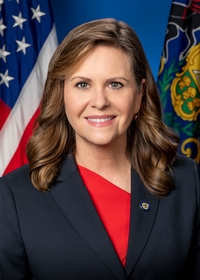
This Pennsylvania House resolution (HR 382) urges Congress to extend expanded health insurance subsidies that currently help Pennsylvanians purchase coverage through Pennie, the state's health insurance marketplace. Without extension, these subsidies expire December 31, 2025, causing average premium increases of 102% for Pennie customers - projected to push 150,000 people to lose coverage. The resolution highlights that without the expanded credits, a couple earning $85,000 annually would pay $25,776 yearly for insurance (31% of their income), compared to lower costs under current subsidies. It cites Pennie's 2025 enrollment of nearly 500,000 customers and a 16% drop in new sign-ups since Open Enrollment 2026 as evidence of the need for continued support. The resolution has no legal force but requests congressional action to maintain affordability.
HB 1446 allows local governments to grant tax exemptions for improvements and redevelopment of vacant or underused properties, directly affecting property owners and developers who redevelop sites like abandoned lots or outdated buildings. It establishes a state-level Economic Development and Mixed-Use Redevelopment Advisory Committee within the State Planning Board to advise on eligible projects and guide implementation. The Department of Community and Economic Development is given authority to manage the program, including setting eligibility rules and overseeing tax exemption approvals. The bill aims to incentivize revitalization of neglected properties by reducing financial barriers for redevelopment. This policy change focuses on concrete tax incentives and administrative structure, not speculative economic outcomes.
HB 1332 is a state budget bill that allocates funding for capital projects (like infrastructure and public buildings) during fiscal year 2025-2026. It specifically limits the amount of state redevelopment assistance capital funds that can be used for certain projects, replacing previous funding rules. This bill directly affects state agencies managing capital projects and local governments receiving redevelopment funds. The law became effective immediately upon the governor's approval on November 19, 2025 (Act No. 48 of 2025).
HB 1540 creates a "Buy America, Buy Union" grant program and fund under Pennsylvania's Department of Community and Economic Development. It requires state-funded projects to prioritize American-made materials and union labor by offering grants to qualifying contractors. The bill establishes a dedicated fund to finance these grants, directly affecting state agencies and contractors working on public projects. Key provisions mandate that projects receiving grants must meet specific union labor and domestic sourcing standards, altering how state procurement contracts are awarded. This policy change shifts procurement incentives toward union workers and U.S. manufactured goods for eligible state projects.
HB 1874 amends Pennsylvania's Transit Revitalization Investment District Act to expand how cities can use tax revenue generated from new development in designated transit areas. It allows redevelopment authorities to apply "incremental tax revenue" (taxes raised from new property values due to transit improvements) toward funding transit projects or infrastructure within those districts. This directly affects cities with transit revitalization districts and developers working in areas near new transit investments. The bill provides clearer rules for directing these tax increases toward transit-focused redevelopment, rather than general city funds.
HB 1331 allocates state funding for specific public projects - including roads, bridges, flood control, and Pennsylvania Fish and Boat Commission initiatives - during the 2025-2026 fiscal year. It authorizes Pennsylvania to borrow money without voter approval and use current state revenue to finance these projects, while requiring agencies to state each project’s estimated lifespan. The bill directly affects state agencies like the Department of General Services, which manage these capital improvements. It does not change public policy but outlines budgetary mechanisms for infrastructure spending.
HB 1788 amends Pennsylvania's transportation laws to improve oversight of transit authorities and fund infrastructure projects. It requires metropolitan transportation authorities to meet new performance standards for fare evasion, bus routes, and public-private partnerships, with consequences for non-compliance. The bill establishes the Public Transportation Trust Fund (funded by 6.15% of certain tax revenues), the Road and Bridge Project Fund for highway maintenance, and a Sinking Fund for bond repayment. These funds will finance road/bridge projects, while mandatory annual reports to legislative committees will track authority spending and progress toward fiscal goals.
HB 1424 amends Pennsylvania's Local Tax Enabling Act to prohibit local governments from taxing admission fees at recreational campgrounds. It adds a new restriction (section 18) preventing municipalities from levying amusement taxes on guest charges for campground access. The bill also clarifies that camping property rentals aren't considered "places of amusement" for tax purposes. This change affects all local authorities covered by the original tax law, including cities, towns, and school districts.
HB 1058 amends Pennsylvania's State Lottery Law to adjust the minimum percentage of lottery revenues dedicated to senior programs. It reduces the required allocation from 20% (for fiscal years 2019-2025) to 10% for fiscal years beginning after June 30, 2025. This directly affects seniors aged 65+ who receive property tax relief and reduced-fare transit services funded by lottery revenues. The change modifies Section 303(a)(11)(iv) of the law, specifying the new funding percentage starting in 2026. The bill became law on July 21, 2025, as Act No. 37 of 2025.
HB 1574 creates a new loan program and fund to help local redevelopment authorities start community renewal projects. It establishes a Redevelopment Authority Startup Fund to provide low-interest loans for initiatives like rebuilding neighborhoods or revitalizing downtown areas. This directly affects cities and towns with active redevelopment agencies, giving them a new way to finance early-stage projects. The bill amends the Fiscal Code to set up this funding mechanism, changing how these local agencies access capital for urban renewal efforts.