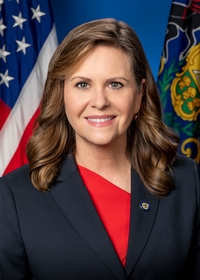
This bill creates a new funding mechanism for Pennsylvania school districts and charter schools to cover extraordinary special education expenses for students with disabilities. It allocates one percent of the state special education appropriation annually from 2016-2017 through 2025-2026, then increases this to two percent starting in 2026-2027, with specific rules for how funds are distributed based on student enrollment duration and expense levels. The legislation covers costs for specialized services including transportation, therapy, and mobility training, while establishing caps and prioritization rules to ensure equitable distribution across districts.
This bill amends Pennsylvania's Tax Reform Code to clarify and strengthen tax exemptions for charitable, religious, volunteer fire, and nonprofit educational organizations. It requires these groups to use tax-exempt purchases only for their qualified purposes, excluding unrelated business activities and major construction projects from the exemption. The legislation also establishes a process for the Department of Revenue to issue conditional tax-exempt status to new organizations and allows for the revocation of exemptions if an organization no longer meets public charity requirements.
HB 1678 adds a 45-mill tax plus a 5-mill surtax on gross receipts from digital advertising services displayed to users within Pennsylvania. It directly affects digital advertising providers (e.g., companies running banner or search ads) but exempts broadcast and news media entities. The tax applies to revenue from ads shown on digital interfaces (websites, apps) where users are located in Pennsylvania, excluding sales of internet access, telecom hardware, and resale services. The law takes effect for taxable years beginning after December 31, 2025.
This bill amends Pennsylvania's Tax Reform Code to modernize how the state handles tax liens by introducing an electronic filing system and a centralized online repository. It directly affects the Department of Revenue, taxpayers, and creditors by requiring the department to post tax liabilities to a public website within seven days of a final assessment. The new system allows the department to maintain a searchable database of liens without needing to refile or revive them, while still requiring physical recording with county officials only when the state seeks to execute against specific property. Additionally, the legislation clarifies the priority of tax liens during judicial sales and establishes procedures for enforcing liens against out-of-state property.
HB 2193 creates a $100 tax credit per deer processed for Pennsylvania deer processors who donate all consumable venison from a single deer to an approved food charity (like those meeting requirements under the Institutions of Purely Public Charity Act). Processors must retain Pennsylvania Game Commission ear tags as proof and submit applications by September 15 for the prior year. The credit is limited to $5,000 per taxpayer annually and $200,000 total statewide each year, with unused credits potentially carried over for up to 15 years. This directly affects deer processors who donate meat to qualifying charities, providing a financial incentive for their donation services.
This bill allocates state funding to support the operation of Pennsylvania's professional licensure boards and the State Athletic Commission for the 2026-2027 fiscal year. It provides $68.4 million from the Professional Licensure Augmentation Account to the Department of State's Bureau of Professional and Occupational Affairs, along with separate restricted funds totaling approximately $13.5 million for the State Boards of Medicine, Osteopathic Medicine, Podiatry, and the State Athletic Commission. The legislation ensures these organizations have the necessary resources to carry out their licensing and regulatory functions without treating these funds as general government appropriations.
This bill allocates $7,805,000 from a restricted revenue account in Pennsylvania's General Fund to the Office of Consumer Advocate within the Office of Attorney General. The funding is designated to support the office's operations for the fiscal year running from July 1, 2026, to June 30, 2027. The appropriation takes effect on July 1, 2026, or immediately, whichever occurs later. This measure provides financial resources to enable the office to continue its consumer protection activities without changing its existing functions or responsibilities.
This bill allocates $81.3 million from the Workmen's Compensation Administration Fund to the Department of Labor and Industry to cover operating expenses for the fiscal year 2026-2027. The funds will support salaries, wages, travel, and contractual services needed to administer the Workers' Compensation Act and the Pennsylvania Occupational Disease Act. An additional $550,000 is designated for the Office of Small Business Advocate within the Department of Community and Economic Development to fund its operations during the same period. The legislation also authorizes payment of any outstanding bills from the previous fiscal year that remain unpaid as of June 30, 2026.
This bill allocates approximately $67 million from two retirement funds to cover the operating expenses of Pennsylvania's Public School Employees' Retirement Board for the 2026-2027 fiscal year. The funding includes about $65.5 million from the Public School Employees' Retirement Fund and $1.5 million from the PSERS Defined Contribution Fund to pay for staff salaries, travel, contractual services, and other administrative costs. The legislation also authorizes payment of any outstanding bills from the previous fiscal year that were not yet settled. These funds will support the board's management of retirement benefits for public school employees and the administration of the defined contribution plan.
This bill allocates $2,235,000 from a restricted revenue account within Pennsylvania's General Fund to the Office of Small Business Advocate in the Department of Community and Economic Development. The funding is intended to support the operational expenses of the office for the fiscal year running from July 1, 2026, to June 30, 2027. The appropriation takes effect on July 1, 2026, or immediately, whichever occurs later. This measure provides financial resources to help the office carry out its existing functions without adding new programs or changing its responsibilities.