

In committee Sep 10, 2026
0 co-sponsors
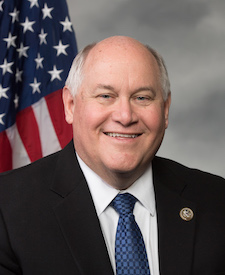
Rep. Ron Estes
Total votes
2,818
all sessions
Attendance
97%
77 missed
Higher than 76% of chamber peers
With party
94%
of cast votes
Near the chamber average
Bipartisan score
3%
crosses aisle rarely
Near the chamber average
Sponsored
523
bills & resolutions
Lower than 88% of chamber peers
Committees
5
assignments
523 bills and resolutions
Sponsored bills
Total
523
Primary
49
Co-sponsor
474
This page
523
matching current filters
American Franchise Act
Maddy summaryHR 5267, the American Franchise Act, clarifies when franchisors can be considered joint employers of franchisee employees under federal labor laws. It defines "substantial direct and immediate control" over essential employment terms like wages, benefits, hours, hiring, and discipline - requiring franchisors to actively set these terms to be deemed joint employers. The bill explicitly excludes routine brand standards, training, or minimal safety requirements from constituting such control. This directly affects franchisors and franchisees by limiting joint employer liability to cases where franchisors exert significant, ongoing influence over core employment decisions. The law applies prospectively to new cases after enactment, not past disputes.
In committee Sep 8, 2026
1 co-sponsor
Advancing American Innovation Act
Maddy summaryThe Advancing American Innovation Act amends Section 337 of the Tariff Act of 1930 to tighten the standards for what qualifies as a domestic industry in unfair trade investigations, specifically requiring that licensing activities lead to the adoption and development of articles sold in the United States. The bill also mandates that the International Trade Commission identify dispositive issues early in proceedings to allow for expedited fact-finding within 100 days, while requiring the agency to consider the impact of exclusion orders on public health, the economy, and consumers before taking action. Additionally, it requires complainants in patent infringement cases to disclose the identity and funding agreements of any third-party litigation funders, with sanctions imposed for non-compliance. These changes apply to complaints filed after the date of enactment and directly affect companies involved in international trade disputes and intellectual property enforcement.
In committee Sep 1, 2026
1 co-sponsor
Honoring and commending the 100th anniversary of the Golf Course Superintendents Association of America.
Maddy summaryThis resolution formally recognizes the 100th anniversary of the Golf Course Superintendents Association of America, honoring its century-long contribution to the golf industry. The bill does not change any laws or allocate funds; instead, it serves as a symbolic commendation for the organization's work in advancing greenkeeping standards, promoting environmental stewardship, and supporting education and workforce development. By acknowledging the association's role in managing golf courses and its impact on the economy and communities, the measure highlights the professional achievements of its members without imposing new regulatory requirements.
In committee Jul 23, 2026
1 co-sponsor
Improving Seniors’ Timely Access to Care Act of 2025
Maddy summaryThis bill requires Medicare Advantage plans to implement electronic pre-approval systems for medical services by 2028 and meet transparency reporting standards starting in 2027. Plans must publicly report data on approval/denial rates, appeal outcomes, response times, and technology use for pre-approval requests, including details on how denials relate to clinical criteria. It establishes a 24-hour response timeframe for certain requests and mandates annual reviews of pre-approval requirements based on data and input from seniors and providers. The law directly affects Medicare Advantage plans, seniors enrolled in these plans, and healthcare providers who submit pre-approval requests. These changes aim to make the pre-approval process faster, more transparent, and more accountable for seniors seeking covered medical services.
In committee Jul 15, 2026
1 co-sponsor
Protecting Privacy in Purchases Act
Protecting Privacy in Purchases Act This bill prohibits payment card networks from using merchant codes that distinguish firearms retailers from general-merchandise retailers or sporting-goods retailers. The Department of Justice must enforce this bill and report annually on the resulting investigations and cases.
Passed Jul 15, 2026
1 co-sponsor
Repealing Big Brother Overreach Act
Repealing Big Brother Overreach Act This bill repeals the Corporate Transparency Act. The act requires existing companies and newly created companies to report beneficial ownership information to the Department of the Treasury’s Financial Crimes Enforcement Network for purposes of addressing the financing of terrorism and money laundering.
In committee Jun 18, 2026
1 co-sponsor
To require the Administrator of the Federal Aviation Administration to conduct a study to assess whether certain aircraft certified under part 23 of title 14, Code of Federal Regulations, may be used in operations conducted under part 121 of such title, and for other purposes.
Maddy summaryThis bill directs the Federal Aviation Administration to conduct a study within 180 days to determine if smaller aircraft, designed for 10 to 19 passengers, can be safely used for scheduled commercial flights. The investigation must examine how allowing these planes in commercial service would affect the economics for airlines serving small communities, review regulations in other countries, and gather input from manufacturers, rural communities, and safety experts. Once the study is finished, the FAA Administrator will submit a report detailing the findings to both the House and Senate committees.
In committee Jun 9, 2026
1 co-sponsor
Expressing strong opposition to the imposition of digital services taxes and other relevant similar measures by other countries that unfairly discriminate against United States companies.
Maddy summaryThis resolution expresses the House of Representatives' opposition to foreign countries imposing digital services taxes that discriminate against U.S. companies. It highlights that these taxes unfairly target gross revenues rather than actual profits and penalize businesses that do not have a physical presence in the taxing country. The bill calls on other nations to repeal such measures and engage in fair trade negotiations based on international tax principles. Additionally, it supports the use of trade tools like Section 301 investigations to protect American businesses from these discriminatory practices.
In committee Jun 4, 2026
0 co-sponsors
Protect Domestic Oil and Gas Small Business Act of 2026
Maddy summaryThis bill, titled the Protect Domestic Oil and Gas Small Business Act of 2026, exempts small oil and gas wells from specific environmental regulations under the Clean Air Act. It directly affects owners and operators of marginal wells, defined as sites producing 15 barrels of oil or less per day, or 90,000 cubic feet of natural gas or less per day. The legislation removes requirements for monitoring, reporting, and leak detection for these smaller operations, while also mandating that the EPA approve any state plan revisions granting this exemption within 180 days. Additionally, the bill requires the EPA to update its regulations to reflect these changes and to terminate any ongoing enforcement actions against marginal wells that were initiated before the law takes effect.
EnergySupports EnergyBill exempts small oil and gas wells from environmental regulations, reducing compliance costs and protecting domestic fossil fuel production.
EnvironmentOpposes EnvironmentBill exempts small oil and gas wells from Clean Air Act regulations, removing monitoring and leak detection requirements, which weakens environmental protections.
In committee May 21, 2026
1 co-sponsor
Ask Maddy
·
AI policy assistant
Ask Maddy about Ron Estes
Scope: oklahoma
Hi! I can help you understand Ron Estes's legislative record. What would you like to know?
Try one of these
i
Maddy answers using official bill text and legislative records. Always verify before sharing.
Sources cited inline