

Maddy summaryHB 4143 increases the property damage threshold requiring a written report for motor vehicle collisions in Oklahoma from $300 to $3,000. This means drivers involved in accidents with damage under $3,000 (and no injury, death, or property damage beyond vehicles) can now exchange information without filing a report. Law enforcement must prepare written reports for collisions on public roads involving injuries, deaths, or damage of $3,000 or more (previously $500). The bill also updates confidentiality rules, keeping reports confidential for 60 days and restricting their use to prevent commercial solicitation.

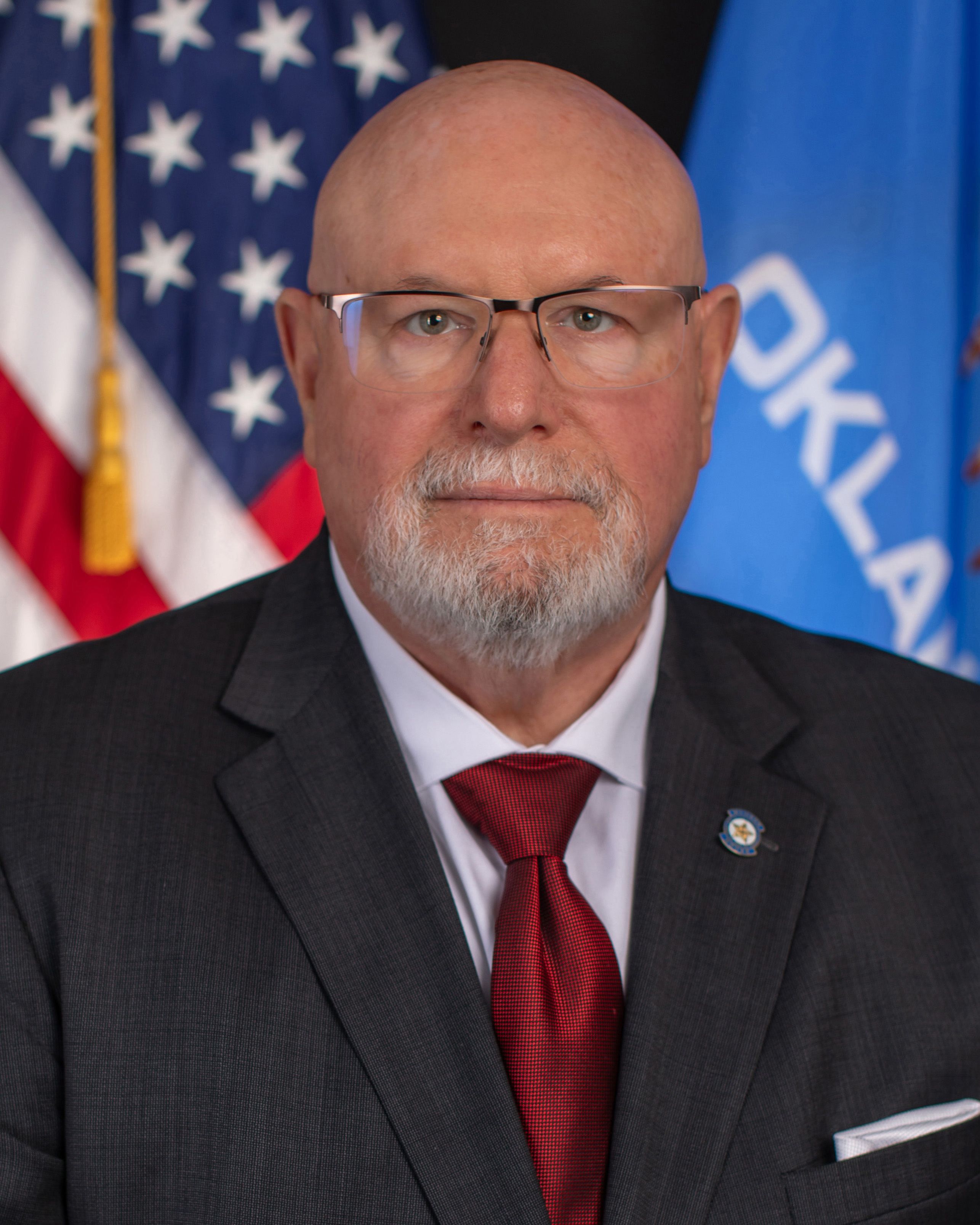
Rep. Robert Manger
Sponsored bills
Maddy summaryHB 4142 amends Oklahoma's criminal code to clarify and expand offenses involving explosives, incendiary devices, and simulated bombs. It adds new felony charges for threatening to use such devices (Section 1767.1, subsection 7), manufacturing/selling them with intent to harm (subsection 4), and possessing them during felonies (subsection 9). The bill also updates definitions, explicitly including "simulated bombs" (devices designed to look like explosives but are inoperable) and clarifying terms like "explosive" and "incendiary device." It excludes harmless juvenile activities involving firecrackers or "stink bombs" from these provisions. The changes take effect on November 1, 2026.
Maddy summarySB 1730 requires Oklahoma law enforcement officers to submit reports of alleged sex offenses (those that would require sex offender registration under state law) to the Oklahoma State Bureau of Investigation within 30 days, regardless of whether an arrest is made. The bill mandates that these reports include details like the accused's identifying information, offense nature, and location, while keeping all submitted information confidential except for official investigations or prosecutions. This law directly affects law enforcement officers who handle such reports and the Oklahoma State Bureau of Investigation, which will manage the centralized records. It takes effect on November 1, 2026, and does not change existing registration requirements for convicted offenders.
Maddy summaryHB 4141 allocates $250,000 from the General Revenue Fund to the District Attorneys Council for hiring a Sexual Assault Nurse Examiner (SANE) Statewide Coordinator and related program costs. This funding directly supports the District Attorneys Council, which oversees SANE programs across Oklahoma, and will improve response services for sexual assault victims. The bill establishes the coordinator’s role to manage statewide forensic training, recruit SANE professionals, expand local SANE and response teams, and handle fund coordination. The $250,000 appropriation is effective July 1, 2026, and is designated as an emergency measure.
Maddy summarySB 1921 updates Oklahoma's rules for criminal history background checks. It requires state agencies and entities needing checks for licensing or commercial purposes (not law enforcement) to complete national criminal history record checks within 60 days of July 1, 2009 (as specified in the bill text), with new fees ranging from $15 to $55 per check depending on type. The bill clarifies that national checks require FBI fingerprint submission, maintains confidentiality for juvenile records, and removes outdated language. It becomes effective November 1, 2026.
Maddy summaryHB 4144 requires Oklahoma law enforcement agencies to make specific arrest and incident reports publicly available, including arrest details (name, date of birth, cause), incident summaries, radio logs, crime summaries, jail records, and body-worn camera footage. Agencies must redact sensitive information like minor identities, medical details, or ongoing investigation details before release, but must disclose redacted portions once investigations conclude. This bill directly affects all Oklahoma law enforcement agencies by expanding public access to policing records while establishing clear redaction standards for privacy and safety concerns. The policy changes standardize transparency for public record requests related to law enforcement activities.
Maddy summaryHB 4139, the Oklahoma Home Warranty Transparency Act, requires home warranty companies to clearly post all fees and detailed pricing (including labor and parts costs) in their physical offices and on their websites. It mandates that repair personnel must be bonded, insured, licensed, or provide proof of required training, and companies must provide license or certification details to customers within 24 hours of a request. Additionally, companies must arrange for a claim assessment within 48 hours of a customer submitting a warranty claim. The bill directly affects home warranty providers and their customers by increasing transparency and service timelines. It becomes effective November 1, 2026.
Maddy summaryHB 4140 modifies Oklahoma's laws on grand larceny and receiving stolen property by adjusting penalty tiers based on the value of stolen property. It reduces maximum fines for receiving stolen property from $2,500 to $500 across all value ranges and updates felony classifications (e.g., $1,000-$2,500 now triggers a Class D3 felony for both crimes, with a $1,000 fine limit for larceny). The bill also requires courts to order restitution to victims for both offenses. It takes effect November 1, 2026, and directly affects individuals convicted of these property crimes.
Maddy summaryThis bill proposes a constitutional amendment (HJR 1081) that would eliminate the income requirement for Oklahoma seniors to qualify for a property tax limit on their homesteads. Currently, seniors aged 65+ must meet an income threshold based on HUD median income for their area; this amendment removes that requirement while keeping the age, 7-year occupancy, and $700,000 property value cap. It would apply only to homesteads valued at $700,000 or less, with the tax limit frozen at the value when the owner turned 65 (or January 1, 1997, for those already eligible before 1997). The change requires voter approval via a ballot measure.
Maddy summarySB 1458 repeals a requirement that prosecutors list witness names on grand jury indictments under Oklahoma law. This procedural change removes an administrative step for prosecutors and court clerks when preparing certain court documents. The bill directly affects court procedures but does not alter legal standards for charging crimes or impact defendants. (1 sentence, as it is a procedural bill)