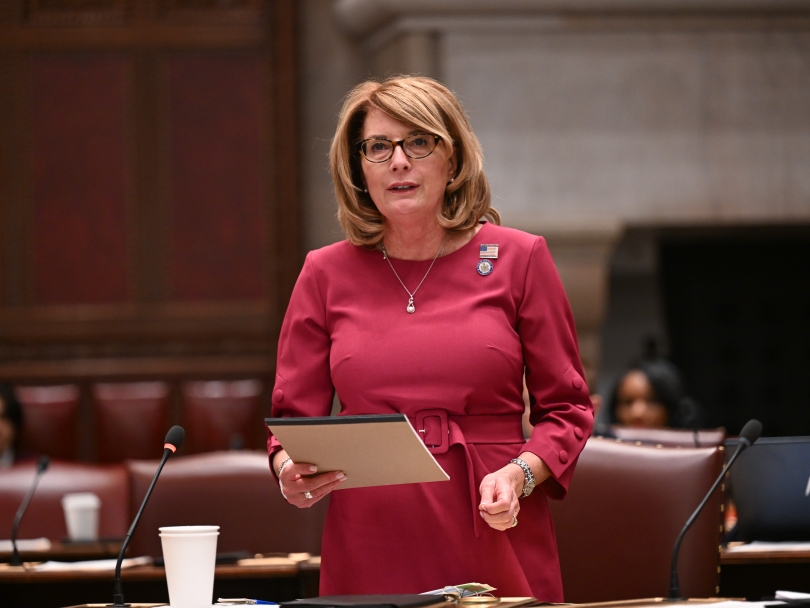
Bill S 2289 expands the eligibility for veterans' preference in Mitchell-Lama housing projects. Currently, this preference is available to veterans who served during a time of war. This bill removes that wartime service requirement, making the housing preference available to all veterans and their surviving spouses as defined by the civil service law. This change applies to projects with open waiting lists and will be implemented when closed lists reopen. The bill also maintains that current residents have first priority for internal transfers within their existing projects.
This bill adds a non-voting representative from the division of service-disabled veterans' business development to the state cannabis advisory board. The amendment specifies that this new member, alongside existing non-voting department representatives, will join the board's thirteen voting members. The change does not alter the board's voting structure or policy authority but expands the advisory group's composition to include veterans' business development expertise. The bill is procedural, focusing solely on board membership composition with no direct policy changes to cannabis regulation.
Relates to preferences under the affordable home ownership development program for veterans with service-related disabilities; defines "veteran with a service-related disability".
This bill creates a new property tax exemption for the primary residence of veterans with a 100% service-connected disability. It applies to veterans who were honorably discharged, have a 100% disability rating from the U.S. Department of Veterans Affairs, and meet specific criteria like permanent total disability or receipt of VA benefits. The exemption fully removes property taxes and special assessments for qualifying veterans' primary homes, in addition to existing tax benefits. The law takes effect for tax assessments dated October 1, 2026, and does not reduce a property's taxable value below zero.
This bill expands New York's veterans tuition awards program by allowing qualified veterans to transfer unused benefits to eligible family members, including spouses, children, or financially dependent survivors. It defines "eligible immediate family member" and sets key rules: transfers are one-time only, children receiving benefits must be under 26, and annual transfers are capped at 100. Veterans must formally designate beneficiaries through a prescribed process, and transfers cannot exceed the original award amount. The changes take effect in 2027, building on prior legislative proposals to enhance support for veterans' families.
Requires the department of veterans' services to consult with the office of fire prevention and control and the department of health to identify the most effective ways to provide useful information to veterans about available volunteer opportunities with local volunteer fire departments and emergency services providers.
This bill authorizes veteran organizations and volunteer fire companies to use electronic bell jar vending machines for fundraising. The machines dispense pre-printed tickets with predetermined winners and fixed prize values, but must be approved by the New York State Gaming Commission and operate only for members of these organizations. Key safeguards include prohibiting casino-style operations, requiring machines to track sales and report to the commission, and restricting use to licensed groups under strict rules to distinguish them from slot machines. The bill aims to modernize charitable gaming while maintaining oversight and preventing expansion into commercial gambling.
Establishes the veteran career assistance program within the SUNY and CUNY systems to provide veterans with assistance in resume writing and employment placement services.
This bill requires a 120-day warning period before municipal or health agencies can impose monetary fines for violations at facilities owned or operated by congressionally chartered veterans' groups (like American Legion posts or VFW halls). During this period, the veterans' group can fix the violation without penalty. The bill allows a written extension request with proof of corrective efforts, but does not apply to immediate life-threatening safety issues or alcohol law violations. It directly affects veterans' organization facilities covered under federal chartering under Title 36 of the U.S. Code.
This bill eliminates fees for New York state veterans who are honorably discharged and have a qualifying disability (40%+ service-connected) or meet specific veteran status criteria under the Veterans' Services Law. It directly affects eligible veterans by removing the $765 fee for a lifetime hunting, fishing, and turkey permit license, changing it to $0. The key mechanism updates the environmental conservation law to create a new fee category specifically for these veterans, while maintaining standard fees for other license types. The policy change applies immediately upon enactment, providing permanent fee relief for qualifying veterans purchasing this combined license.