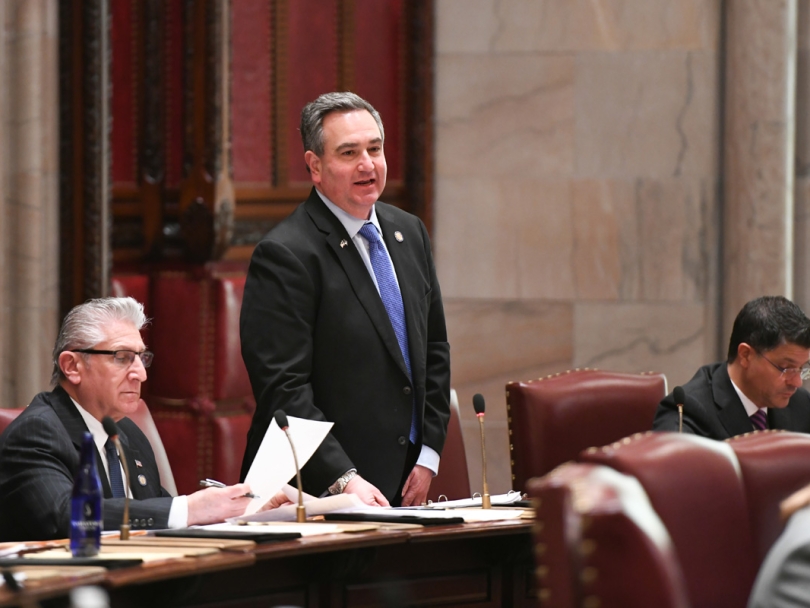
This bill adds menopause as a qualifying condition for paid leave under New York's workers' compensation law. It provides eligible employees with five days of paid leave annually (not monthly) to seek medical care for menopause symptoms like hot flashes, sleep issues, or hormonal imbalances. The leave is in addition to existing family and medical leave protections and requires employees to obtain physician assistance for treatment. It directly affects workers experiencing menopause-related health needs who qualify for workers' compensation coverage.
Requires employers to provide a leave of absence of at least four hours for every 12 month period for an employee to use for preventative health care measures.
This bill creates a new paid leave benefit for workers experiencing menopause symptoms. It adds "menopause" to the definition of disability under workers' compensation law and defines it to include symptoms like hot flashes, sleep issues, and hormonal imbalances. Eligible employees may take up to five paid days per month (60 days annually) for medical care related to menopause, such as doctor visits or managing prescribed treatments. This leave is in addition to existing paid family and medical leave options and applies to all covered employees under the workers' compensation system.
This bill requires employers to provide employees with four hours of paid leave each year specifically for colon cancer screenings. It directly affects employees who need screening appointments and employers with at least a certain number of workers (implied by labor law context). Key provisions include prohibiting employer retaliation for using this leave and clarifying that the leave does not replace other existing benefits or leave policies. The law takes effect immediately upon enactment.
Requires employers to provide leave of absence of at least five days for every 12 month period for an employee to use for menopause symptoms; requires the commissioner of labor, in consultation with the commissioner of health, to develop workplace guidance relating to menopause.
Requires employers to provide a leave of absence of at least four hours for every 12 month period for an employee to use for preventative health care measures.
This bill increases paid leave for public employees serving in the military. It raises the maximum annual paid leave from 30 days (or 22 working days) to 60 days (or 52 working days) for time spent on military duty, including travel to and from duty. The change directly affects state and local government workers who are called to active military service. The policy ensures these employees receive full pay for up to the extended leave period without losing their jobs. The bill amends existing law to align with updated military service needs.
This bill requires employers to provide employees with at least four hours of unpaid leave each year specifically for colon cancer screenings. It directly affects employees who need to schedule regular screenings, ensuring they can take time off without penalty. Employers must not retaliate against employees who request this leave, and the law does not limit existing benefits or leave policies. The bill establishes a clear, annual leave requirement focused solely on facilitating preventive healthcare access.
Extends paid family leave benefits to certain construction employees who shall be eligible for family leave benefits if they were employed for at least twenty-six of the last thirty-nine weeks by any covered employer which is signatory to a collective bargaining agreement; relates to the effectiveness thereof.
Requires an employer to provide sick leave to an employee who telecommutes at the same rate and under the same conditions that an employee present at the employer's work site would accrue it.