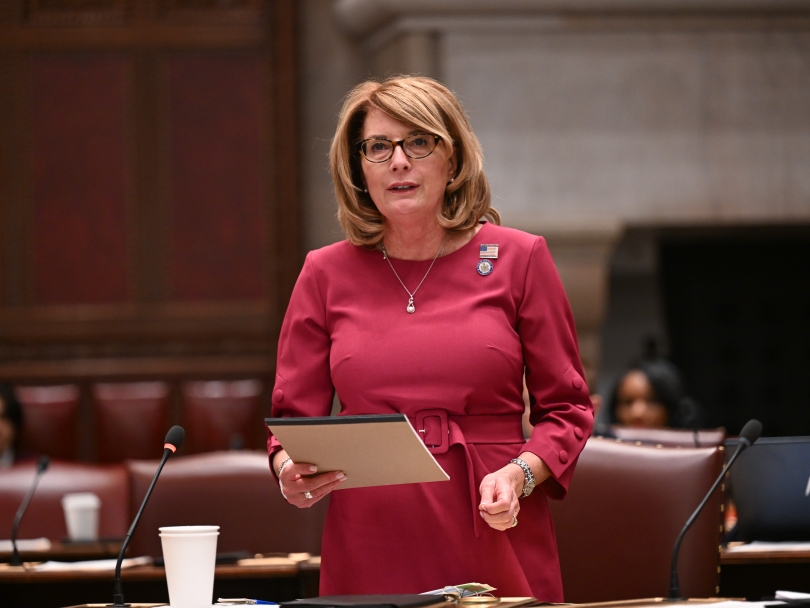
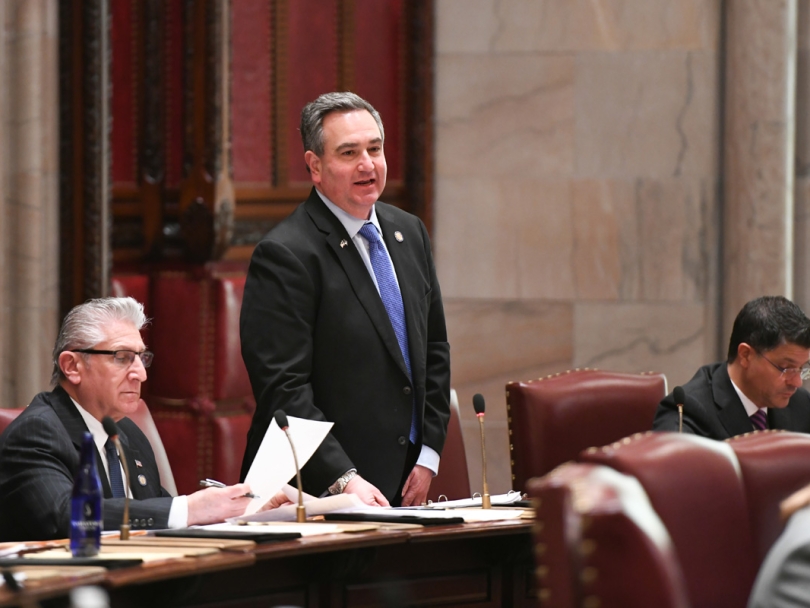
This bill asks the Governor of New York to officially declare April 2026 as Workplace Violence Prevention Month. The measure aims to raise awareness about workplace safety, with a specific focus on protecting healthcare workers who face higher risks of violence. It does not change laws or create new programs but serves as a symbolic recognition of the issue. Copies of the resolution will be sent to the Governor and several medical organizations to highlight the importance of a safe work environment.
This bill directs the Governor of New York to officially recognize April 28, 2026, as Workers' Memorial Day. The resolution honors workers who have been injured or killed on the job and acknowledges the historical efforts to improve workplace safety. It does not create new laws or change any regulations but serves as a formal statement of remembrance and support for labor safety. The measure is a symbolic gesture intended to highlight the ongoing importance of protecting workers' health and well-being.
This bill mandates that all general hospitals install metal detectors at every public entrance to enhance workplace safety. It requires hospitals to include this specific security measure within their broader workplace violence safety and security plans, which must also cover employee training and other risk-reduction strategies. Hospitals are further obligated to share these plans with staff and union representatives and to report incident data to internal safety committees while protecting individual privacy. The legislation takes effect immediately or aligns with the timeline of related 2025 laws if not yet in force.
Enacts the "Empowering People in Rights Enforcement (EMPIRE) Worker Protection Act"; relates to the delegation of state enforcement authority to private actors; authorizes an affected employee, whistleblower, representative organization or an organizational deputy to initiate a public enforcement action on behalf of the commissioner for certain provisions of the labor law, or any regulation promulgated thereunder.
Relates to disqualification from receiving benefits for separation from employment in cases where the claimant's employer maintained or refused to cure a health or safety condition that made the environment unsuitable.
Preserves the right to unemployment benefits for a voluntary separation due to unsafe or unhealthy working conditions if the employer has caused, maintained, or refused or failed to cure an unsafe or unhealthy working condition including, but not limited to, exposure to physical, chemical or biological hazards, harassment or violence by their employer, other employees or members of the public, or other deleterious condition that makes the work environment unreasonably dangerous or unsafe for the claimant.
Directs the department of transportation to conduct a comprehensive study of highway construction and maintenance worker safety; directs the department to gather feedback from stakeholders; requires the department to submit a report on its findings and recommendations.
This bill (A 8417) extends the expiration date of the September 11th worker protection task force act from June 10, 2025, to June 10, 2030. It directly affects the existing task force established to address health and safety concerns for workers who responded to the 9/11 attacks. The key provision is a simple amendment to the act's expiration date, prolonging the task force's authority without altering its purpose or duties. This procedural extension ensures the task force can continue its work supporting affected workers through 2030.
Requires hospitals to establish a violence prevention program which includes a workplace safety and security assessment and develop a safety and security plan that addresses identified workplace violence threats or hazards.
S 8181 extends the September 11th Worker Protection Task Force Act, which supports workers involved in 9/11 cleanup and related health monitoring. The bill changes the act’s expiration date from June 10, 2025, to June 10, 2030, ensuring continued operations. It directly affects workers who participated in 9/11 recovery efforts and their healthcare monitoring programs. The key provision is a simple extension of the task force’s legal authority without altering its core functions.