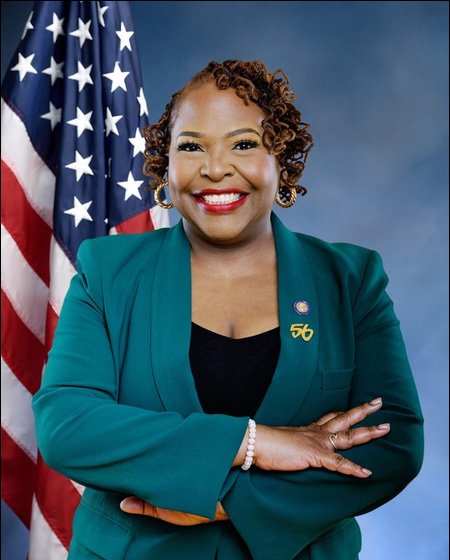
Bill S 7320 prohibits discriminatory practices by real estate appraisers based on protected characteristics like race, gender identity, or familial status. It defines "real estate appraisal" broadly to include all residential appraisals and supporting documents, applying to both licensed and unlicensed individuals. The bill makes it an unlawful practice to base an appraisal on these characteristics of current or prospective property owners or those in the vicinity. It allows for sanctions, license suspension, revocation, or fines up to $2,000 for violations, with half of these fines allocated to a fund supporting fair housing compliance programs and addressing appraisal discrimination.
Bill S 7526, known as the "private activity bond allocation act of 2025," establishes a new formula for distributing the state's annual volume ceiling for certain tax-exempt private activity bonds. This bill directly affects state and local government agencies, as well as other entities that issue these bonds for projects such as housing, economic development, and job creation.
The bill divides the statewide bond volume ceiling into three equal portions. One-third is set aside for local agencies based on population, another third for state agencies, and the final third forms a statewide bond reserve for additional allocations to either state or local entities. This system aims to create an orderly and efficient process for allocating these bonds, which require an allocation to qualify for federal tax exemption.
Bill S 7285 expands the existing residential redevelopment inhibited property exemption. It allows all cities, towns, and villages in the state to offer a property tax exemption for redeveloped neglected or abandoned residential properties. The bill broadens eligibility to include one-to-four unit residences, not just one-family homes, and permits occupancy by either an owner or a tenant as their primary residence. This exemption reduces the increase in property taxes linked to the added value from demolition, alteration, rehabilitation, or remediation of these properties.
Provides for a partial exemption from taxation of certain residential real property transferred by a governmental entity, nonprofit housing organization, land bank or community land trust to low-income households; sets forth conditions for the discontinuance of such exemption.
Requires the division of housing and community renewal to calculate the period of rent reduction due to diminution of services from the date of actual diminution of the services.
Requires property owners to dedicate certain residential units to rent regulated status following demolition and new construction or substantial renovation.
This bill allows any town in New York with a 2020 census population between 69,000 and 69,500 to create a homestead exemption for real property taxes. It enables qualifying towns to offer an exemption similar to the existing STAR school tax relief program, capping the exemption at $50,000 in property value. Property owners must apply annually using a standard form, and the exemption applies only to eligible homes meeting the same criteria as STAR. This directly affects homeowners in qualifying towns by potentially reducing their local property tax burden.
This bill increases the New York State Housing Finance Agency's borrowing limit to $36.28 billion for housing-related bonds. It directly affects the agency and future housing finance programs, allowing it to issue more bonds to fund affordable housing developments, renovations, and related projects. The key provision raises the existing cap from $31 billion to $36.28 billion, expanding the agency's capacity to finance housing without changing the types of projects it supports. This is a straightforward funding authorization, not a new program or policy change.