Issue · Criminal Justice

Criminal Justice (Courts)

Every criminal justice bill, vote, and legislator stance in New York, automatically classified by Maddy, our AI policy reader.

Total bills
254
2025 Regular Session
Top supporter
Shelley Mayer
100% support rate
Top opponent
Anil Beephan
0% support rate
Ranked legislators
10
5 support · 5 oppose
Key legislators

Who's moving courts in New York

Legislators moving courts in New York
Legislator Party Stance Support rate Votes
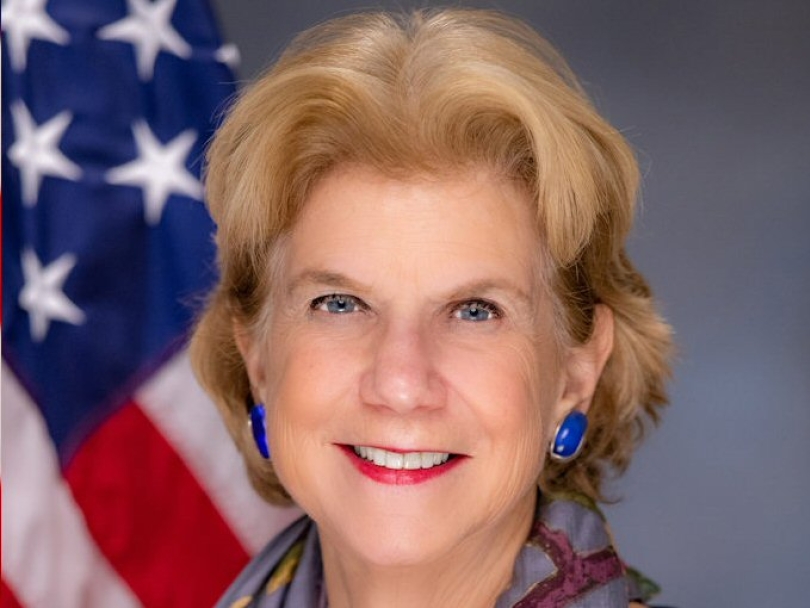
Shelley Mayer
Shelley Mayer Senate · District 37
D
Strong +
100% 27
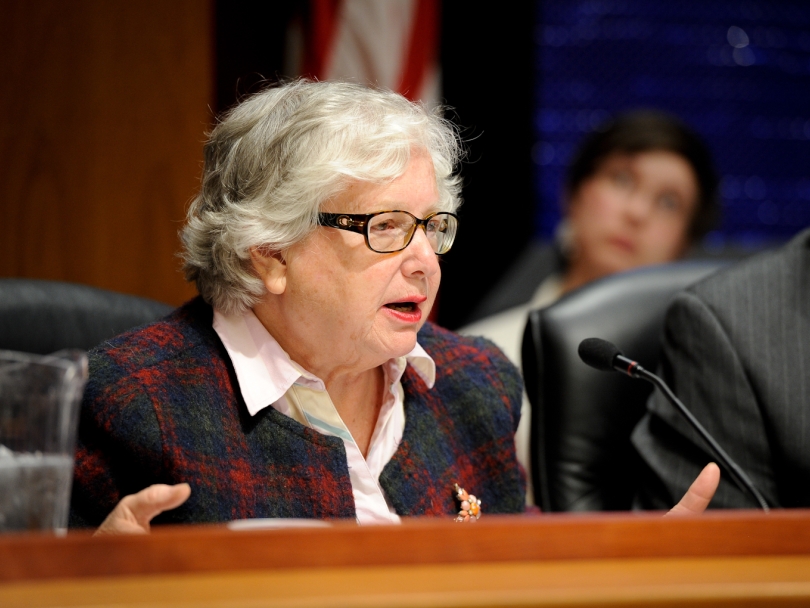
Toby Stavisky
Toby Stavisky Senate · District 11
D
Strong +
100% 24
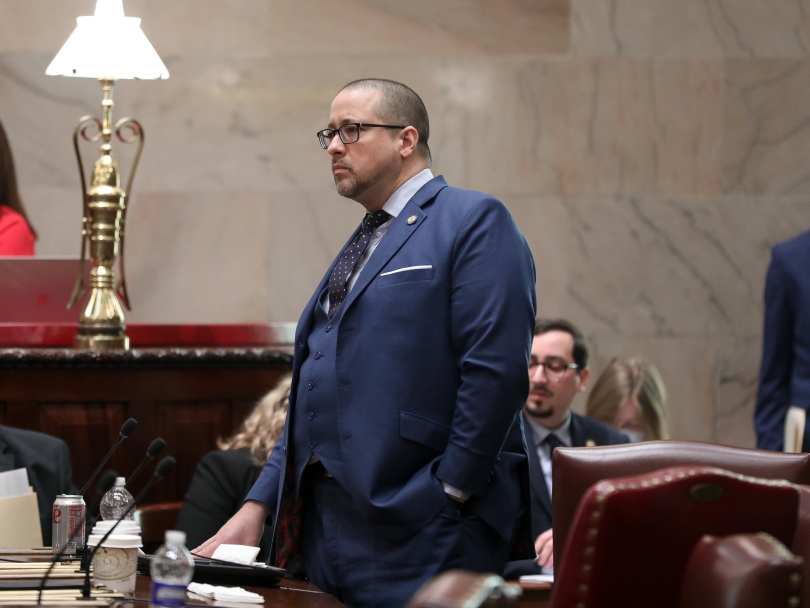
Gustavo Rivera
Gustavo Rivera Senate · District 33
D
Strong +
100% 23
Leroy Comrie
Leroy Comrie Senate · District 14
D
Strong +
100% 23
Jessica Ramos
Jessica Ramos Senate · District 13
D
Strong +
100% 22
Anil Beephan
Anil Beephan House · District 105
R
Strong −
0% 6
Ari Brown
Ari Brown House · District 20
R
Strong −
0% 6
Brian Miller
Brian Miller House · District 122
R
Strong −
0% 6
Chris Friend
Chris Friend House · District 124
R
Strong −
0% 6
Chris Tague
Chris Tague House · District 102
R
Strong −
0% 6
Showing 181–190 of 254 bills

All criminal justice bills

in committee · New York · Assembly Jan 7, 2026

A 930: Provides for the ability of a court to set bail for repeat offenses

Provides for the ability of a court to set bail where the principal stands charged for the third time for the same offense within a period of two years.
Sub-Topics Courts
in committee · New York · Senate Jan 7, 2026

S 865: Prohibits public officials from releasing sealed juvenile police records

S 865 prohibits public officials and employees who handle juvenile court records from releasing sealed juvenile police records without a court order. It directly affects elected officials, appointed staff, and court employees who manage sealed juvenile records. The bill makes unauthorized releases a class A misdemeanor, requiring judicial authorization for any disclosure. This strengthens existing protections for juvenile records by adding criminal penalties for violations. The law would take effect November 1, 2025, after enactment.
in committee · New York · Assembly Jan 7, 2026

A 3089: Requires certain justices and judges to visit the correctional facility with the highest population in the county in which such justice or judge was elected or appointed

Requires justices of the supreme court, judges of the county court and judges of the court of claims, regularly sitting in a criminal term or in a term with criminal as well as civil jurisdiction to visit the correctional facility with the highest population of incarcerated individuals in the county in which such justice is appointed or elected within two years of such appointment or election and every two years thereafter; requires a report on the conditions of such correctional facility.
failed · New York · Assembly Jan 7, 2026

A 6684: Permits at the discretion of the court certain members of the victim's family to read statements in court during the sentencing of a defendant

Permits at the discretion of the court certain members of the deceased victim's family to read statements in court during the sentencing of a defendant, rather than allowing only a single member of the victim's family to read a statement in court, upon consultation with counsel for the defendant and the people.
passed · New York · Senate Jun 5, 2026

S 1819: Provides that the results of urine tests conducted pursuant to a judicial diversion program shall be private and confidential

This bill (S 1819) ensures that urine test results from judicial diversion programs - where defendants avoid jail by completing treatment instead of facing criminal charges - are kept private and confidential. It directly affects individuals participating in these programs who undergo required drug testing as part of their court-ordered treatment. The law prohibits sharing test results with courts, prosecutors, or other parties without the defendant’s consent, and bans using positive results as evidence in future criminal cases. Treatment programs may still access results to support care, but the defendant’s privacy is protected from legal proceedings. The bill does not change testing requirements but safeguards the confidentiality of sensitive health information.
in committee · New York · Senate Jan 7, 2026

S 3117: Provides that persons arrested for domestic violence forfeit bail when violating an order of protection

This bill requires individuals arrested for domestic violence to forfeit any bail they've posted if they later violate an existing order of protection. It applies specifically to people charged with domestic violence offenses who break court-issued protection orders, including those from New York courts or other states/tribes. The law automatically takes away the bail money without needing a separate court hearing. This directly affects individuals arrested for domestic violence who disregard protection orders, changing the consequence of violating those orders from potential additional penalties to losing their bail.
in committee · New York · Assembly Jan 7, 2026

A 5165: Provides that sentence for commission of certain provisions of murder in the first degree is death or life without parole

This bill (A 5165) changes sentencing requirements for certain serious crimes in New York. It mandates that defendants convicted of specific types of first-degree murder (as defined in sections 125.27(i)-(iii) of the penal law), aggravated murder, or certain terrorism/chemical weapon offenses must receive either the death penalty or life imprisonment without parole. For other first-degree murder convictions, the court must choose between death, life without parole, or a standard class A-I felony sentence. The bill also specifies that individuals convicted of murder in the second degree under defined circumstances must receive life without parole. These changes apply directly to defendants convicted of the listed offenses in New York State.
in committee · New York · Senate Jan 7, 2026

S 5153: Prohibits the use of DNA phenotyping in criminal prosecutions and proceedings

This bill prohibits New York law enforcement agencies from using or contracting for DNA phenotyping services, which predict physical traits like eye color, skin tone, or ancestry from DNA. It bans any evidence derived from such analysis from being used in criminal investigations, arrests, or court proceedings, and requires existing DNA phenotyping data held by police to be destroyed immediately. Convictions based on this evidence would be eligible for review under existing legal procedures. The law applies directly to police departments and criminal cases within New York State.
Sub-Topics Courts Policing
in committee · New York · Assembly Jan 7, 2026

A 3099: Relates to an order upon termination of criminal action in favor of the accused

This bill automatically seals certain criminal records after specific timeframes if no prosecution occurs. It applies to arrests (after January 1, 2027) without docket numbers or cases (after January 1, 2027) with no action for a year. The Division of Criminal Justice Services must notify relevant agencies (prosecutors, courts, police) after 6 months for arrests or 2 years for cases, then seal records 60 days later if no prosecution updates are received. Sealed records become inaccessible to all entities, protecting individuals from having unresolved arrests or cases affecting their records. The law takes effect January 1, 2027.
Sub-Topics Courts Policing
in committee · New York · Senate Jan 7, 2026

S 7360: Provides for orders of protection for harassment

This bill (S 7360) standardizes the duration of court-issued protective orders for harassment victims after criminal convictions. It requires courts to set specific time limits for these orders based on the offense type: up to 8 years for felony sexual assault convictions, up to 5 years for certain class A misdemeanors, and up to 2 years for other offenses. Courts must also state on record why they issued or denied such orders when a temporary order was previously granted. The bill directly affects defendants convicted of harassment-related crimes and the courts issuing protective orders in those cases.
Showing 181 to 190 of 254 bills
Previous 1 18 19 20 26 Next