Issue · Criminal Justice

Criminal Justice (Domestic Violence)

Every criminal justice bill, vote, and legislator stance in New York, automatically classified by Maddy, our AI policy reader.

Total bills
113
2025 Regular Session
Top supporter
Gustavo Rivera
100% support rate
Top opponent
George Borrello
0% support rate
Ranked legislators
10
5 support · 5 oppose
Key legislators

Who's moving domestic violence in New York

Legislators moving domestic violence in New York
Legislator Party Stance Support rate Decisive votes
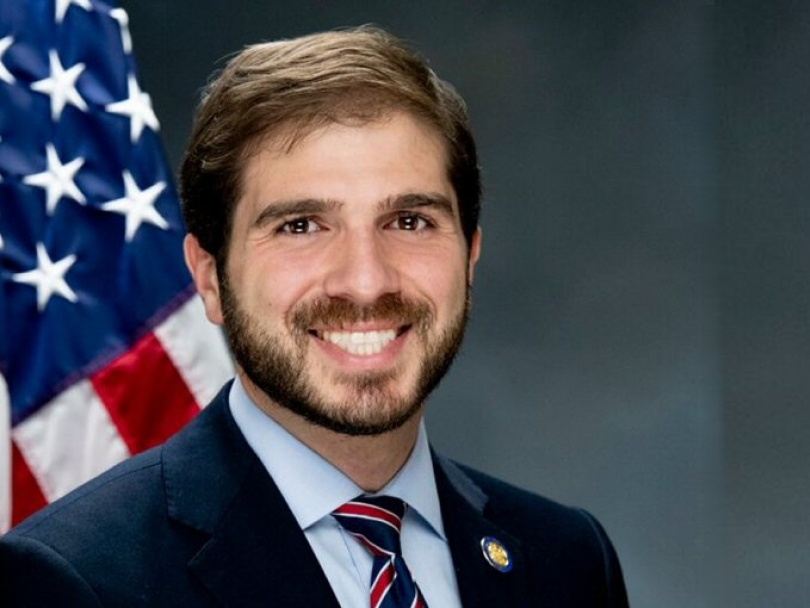
Gustavo Rivera
Gustavo Rivera Senate · District 33
D
Strong +
100% 10
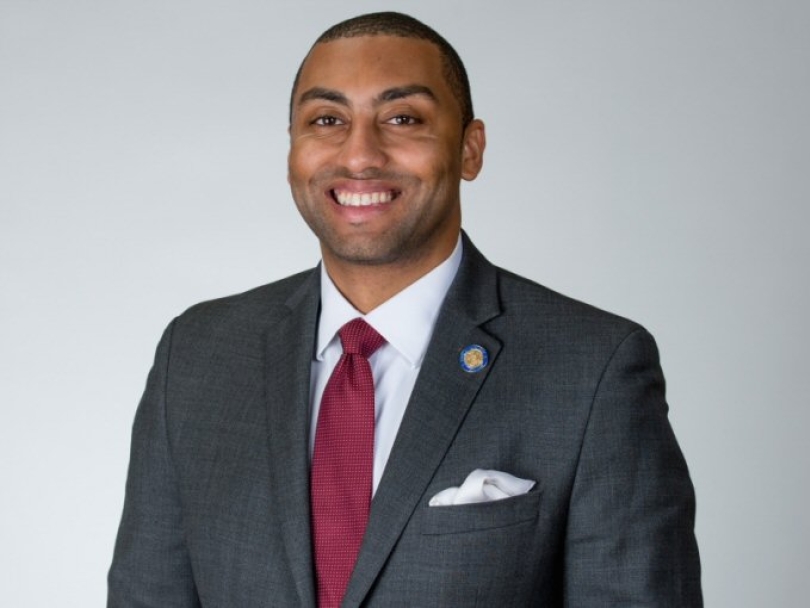
Jamaal Bailey
Jamaal Bailey Senate · District 36
D
Strong +
100% 10
Julia Salazar
Julia Salazar Senate · District 18
D
Strong +
100% 10
Luis Sepúlveda
Luis Sepúlveda Senate · District 32
D
Strong +
100% 10
Andrew Gounardes
Andrew Gounardes Senate · District 26
D
Strong +
100% 9
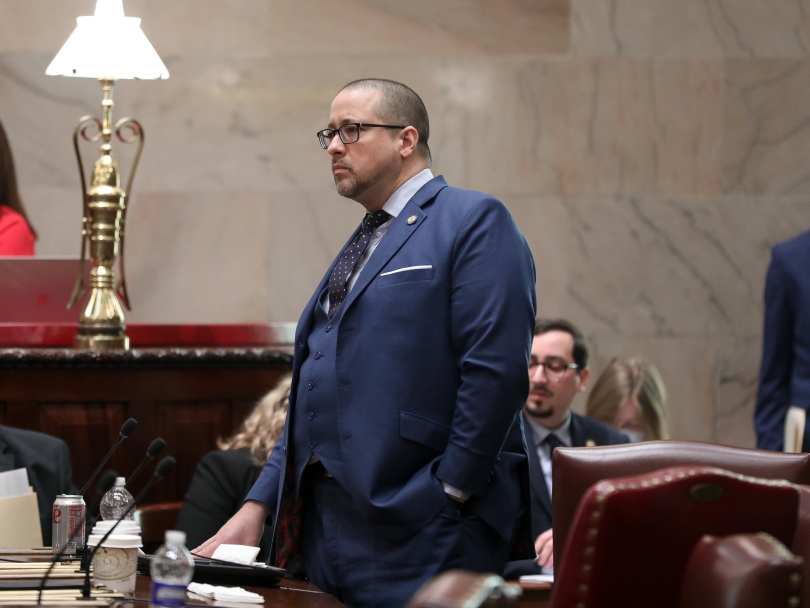
George Borrello
George Borrello Senate · District 57
R
Strong −
0% 9
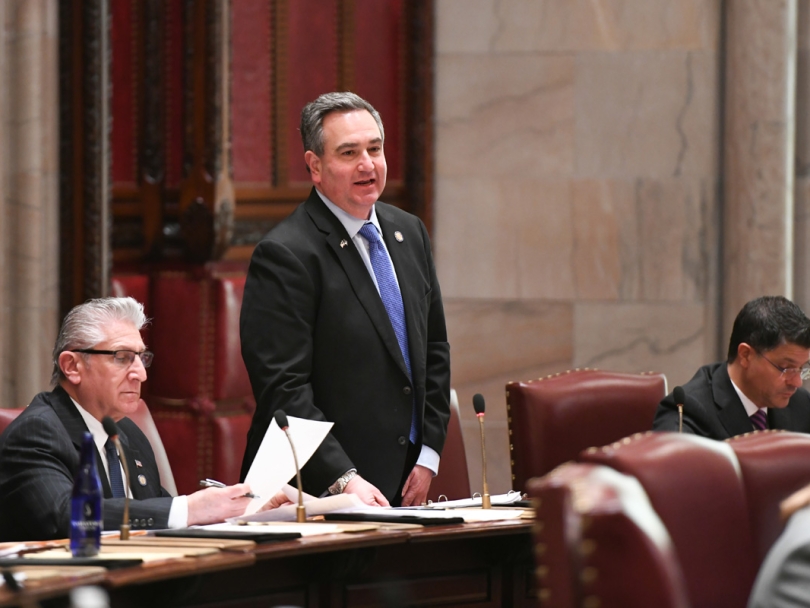
Joe Griffo
Joe Griffo Senate · District 53
R
Strong −
0% 9
Pam Helming
Pam Helming Senate · District 54
R
Strong −
0% 9
Patrick Gallivan
Patrick Gallivan Senate · District 60
R
Strong −
0% 9
Tom O'Mara
Tom O'Mara Senate · District 58
R
Strong −
0% 9
Showing 101–110 of 113 bills

All criminal justice bills

failed · New York · Assembly Jan 7, 2026

A 1596: Requires mandatory jail time for violators of orders of protection

Bill A 1596 mandates specific minimum jail sentences for individuals who violate an existing order of protection by committing a family offense. For a first such violation, courts would be required to impose a jail term of no less than five days. A second violation involving a family offense would incur a mandatory minimum of fifteen days, while a third or subsequent violation would require a minimum of thirty days. This bill directly affects individuals who are found to have violated an order of protection through the commission of a family offense.
in committee · New York · Assembly Jan 7, 2026

A 5895: Provides for orders of protection for harassment

This bill amends New York's criminal procedure law to clarify when courts can issue orders of protection for harassment victims during criminal cases. It specifies that courts may issue temporary protection orders while a case is pending and must state reasons for issuing or denying final protection orders after sentencing. The bill sets new maximum durations for these orders based on offense type: up to 8 years for felony convictions (10 years for certain sexual assault cases), 5 years for class A misdemeanors (6 years for sexual assault), and 2 years for other offenses. These changes directly affect courts handling criminal cases, defendants convicted of harassment-related crimes, and victims seeking legal protection.
in committee · New York · Senate Jan 7, 2026

S 4256: Requires mandatory jail time for repeat violators of orders of protection

This bill requires courts to impose a minimum 30-day jail sentence for individuals who repeatedly violate orders of protection issued to prevent family violence. It specifically applies when a person has been found to violate such an order more than once, and those violations involved committing a "family offense" as defined by New York law (such as assault or menacing). The law amends multiple statutes to mandate this minimum sentence upon repeated violations, replacing prior judicial discretion in these cases. It directly affects individuals convicted of repeated, willful breaches of court-issued protection orders related to family violence. The bill does not change penalties for first-time violations or non-violent breaches.
failed · New York · Assembly Apr 21, 2026

A 7327: Makes the crimes of menacing and stalking bail eligible

This bill amends New York's criminal procedure law to make menacing and stalking charges eligible for release without cash bail. It adds specific definitions of menacing (Penal Law §§ 120.13-120.15) and stalking (Penal Law §§ 120.45-120.60) to the list of offenses where defendants may be released on their own recognizance or under non-monetary conditions. The law requires prosecutors to show reasonable cause that the defendant committed the crime, but courts may still allow non-monetary release if the offense appears minor (e.g., negligible property damage). This directly affects individuals charged with these specific crimes who would otherwise face cash bail requirements.
Sub-Topics Domestic Violence
passed · New York · Senate Jun 12, 2025

R 1245: Establishes a plan setting forth an itemized list of grantees for a certain appropriation for the 2025-2026 state fiscal year for community safety and restorative justice programs

This Senate Resolution (R 1245) requires the state to create and approve an itemized list of organizations receiving funds for community safety and restorative justice programs in the 2025-2026 fiscal year. It directly affects local government agencies, community-based nonprofits, and service providers (like victim support groups, legal aid organizations, and violence prevention programs) by mandating that all allocated funds - totaling over $1 million - must be distributed according to a Senate-approved plan. Key provisions include requiring Senate leadership and the budget director to approve the grant list or allocation method before funds are spent, and allowing limited fund transfers between state agencies like victim services or domestic violence prevention offices. The resolution specifies exact amounts for 28 grantees, including $200,000 to Empire Justice Center and $100,000 to Women's Initiative for Self-Empowerment Inc., for programs addressing issues like domestic violence, gun violence prevention, and alternatives to incarceration.
passed · New York · Senate Jun 12, 2025

R 1237: Establishes an itemized list of grantees for the 2024-25 state fiscal year for services and expenses, grants or reimbursement of expenses incurred by providers of community safety and restorative justice programs

Senate Resolution R1237 requires an itemized list of grantees for state funds allocated to community safety and restorative justice programs during the 2024-25 fiscal year. It directly affects local governments, non-profit organizations, and community-based providers offering services like survivor support for sexual assault/domestic violence, gun violence prevention, legal aid, and alternatives to incarceration. The bill mandates that any allocation plan must be approved by the Senate President and Budget Director, then passed as a Senate resolution with a majority vote. This ensures transparency in distributing funds for programs including re-entry initiatives, community supervision, and violence reduction strategies.
in committee · New York · Senate Jan 7, 2026

S 4768: Includes solicitation or facilitation of certain crimes as a specified offense for the purposes of a hate crime

This bill expands New York's hate crime definition by adding "solicitation or facilitation" of specific violent offenses to the list of acts that qualify as hate crimes. It directly affects prosecutors, courts, and victims of crimes like assault, stalking, sexual abuse, kidnapping, and terrorism when motivated by bias. The key change modifies the penal law to include these actions - such as urging someone to commit a listed crime or helping plan it - as punishable hate crimes. This applies to the full range of offenses previously defined as "specified offenses," including violent and hate-motivated acts. The bill takes effect immediately upon enactment.
in committee · New York · Senate Jan 7, 2026

S 1905: Makes the crimes of menacing and stalking bail eligible

S 1905 amends New York's criminal procedure law to make charges of menacing and stalking eligible for bail consideration. Specifically, it adds these crimes to the list of offenses where defendants may be released on bail (rather than being held without bail), by creating new qualifying offense categories in sections 510.10 and 530.40. The bill directly affects individuals charged with menacing (under Penal Law sections 120.13-120.15) or stalking (under sections 120.45-120.60). This change modifies bail eligibility rules without altering the underlying criminal definitions of these offenses.
Sub-Topics Domestic Violence
in committee · New York · Senate Jan 7, 2026

S 6836: Relates to the crime of aggravated criminal contempt

This bill (S 6836) requires that sentences for aggravated criminal contempt be served consecutively when the offense occurs while a person is awaiting sentencing on another felony charge. It specifically applies to individuals convicted of aggravated criminal contempt - such as violating protection orders, having prior contempt convictions, or committing contempt while in custody - while facing a separate felony case. The key change mandates that if imprisonment is ordered for both offenses, the sentences must run one after the other, not concurrently. This affects defendants in criminal contempt cases who also have pending felony charges, altering how their prison terms are structured.
in committee · New York · Assembly Jan 7, 2026

A 3562: Enacts the Justice for Rachael Act

This bill creates mandatory pretrial hearings to determine if defendants charged with specific serious offenses (like domestic violence, weapons crimes, repeat violent offenses, or certain felonies) pose a danger to the community. If the court finds they might be dangerous, they may be held in custody before trial, but only after a hearing and if no release conditions (such as avoiding victims or substance use) can ensure safety. The law requires hearings within days of arrest, presumes release unless clear evidence shows no conditions can guarantee safety, and limits pretrial detention to 120 days (district court) or 180 days (supreme court). It directly affects individuals facing charges listed in the bill, including domestic violence cases, weapon-related offenses, and repeat crimes.
Showing 101 to 110 of 113 bills