Issue · Budget & Taxes

Budget & Taxes (Income Tax)

Every budget & taxes bill, vote, and legislator stance in New York, automatically classified by Maddy, our AI policy reader.

Total bills
167
2025 Regular Session
Top supporter
Leroy Comrie
100% support rate
Top opponent
George Borrello
0% support rate
Ranked legislators
10
5 support · 5 oppose
Key legislators

Who's moving income tax in New York

Legislators moving income tax in New York
Legislator Party Stance Support rate Votes
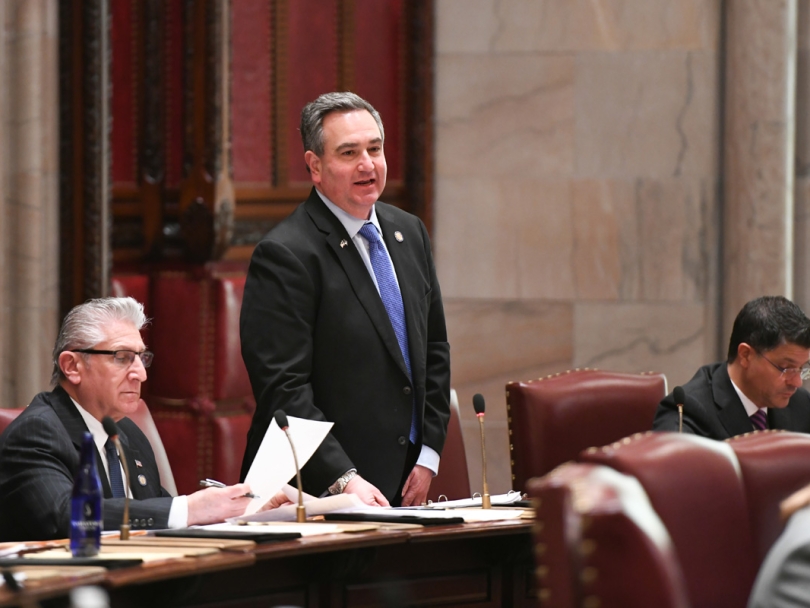
Leroy Comrie
Leroy Comrie Senate · District 14
D
Strong +
100% 7
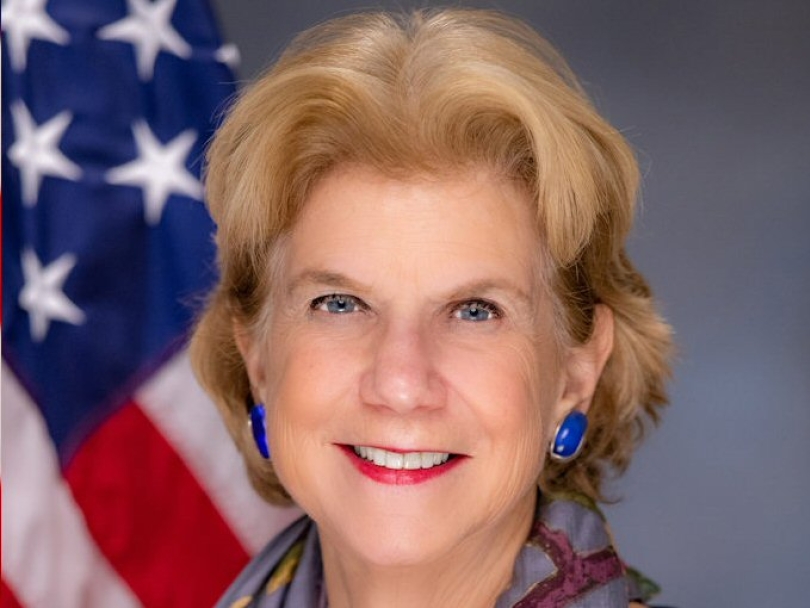
Shelley Mayer
Shelley Mayer Senate · District 37
D
Strong +
100% 6
Jamaal Bailey
Jamaal Bailey Senate · District 36
D
Strong +
100% 5
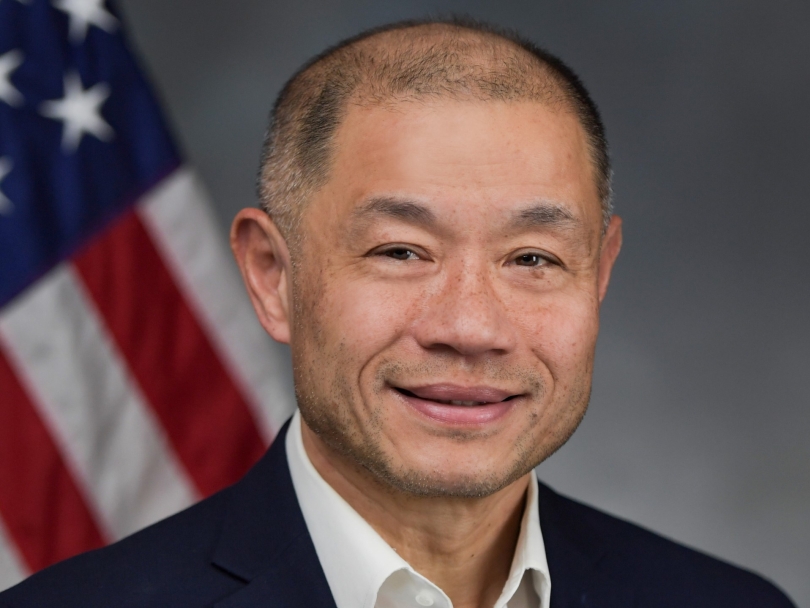
John Liu
John Liu Senate · District 16
D
Strong +
100% 5
Kristen Gonzalez
Kristen Gonzalez Senate · District 59
D
Strong +
100% 5
George Borrello
George Borrello Senate · District 57
R
Strong −
0% 5
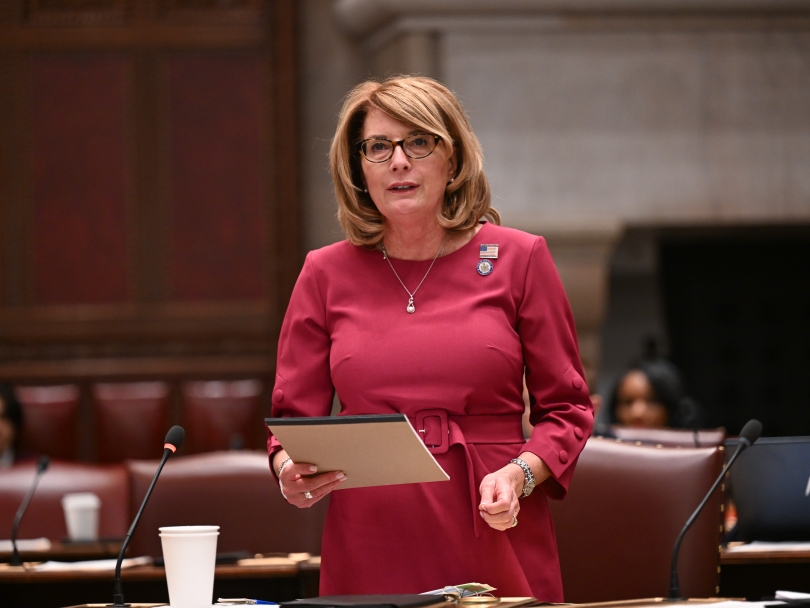
Pam Helming
Pam Helming Senate · District 54
R
Strong −
0% 5
Patrick Gallivan
Patrick Gallivan Senate · District 60
R
Strong −
0% 5
Andrew Lanza
Andrew Lanza Senate · District 24
R
Strong −
0% 4
Rob Ortt
Rob Ortt Senate · District 62
R
Strong −
0% 4
Showing 141–150 of 167 bills

All budget & taxes bills

in committee · New York · Assembly Jan 7, 2026

A 9249: Establishes a tax deduction for tires that are blown out from potholes on state and local roads

This bill creates a $1,000 tax credit for taxpayers who must replace tires damaged by potholes on state or local roads. It directly affects vehicle owners who incur costs from pothole-related tire failures, reducing their income tax liability by up to $1,000 per year. To claim the credit, taxpayers must provide proof of the pothole damage to the tax commissioner, and any unused portion of the credit may be carried forward as an overpayment. The credit applies to taxable years starting January 1, 2025, and is limited to one replacement per vehicle.
Sub-Topics Income Tax Tax Credits
in committee · New York · Assembly Jan 7, 2026

A 6853: Establishes credits against income tax for a teacher's unreimbursed expenditures for qualified supplies

This bill creates a $500 annual tax credit for K-12 teachers in New York who pay out-of-pocket for approved classroom supplies. It covers expenses like books, writing tools, paper, instructional materials, and field trips, but excludes religious materials, sports programs, and most extracurricular activities (except music/drama). The credit reduces income tax liability, with any excess paid as a refund if it exceeds the tax owed. The credit applies to taxable years starting January 1, 2027, and is limited to qualified public or private schools. It directly benefits teachers who bear these costs without employer reimbursement.
in committee · New York · Senate Jan 7, 2026

S 4018: Relates to modifications reducing federal adjusted gross income

This bill allows taxpayers to subtract interest paid on qualified education loans and specific "education debt" from their taxable income. It creates two deduction options: (A) interest on loans already deductible under federal tax rules (26 U.S.C. §221), and (B) interest on state or federal student loans used solely for undergraduate tuition/expenses at college. Taxpayers cannot claim both deductions for the same expenses. The policy directly affects individuals with education-related debt who file state tax returns in this jurisdiction.
in committee · New York · Senate Jan 7, 2026

S 1821: Establishes a personal income tax deduction for the interest paid on student loans by certain taxpayers

Establishes a personal income tax deduction for the interest paid on student loans by individual taxpayers having a federal adjusted income of between $65,000 and $125,000, and married taxpayers filing jointly having a federal adjusted income of between $130,000 and $250,000.
in committee · New York · Senate Jan 7, 2026

S 4797: Relates to establishing the manufacturing development zone program and tax credits related thereto

This bill establishes a program to create "manufacturing development zones" in designated geographic areas, primarily targeting heavy manufacturers (like construction, mining, and metal processing) while excluding apparel, electronics, food, and textiles. Local governments (counties or municipalities) can apply to designate zones, with limits of six statewide and two per county annually. Qualified businesses moving into these zones after designation receive property and income tax credits for ten years, provided they create new jobs, make capital investments, and meet local standards. The program aims to attract new manufacturing investment to specific areas through these tax incentives.
Sub-Topics Business Taxes Income Tax Tax Incentives Tags Economic Development
in committee · New York · Senate Jan 7, 2026

S 1853: Provides a tax deduction for fertility preservation services

This bill would allow individuals to claim a federal tax deduction of up to $1,000 for costs related to fertility preservation services, specifically including the collection, freezing, preservation, and storage of eggs. It directly affects people who pay for these services, such as those undergoing fertility treatments before medical procedures or for personal preservation. The deduction applies to expenses that would otherwise count toward federal adjusted gross income, with the provision taking effect for taxable years beginning January 1, 2025. The bill defines "fertility preservation services" narrowly to cover only egg-related preservation methods.
Sub-Topics Income Tax
in committee · New York · Senate Jan 7, 2026

S 2402: Provides for a tax credit for certain persons relocating to the state to provide or receive reproductive care or gender-affirming care

This bill creates a $500 state tax credit for individuals who permanently relocate to the state to provide or receive reproductive care or gender-affirming care. It applies to healthcare providers moving from states with more restrictive abortion laws or gender-affirming care access, as well as patients (or their parents/guardians) relocating for the same reasons. The credit is available for tax years beginning January 1, 2025, and can be claimed on individual income tax returns. The credit cannot reduce tax liability below zero, but any excess is refundable. The bill defines "healthcare provider" to include licensed physicians, nurses, physician assistants, and pharmacists.
in committee · New York · Senate Jan 7, 2026

S 1556: Relates to indexing personal income taxes to the cost of living adjustment; repealer

This bill (S 1556) adjusts New York State personal income tax thresholds to automatically rise with inflation starting in 2026. It requires the state tax commissioner to increase key tax amounts - like income tax brackets, standard deductions, and certain calculation thresholds - each year using the federal Chained Consumer Price Index (C-CPI-U). This change directly affects all New York residents who file personal income tax returns, preventing their tax burden from increasing solely due to inflation. The adjustments will be rounded to the nearest $50 increment and take effect immediately, though the first adjustment applies to the 2026 tax year.
Sub-Topics Income Tax
in committee · New York · Assembly Jan 7, 2026

A 3948: Provides for a tax credit for certain persons relocating to the state to provide or receive reproductive care or gender-affirming care

This bill provides a $500 tax credit for individuals who permanently relocate to the state to access reproductive care or gender-affirming care, or for healthcare providers who relocate to offer such care. It applies to people moving from states with stricter abortion laws or more restrictive gender-affirming care access laws. The credit is available on individual income tax returns for the tax year of relocation, with excess credits refundable if they exceed tax liability. The policy takes effect for taxable years beginning January 1, 2025.
in committee · New York · Senate Jan 7, 2026

S 7248: Establishes a personal income tax credit for the purchase of a gun safe

S 7248 creates a personal income tax credit allowing taxpayers to deduct up to $500 from their state income tax for purchasing a gun safe. The credit is limited to once every ten years and cannot exceed $500 per taxable year. Taxpayers who claim the credit may apply any unused portion as an overpayment refund, but no interest is paid on the refund. This policy directly affects individuals buying gun safes who file state income taxes.
Showing 141 to 150 of 167 bills
Previous 1 14 15 16 17 Next