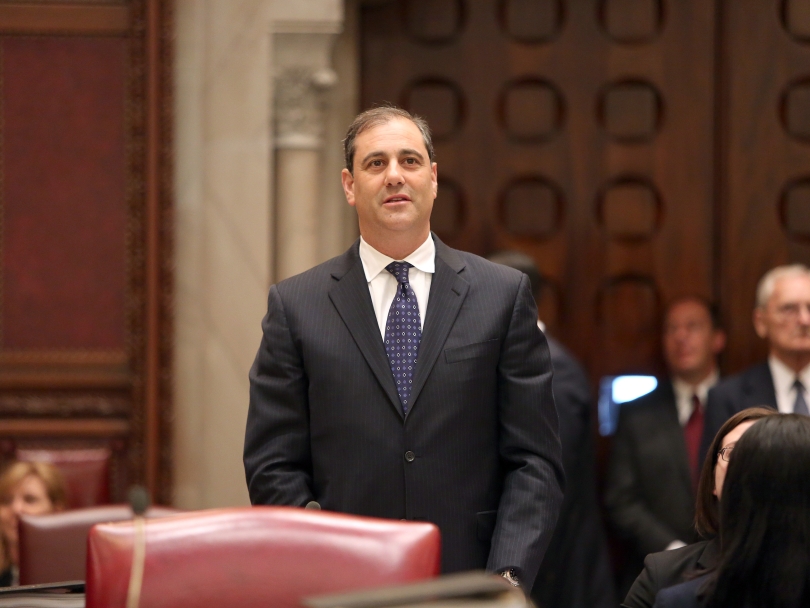
Authorizes the town of Fishkill to adopt a local law to impose a hotel/motel occupancy tax for hotels not located in the village of Fishkill; authorizes the village of Fishkill to adopt local laws to impose a hotel/motel occupancy tax in such village; provides for the repeal of such provisions upon expiration thereof.
Authorizes the town of Chester to establish community preservation funds; establishes a real estate transfer tax with revenues therefrom to be deposited in said community preservation fund.
Relates to hotel and motel taxes in Saratoga county and the city of Saratoga Springs; increases the allowable amount of tax imposed by the county; removes exemptions for properties having less than 4 units; relates to the disposition of tax revenues collected; eliminates an advisory committee.
This bill authorizes the cities of Utica and Rome to impose an occupancy tax of up to 3% on hotel, motel, and bed-and-breakfast stays. It directly affects hotels, motels, and similar lodging facilities in these cities, while exempting permanent residents (staying 90+ days), government entities, and qualifying non-profits. The tax applies to the daily rental rate, with revenue collected by city officials and deposited into the general fund for municipal services. The law specifies collection procedures, refund processes, and limits local tax authority to two-year periods.
Provides for a partial exemption from taxation of certain residential real property transferred by a governmental entity, nonprofit housing organization, land bank or community land trust to low-income households; sets forth conditions for the discontinuance of such exemption.
This bill authorizes the town of Dickinson to impose a 3% tax on hotel and motel room rentals within its boundaries. It allows property owners to collect the tax from guests (included in the room rate) and remit it to the town, with exemptions for government entities, non-profits, and guests staying 30+ consecutive days. Revenue from the tax must be deposited into Dickinson’s general fund for any lawful town use. The tax applies to standard hotel/motel stays but excludes certain organizations and long-term residents.
This bill allows Yeshivas Nachlas Sofrim Inc. to apply for retroactive property tax exemption on its Ramapo, New York property (66 Highview Road) for 2022-2023 tax years. If approved by the town assessor and Ramapo Town Board, the organization can receive refunds for taxes paid on those years, including cancellation of related penalties or interest. The bill authorizes the town to treat the application as if filed on time, correcting past tax rolls. It directly affects only this specific religious institution and its property tax obligations for the 2022-2023 assessment period.
This bill increases Clinton County's tax on hotel and motel stays from 3% to 5% of the daily room rate. It applies to short-term stays (under 30 consecutive days) at hotels, motels, bed-and-breakfasts, and tourist facilities, but exempts guests staying 30+ consecutive days (defined as "permanent residents"). The change directly affects hotels and motels operating in Clinton County by raising revenue from transient guests. The tax rate adjustment is the primary policy change, with no other provisions altering the tax structure or exemptions.
This bill authorizes the city of Mount Vernon to impose a 5.875% tax on temporary stays in hotels, motels, vacation rentals (including Airbnb), and bed-and-breakfasts. It applies to guests staying less than 30 consecutive days, excluding permanent residents. The tax is collected by Mount Vernon’s fiscal officer and funds flow into the city’s general fund for local use. The bill explicitly excludes government entities, nonprofits, and certain charitable organizations from paying the tax.
This bill expands the residential redevelopment inhibited property exemption to all cities, towns, and villages in the state, removing a current restriction that limited it to one specific city. It allows any municipality to adopt local laws designating properties as "redevelopment inhibited" if they are neglected, abandoned, or have conditions (like long vacancy or zoning violations) preventing private redevelopment. Property owners in designated areas can then receive an exemption from taxes on the increased value of their property after redevelopment, provided they own a one- to four-unit residence, maintain owner-occupancy, and file annual residency affidavits. The exemption covers only the incremental tax increase from redevelopment, not the base property value, and requires compliance with building and zoning codes.