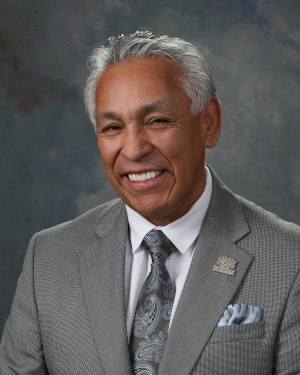
HB 114 appropriates $1 million from the general fund to expand New Mexico's Double Up Food Bucks program for fiscal year 2027. The bill directly helps SNAP participants by doubling their purchasing power for meat, nuts, eggs, and fresh fruits/vegetables at New Mexico farmers' markets. It requires the Board of Regents of New Mexico State University to manage the funds, with any unspent balance reverting to the general fund by year-end. This concrete funding increase aims to increase access to fresh, healthy food for low-income residents at local farmers' markets.
SB 198 appropriates $10 million from the general fund to New Mexico's Department of Game and Fish for designing, planning, and constructing an aquatic endangered species hatchery and rearing station in Las Vegas during fiscal year 2027. The bill directly affects the Department of Game and Fish, which will use the funds to build this facility for protecting endangered aquatic species. Any unspent money by the end of fiscal year 2027 must revert to the general fund. This is a funding bill with no policy changes beyond authorizing the construction project.
HB 154 updates the definition of "advanced energy product" for New Mexico's existing tax credit programs. It specifies that qualifying products include solar components (like panels and cells), wind turbine parts, battery materials, fusion machine components, and critical minerals (such as lithium and cobalt). This definition determines eligibility for the Advanced Energy Equipment Income Tax Credit and Corporate Income Tax Credit, which provide tax relief for manufacturers investing in qualifying facilities within New Mexico. The bill directly affects businesses producing these specific energy technologies who seek to claim the tax credits.
SB 152 establishes a new Low-Income Telecommunications Assistance Program in New Mexico, replacing the previous "Low Income Telephone Service Assistance Act." The program directly affects low-income residents who qualify for telecom service assistance, waiving specific fees including the 911 emergency surcharge and telecommunications relay service surcharge. Key provisions include restructuring the existing broadband program, setting budget caps for the state rural universal service fund, and requiring regular reporting on program administration. The bill repeals the outdated Low Income Telephone Service Assistance Act to streamline eligibility and funding under the new framework.
SB 194 allocates $5 million from the state general fund to the Higher Education Department for a new softball and baseball field at Luna Community College, to be spent in fiscal year 2027. Any unspent funds at year-end will revert to the general fund. The bill directly affects Luna Community College by funding a specific athletic facility and the Higher Education Department as the administering agency. This is a straightforward funding measure with no policy changes beyond the appropriation.
HB 143 expands tax credits for healthcare providers working in New Mexico's rural underserved areas. It increases the rural health care practitioner tax credit to $15,000 annually for physicians/dentists/optometrists (requiring 1,584+ hours of service) and $9,000 for other providers like nurses, pharmacists, and therapists. The bill also creates a new Medical Residency Loan Repayment Act to award loan repayment assistance to qualifying medical residents and fellows. These provisions directly target healthcare professionals in rural communities to improve provider recruitment and retention.
HB 92 would expand New Mexico's tax exemption for Social Security income, directly benefiting seniors whose primary income comes from Social Security. The bill phases in higher tax exemptions over time: starting at 20% for 2026-2027, increasing to 40% (2028-2029), 60% (2030-2031), 80% (2032-2033), and reaching 100% by 2034. It sets income thresholds: $75,000 for married filing separately, $150,000 for joint filers, and $100,000 for single filers. The bill is currently pending before the House Commerce & Economic Development and Taxation & Revenue Committees.
HB 41 provides a temporary, additional 2% payment to eligible retired public employees under New Mexico's Public Employees Retirement Act (PERA) for fiscal years 2027 and 2028. It directly affects retirees who meet specific criteria, such as having retired for at least two years (or one year if over 65), disability retirees with one year of retirement, or survivor beneficiaries with two years of payments. The bill appropriates $70 million from the general fund to cover these payments, which are calculated as 2% of each recipient’s current pension amount (not compounded), with special provisions for retirees receiving under $25,000 annually or aged 75+.
SB 19 adjusts New Mexico's public school funding calculation for fiscal year 2026 by resetting the "unit value" used to determine state education funding. It requires the Secretary of Public Education to adjust this value by February 27, 2026, based on statewide unit counts after consulting with finance departments and legislative committees. This change directly affects all public schools in New Mexico by altering the formula for calculating their state funding allocation for that fiscal year. The bill is a temporary adjustment for FY2026, not a permanent change to the school finance system.
SB 196 allocates $2.5 million from the state general fund for fiscal year 2027 to fund spay/neuter programs, veterinary care, and facility improvements at the Las Vegas Animal Care Center. The bill directly affects the center's operations by providing funding for essential animal health services and infrastructure upgrades. It requires the Local Government Division of the Department of Finance and Administration to contract these services, with any unspent funds reverting to the general fund by year-end. This is a funding measure, not a policy change, focused on supporting animal welfare services at a specific municipal facility.