Issue · Criminal Justice

Criminal Justice

Every criminal justice bill, vote, and legislator stance in New Jersey, automatically classified by Maddy, our AI policy reader.

Total bills
836
2026-2027 Regular Session
Top supporter
Al Abdelaziz
100% support rate
Top opponent
Al Barlas
0% support rate
Ranked legislators
10
5 support · 5 oppose
Key legislators

Who's moving criminal justice in New Jersey

Legislators moving criminal justice in New Jersey
Legislator Party Stance Support rate Decisive votes
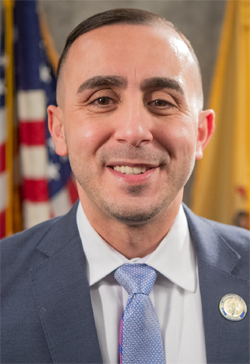
Al Abdelaziz
Al Abdelaziz House · District 35
D
Strong +
100% 8
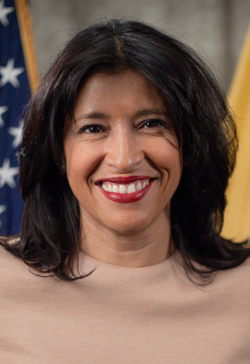
Alixon Collazos-Gill
Alixon Collazos-Gill House · District 27
D
Strong +
100% 8
Angela McKnight
Angela McKnight Senate · District 31
D
Strong +
100% 8
Annette Quijano
Annette Quijano House · District 20
D
Strong +
100% 8
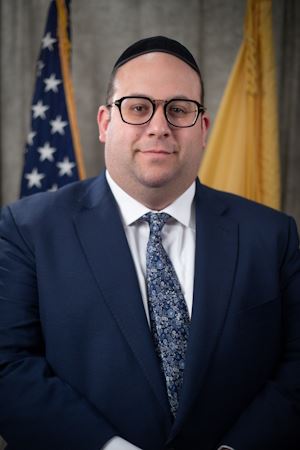
Avi Schnall
Avi Schnall House · District 30
D
Strong +
100% 8
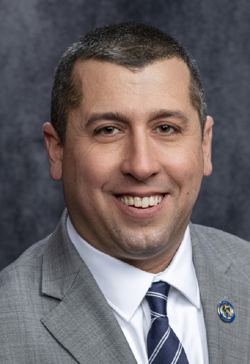
Al Barlas
Al Barlas House · District 40
R
Strong −
0% 8
Bob Auth
Bob Auth House · District 39
R
Strong −
0% 8
Brian Bergen
Brian Bergen House · District 26
R
Strong −
0% 8
Carmen Amato
Carmen Amato Senate · District 9
R
Strong −
0% 8
Dawn Fantasia
Dawn Fantasia House · District 24
R
Strong −
0% 8
Showing 301–310 of 836 bills

All criminal justice bills

in committee · New Jersey · General Assembly Jan 13, 2026

A 1888: Permits certain special law enforcement officers to carry firearms at all times when in State.

This bill allows certain Class Two special law enforcement officers in New Jersey to carry firearms at all times while in the state, under specific conditions. It directly affects officers employed by municipalities with over 300,000 residents who work at least 35 hours weekly, meet residency requirements, and complete 280 hours of required training (covering arrest, search, criminal law, and deadly force) plus annual firearm qualification. The key provision permits off-duty carry only after successfully completing the training and obtaining an annual permit from the chief of police, which can be revoked. This replaces the prior rule requiring officers to return firearms at the end of their workday.
in committee · New Jersey · General Assembly Jan 13, 2026

A 698: Makes it a crime of the second degree to interfere with 9-1-1 public safety answering points.

This bill amends New Jersey law to make intentionally disrupting 9-1-1 call centers a second-degree crime. It specifically targets individuals who deny, disrupt, or impair access to public safety answering points (PSAPs) - the facilities that handle 9-1-1 emergency calls - without authorization. The law clarifies that interfering with these critical emergency systems now carries the same penalty as other computer crimes against public infrastructure. This applies to anyone who intentionally disrupts 9-1-1 services, including hackers or others causing interference.
Tags Public Safety
in committee · New Jersey · Senate Mar 2, 2026

S 3706: Establishes presumption of knowledge that display of noose or Nazi or Confederate symbol would cause bias intimidation; enhances penalties.

New Jersey's S 3706 creates a legal presumption that displaying a noose, Nazi symbol, or Confederate symbol during a crime means the perpetrator knew it would intimidate someone based on their race, religion, gender, disability, sexual orientation, gender identity, national origin, or ethnicity. It applies to defendants who use these specific symbols in connection with other offenses like assault or vandalism. The bill establishes that such displays automatically count as an aggravating factor under bias intimidation law, making it easier for courts to impose harsher penalties. This targets symbols with documented histories of causing racial fear and violence, including nooses (evoking lynchings) and Confederate symbols (evoking slavery and segregation).
Sub-Topics Violent Crime
in committee · New Jersey · General Assembly Jan 13, 2026

ACR 106: Strongly condemns decision of President Trump to permit immigration enforcement actions in sensitive locations such as schools and hospitals.

New Jersey's ACR 106 is a formal statement condemning President Trump's 2025 decision to end federal protections preventing immigration enforcement in sensitive locations like schools, hospitals, places of worship, and shelters. The resolution states this policy reversal - reversing Biden-era guidance that had barred ICE actions in these areas - undermines community trust and deters immigrants from accessing essential services. It does not change laws but sends a formal disapproval to the White House, Homeland Security, and New Jersey's congressional delegation. The resolution reaffirms New Jersey's commitment to equal access to healthcare, education, and community resources for all residents, regardless of immigration status.
in committee · New Jersey · General Assembly Jan 13, 2026

A 225: Eliminates statute of limitations for prosecution of human trafficking crimes.

This bill removes the time limit for prosecuting human trafficking crimes in New Jersey. It specifically eliminates the current 5-year statute of limitations for offenses listed under N.J.S.2C:11-3 (human trafficking) and similar statutes. As a result, prosecutors can bring charges for these crimes at any time, regardless of when the trafficking occurred. This directly affects human trafficking victims by enabling legal action even years after the crime, and it shifts the burden to prosecutors to pursue cases without time constraints. The change applies immediately to all unbarred human trafficking cases.
Sub-Topics Human Trafficking
in committee · New Jersey · General Assembly Jan 13, 2026

A 619: Establishes crime of doxxing.

This New Jersey bill (A 619) creates a new criminal offense for "doxxing," defined as knowingly sharing someone's personal details (like address or phone number) online without consent to cause fear of harm, violence, or stalking. It specifically targets disclosures that create a serious risk of bodily injury, stalking, or severe emotional distress (mental anguish) to the person or their close relations - such as family, household members, or close associates. Exceptions apply for good-faith disclosures to the public about suspected unlawful conduct, to law enforcement, or during official investigations. Violations are a fourth-degree crime (up to 18 months in jail or $10,000 fine), escalating to a third-degree crime if serious harm occurs.
in committee · New Jersey · General Assembly Jan 13, 2026

A 436: Requires vehicle identification number be stamped on catalytic converters of motor vehicles.

This bill requires vehicle manufacturers selling in New Jersey to stamp the vehicle identification number (VIN) directly onto each catalytic converter installed in new vehicles. It directly affects manufacturers by mandating this marking as a standard part of vehicle production for all vehicles sold in the state. The key provision is the requirement to permanently mark catalytic converters with the VIN, which helps law enforcement identify stolen parts. The bill takes effect three months after enactment.
Sub-Topics Law Enforcement
in committee · New Jersey · General Assembly Jan 13, 2026

A 2951: Revises child pornography law.

This bill revises New Jersey's child pornography law by clarifying and expanding criminal penalties for offenses involving minors. It defines "distribute" broadly to include any internet sharing (without requiring compensation) and makes it a first-degree crime for caregivers who cause children to engage in prohibited sexual acts knowing recordings may occur. The law establishes strict liability for the age of depicted children - defendants cannot claim they believed the child was 16+ - and increases penalties for possessing or distributing material showing minors in prohibited acts (e.g., sexual intercourse, nudity for stimulation). It directly affects anyone creating, distributing, or possessing such material involving children under 16, with specific provisions for digital reproduction and online sharing.
in committee · New Jersey · General Assembly May 4, 2026

A 2256: Concerns "Sexual Violence Restorative Justice Pilot Program."

This bill establishes a three-year "Sexual Violence Restorative Justice Pilot Program" administered by New Jersey's Attorney General to provide trauma-informed restorative justice services for survivors of sexual violence, including those who chose not to report the crime to police. It requires the Attorney General to partner with organizations specializing in trauma care (not affiliated with law enforcement) to design and run the program, emphasizing survivor autonomy - participants may join or leave at any time - and mandates strict confidentiality for all communications related to the program, protecting them from use in court. The program will serve survivors statewide (replacing the prior requirement for specific county locations) and must be evaluated within 90 days of completion, with a report recommending whether to continue, expand, or make it permanent. The bill amends existing law by removing the requirement to compensate partner organizations and updating service delivery parameters.
in committee · New Jersey · General Assembly Jan 13, 2026

A 2736: Updates certain crimes to include nonconsensual pornographic deepfake threats and disclosure.

New Jersey bill A2736 updates criminal laws to address nonconsensual deepfake pornography. It makes it a crime (third or fourth degree) to create or share deepfake images of someone in private moments without consent - such as deepfake porn videos or images of private body parts - using advanced AI technology to mimic real people. The law directly affects victims of nonconsensual deepfakes and individuals who create or distribute such content. Key provisions define "deepfake" clearly, prohibit sharing these images (including online), and set fines up to $30,000 for violations. The bill does not cover law enforcement or retail fitting room exceptions.
Showing 301 to 310 of 836 bills
Previous 1 … 30 31 32 … 84 Next