Issue · Criminal Justice

Criminal Justice

Every criminal justice bill, vote, and legislator stance in New Jersey, automatically classified by Maddy, our AI policy reader.

Total bills
320
2026-2027 Regular Session
Top supporter
Paul Sarlo
100% support rate
Top opponent
Mike Testa
0% support rate
Ranked legislators
10
5 support · 5 oppose
Key legislators

Who's moving criminal justice in New Jersey

Legislators moving criminal justice in New Jersey
Legislator Party Stance Support rate Decisive votes
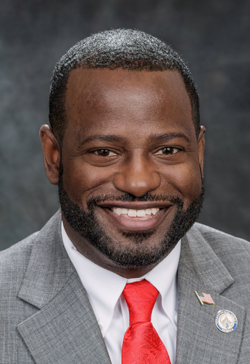
Paul Sarlo
Paul Sarlo Senate · District 36
D
Strong +
100% 14
Renee Burgess
Renee Burgess Senate · District 28
D
Strong +
100% 14
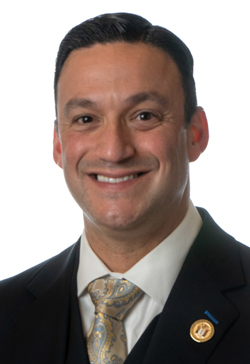
Joe Danielsen
Joe Danielsen House · District 17
D
Strong +
100% 13
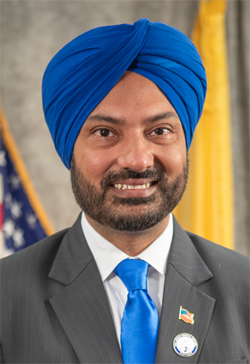
Balvir Singh
Balvir Singh House · District 7
D
Strong +
100% 12
Bob Smith
Bob Smith Senate · District 17
D
Strong +
100% 12
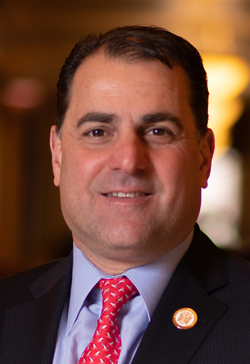
Mike Testa
Mike Testa Senate · District 1
R
Strong −
0% 14
Antwan McClellan
Antwan McClellan House · District 1
R
Strong −
0% 11
Paul Kanitra
Paul Kanitra House · District 10
R
Strong −
0% 11
Carmen Amato
Carmen Amato Senate · District 9
R
Strong −
0% 10
Dawn Fantasia
Dawn Fantasia House · District 24
R
Strong −
0% 10
Showing 251–260 of 320 bills

All criminal justice bills

in committee · New Jersey · Senate Jan 13, 2026

S 57: Increases penalties for unlawfully manufacturing, distributing, or dispensing fentanyl.

This bill increases penalties for fentanyl offenses under New Jersey law. It classifies possessing or distributing five ounces or more of fentanyl (including impurities) as a first-degree crime, mandating a minimum prison term of one-third to one-half of the sentence without parole eligibility, plus fines up to $500,000. The law specifically targets fentanyl trafficking, raising the threshold for the most severe penalties compared to other drugs like heroin or methamphetamine. It directly affects individuals involved in manufacturing, distributing, or dispensing fentanyl in quantities meeting the new thresholds. The bill amends existing New Jersey statute N.J.S.2C:35-5 to implement these stricter penalties.
in committee · New Jersey · Senate Jan 13, 2026

S 1514: Creates penalty for child endangerment via use of social media.

This bill (S 1514) creates criminal penalties for individuals who knowingly endanger children via social media or other electronic communication. It amends New Jersey law to specifically prohibit using electronic means (including social media platforms) to engage in conduct likely to harm a child’s physical, mental, or moral welfare, or to direct children into dangerous activities. Those with legal care responsibilities for the child face second-degree charges, while others face third-degree charges. The law explicitly excludes internet service providers protected under federal law (Section 230) from these penalties. It directly affects anyone using digital platforms to endanger children under 18, with penalties applying to distribution, possession, or storage of child sexual abuse material shared online.
Sub-Topics Drug Policy
in committee · New Jersey · Senate Jan 13, 2026

S 489: Creates crime of victimization of a senior citizen or a person with a disability.

This New Jersey bill (S 489) creates a new criminal offense called "victimization of a senior citizen or person with a disability" when someone commits certain crimes (like assault or theft) against these individuals. It directly affects seniors (62+ years) and people with medically determined disabilities that substantially limit their ability to resist. The key mechanism requires that this new offense be charged separately from the underlying crime, with sentencing one degree higher (e.g., a third-degree crime becomes a second-degree crime for the victimization charge), and mandates separate sentences for both offenses. The bill defines "senior citizen" as 62+ and "person with a disability" as someone with a pre-existing impairment making them substantially unable to resist.
Sub-Topics Sentencing Violent Crime Tags Seniors
died · New Jersey · Senate Jan 13, 2026

S 1268: Establishes criminal penalties for sale and possession of machine gun conversion device.

S 1268 would have added criminal penalties for selling or possessing machine gun conversion devices - parts that turn standard firearms into automatic weapons. It directly affects individuals who manufacture, sell, or keep these parts, making such actions a criminal offense under New Jersey's firearm laws. The bill amended existing definitions to explicitly include "any part designed and intended solely for converting a firearm into a machine gun" within prohibited items. However, the bill was withdrawn on January 13, 2026, as it was superseded by a prior law (P.L.2025, c.363).
Sub-Topics Drug Policy Firearms
in committee · New Jersey · Senate Jan 13, 2026

S 2508: Provides act of domestic violence or child endangerment committed during state of emergency may be classified one degree higher than underlying offense.

This bill (S 2508) allows prosecutors to classify domestic violence or child endangerment offenses one degree higher than the standard charge if committed during a declared national, state, or county emergency. It directly affects individuals accused of these crimes during emergency periods, such as natural disasters or public health crises. The key mechanism is the prosecutor's discretion to elevate the charge level under the existing legal framework (amending P.L.1991, c.261). The bill does not change arrest procedures but modifies how such offenses are formally categorized during emergencies.
Sub-Topics Domestic Violence
in committee · New Jersey · Senate Jan 13, 2026

S 2395: Elevates impersonating public servant to crime of fourth degree in certain instances; establishes offense of exploiting authority implied by a public emergency.

New Jersey bill S 2395 elevates impersonating a public servant - specifically contact tracers during public health or state emergencies - to a fourth-degree crime, punishable by up to 18 months in prison or a $10,000 fine. It also creates a new offense for defrauding people by falsely claiming an emergency (even if none is declared) to obtain personal identifying information. The bill targets individuals exploiting crisis situations to coerce others into sharing sensitive data like Social Security numbers, biometrics, or financial details. It directly affects those impersonating officials or misusing emergency claims to steal personal information, strengthening penalties from prior disorderly persons offenses. The law defines "personal identifying information" broadly to include names, addresses, account numbers, and unique biometric data.
in committee · New Jersey · Senate Jan 13, 2026

S 2043: Concerns pretrial and post-trial considerations for certain crimes involving operation of vehicles, including rebuttable presumption for pretrial detention, pretial recommendation of no release from detention, suspension or revocation of license, and vehicle forfeiture.

This bill (S 2043) revises New Jersey's reckless vehicular homicide law to increase penalties for drivers causing death while operating a vehicle recklessly. It directly affects drivers convicted of such crimes who were driving under the influence (DUI), with a suspended license, or near schools (within 1,000 feet of school property or school crossings). Key provisions include: a mandatory minimum prison term (one-third to one-half of sentence or three years, whichever is greater), automatic pretrial detention, a license suspension of 5 years to life, and vehicle forfeiture (unless the defendant proves hardship). The law also specifies that ignorance of school proximity or lack of students present does not excuse violations near schools.
in committee · New Jersey · Senate Jan 13, 2026

S 1960: Creates offense of making false child abuse report; permits assessment of penalty.

New Jersey's S 1960 makes it a crime for anyone to knowingly or willfully file a false report of child abuse or neglect under existing law. A person convicted faces a third-degree crime penalty (up to 5 years in prison or a $15,000 fine), plus an additional $10,000 civil penalty payable to the state Treasury for the Department of Children and Families. The bill directly affects individuals who make false reports, not victims or child welfare workers. Key provisions establish criminal and civil penalties for false reporting, aiming to deter misuse of child abuse reporting systems. The law takes effect immediately upon passage.
Sub-Topics Corrections
in committee · New Jersey · Senate Jan 13, 2026

S 2397: Broadens riot and disorderly conduct; enhances penalties for public monument destruction; addresses riot victim assaults; creates crime of promotion of violent, disorderly assembly.

This New Jersey bill (S 2397) expands definitions of riot and disorderly conduct while increasing penalties. It makes damaging public monuments (like statues or war memorials) during riots a fourth-degree crime, and enhances penalties for assaults on first responders, school staff, or emergency personnel during such events. The bill also creates a new offense for promoting violent assemblies and increases penalties for obstructing public spaces during riots. It directly affects individuals participating in or inciting public disorder, particularly those damaging property or attacking specific protected groups during unrest. The changes apply to all individuals violating these provisions, with penalties ranging from fourth-degree crimes to aggravated assault charges.
Sub-Topics Violent Crime
in committee · New Jersey · Senate Jan 13, 2026

S 2352: Imposes criminal liability on persons who allow minors to access firearms used to commit crimes.

This bill (S 2352) amends New Jersey law to hold adults criminally liable if a minor under age 18 accesses a firearm they improperly stored and uses it to commit a crime. It upgrades the offense from a disorderly persons charge to a third-degree crime (3-5 years prison, up to $15,000 fine) by removing the "loaded" requirement, extending coverage to firearms in vehicles, and raising the minor’s age threshold from 16 to 18. If a minor uses the firearm unlawfully after gaining access due to improper storage, the adult facilitator faces a second-degree crime charge (5-10 years prison, up to $150,000 fine) under the "community gun" statute. The law directly affects parents, guardians, or anyone responsible for firearm storage in homes or vehicles where minors gain access.
Sub-Topics Corrections Firearms
Showing 251 to 260 of 320 bills
Previous 1 … 25 26 27 … 32 Next