Issue · Criminal Justice

Criminal Justice (Corrections)

Every criminal justice bill, vote, and legislator stance in New Jersey, automatically classified by Maddy, our AI policy reader.

Total bills
144
2026-2027 Regular Session
Top supporter
Tennille McCoy
100% support rate
Top opponent
Antwan McClellan
0% support rate
Ranked legislators
10
5 support · 5 oppose
Key legislators

Who's moving corrections in New Jersey

Legislators moving corrections in New Jersey
Legislator Party Stance Support rate Decisive votes
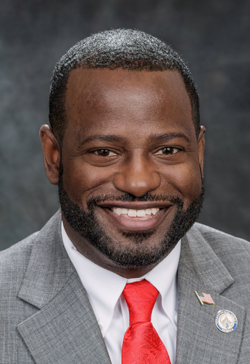
Tennille McCoy
Tennille McCoy House · District 14
D
Strong +
100% 7
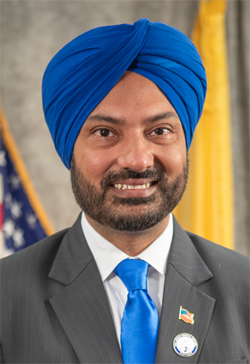
Balvir Singh
Balvir Singh House · District 7
D
Strong +
100% 6
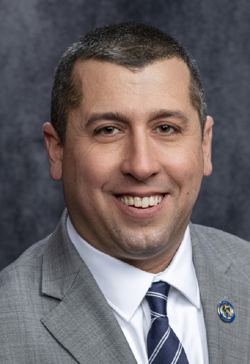
Joe Danielsen
Joe Danielsen House · District 17
D
Strong +
100% 6
Mitchelle Drulis
Mitchelle Drulis House · District 16
D
Strong +
100% 6
Annette Quijano
Annette Quijano House · District 20
D
Strong +
100% 5
Antwan McClellan
Antwan McClellan House · District 1
R
Strong −
0% 6
Bob Auth
Bob Auth House · District 39
R
Strong −
0% 5
Brian Bergen
Brian Bergen House · District 26
R
Strong −
0% 5
Brian Rumpf
Brian Rumpf House · District 9
R
Strong −
0% 5
Dawn Fantasia
Dawn Fantasia House · District 24
R
Strong −
0% 5
Showing 141–144 of 144 bills

All criminal justice bills

in committee · New Jersey · Senate Jan 13, 2026

S 2308: Broadens statute that criminalizes cyber-harassment of minor.

S 2308 (Broadens statute that criminalizes cyber-harassment of minor) amends New Jersey law to make cyber-harassment of a minor a third-degree crime when committed by someone aged 18 or older, removing the previous requirement that the offender impersonate a minor. It directly affects adults who cyber-harass minors, parents/guardians of minors convicted of such acts, and courts ordering prevention programs. Key provisions include imposing fines ($100-$500) on parents who fail to comply with court-ordered education programs for minors, and allowing civil liability for parents showing "willful disregard" in supervising minors. The bill updates sentencing to treat this as a third-degree offense (up to 5 years in prison or $15,000 fine), replacing the prior stricter requirement of impersonation.
in committee · New Jersey · Senate Jan 13, 2026

S 365: Establishes criminal liability for property destruction occurring during auto theft and police pursuit for auto theft; requires restitution for damages incurred.

S 365 makes it a crime to cause property damage during auto theft or immediate flight from it, directly affecting individuals committing or involved in such thefts. Damage of $500 or more triggers a third-degree crime (up to 5 years in prison), while damage under $500 is a fourth-degree crime (up to 18 months). The bill requires convicted individuals to pay restitution to property owners for repairs or replacement, regardless of whether the damage was caused by the defendant, police during a pursuit, or others. This law applies even if the defendant wasn’t the driver of the stolen vehicle.
in committee · New Jersey · Senate Jan 13, 2026

S 318: Criminalizes unlawful occupancy of dwellings.

This New Jersey bill (S 318) criminalizes three specific acts related to vacant dwellings: forcibly entering without permission to take residence ("housebreaking"), occupying without permission ("unlawful occupancy"), and reentering after a court-ordered eviction ("unlawful reentry"). All are classified as fourth-degree crimes punishable by up to 18 months in jail or a $10,000 fine. The law presumes occupants know they lack permission unless they have a notarized written rental agreement with the owner's current contact details. It directly affects property owners seeking to evict unauthorized occupants and occupants in vacant properties without documented authorization.
in committee · New Jersey · Senate Jan 13, 2026

S 2929: Concerns false public alarms involving places of worship.

This New Jersey bill (S 2929) increases penalties for false alarms targeting religious buildings. It amends state law to make false reports about churches, synagogues, mosques, gurdwaras, or other places of worship a second-degree crime (instead of third-degree). The bill defines "place of worship" as a building seating over 50 people used primarily for religious services. Violators face a minimum $5,000 civil fine or actual emergency response costs (double the standard penalty for other false alarms), with criminal penalties up to 10 years in prison. The law aims to deter disruptions to religious institutions and reduce unnecessary emergency responses.
Sub-Topics Corrections
Showing 141 to 144 of 144 bills
Previous 1 … 13 14 15