Issue · Criminal Justice

Criminal Justice (Corrections)

Every criminal justice bill, vote, and legislator stance in New Jersey, automatically classified by Maddy, our AI policy reader.

Total bills
144
2026-2027 Regular Session
Top supporter
Tennille McCoy
100% support rate
Top opponent
Antwan McClellan
0% support rate
Ranked legislators
10
5 support · 5 oppose
Key legislators

Who's moving corrections in New Jersey

Legislators moving corrections in New Jersey
Legislator Party Stance Support rate Decisive votes
Tennille McCoy
Tennille McCoy House · District 14
D
Strong +
100% 7
Balvir Singh
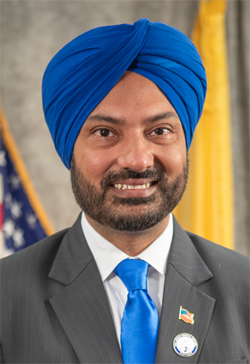
Balvir Singh House · District 7
D
Strong +
100% 6
Joe Danielsen
Joe Danielsen House · District 17
D
Strong +
100% 6
Mitchelle Drulis
Mitchelle Drulis House · District 16
D
Strong +
100% 6
Annette Quijano
Annette Quijano House · District 20
D
Strong +
100% 5
Antwan McClellan
Antwan McClellan House · District 1
R
Strong −
0% 6
Bob Auth
Bob Auth House · District 39
R
Strong −
0% 5
Brian Bergen
Brian Bergen House · District 26
R
Strong −
0% 5
Brian Rumpf
Brian Rumpf House · District 9
R
Strong −
0% 5
Dawn Fantasia
Dawn Fantasia House · District 24
R
Strong −
0% 5
Showing 131–140 of 144 bills

All criminal justice bills

in committee · New Jersey · Senate Jan 13, 2026

S 422: Establishes penalty for withholding identification to hinder apprehension or prosecution.

This bill makes it a crime in New Jersey for a person to refuse to provide valid identification or their true identity to law enforcement *when arrested and specifically requested to do so*, if the purpose is to hinder their own apprehension or prosecution. It applies to individuals who withhold ID to avoid being charged or convicted, with penalties tied to the severity of the underlying offense they face (e.g., a mandatory minimum year in prison for serious cases like fatal hit-and-runs). Penalties range from a third-degree crime (for serious underlying offenses) to a fourth-degree crime or disorderly persons offense (for less severe cases). The law does not apply to routine ID requests unrelated to evading prosecution.
in committee · New Jersey · Senate Jan 13, 2026

S 1551: Increases penalties for certain heroin offenses by revising threshold amounts for first, second, and third degree crimes of manufacturing, distributing, and dispensing heroin.

This bill (S 1551) changes New Jersey's sentencing rules for heroin offenses by lowering the quantity thresholds that trigger higher penalties. Specifically, it sets a new second-degree crime threshold for distributing heroin at 0.17 ounces or more (down from a higher amount under current law), while keeping 2.5 ounces or more as the first-degree threshold. This means smaller amounts of heroin will now lead to more severe penalties, affecting individuals convicted of manufacturing, distributing, or dispensing heroin in the state. The law directly impacts defendants in drug-related cases, with sentencing consequences including mandatory minimum prison time and higher fines for qualifying offenses.
in committee · New Jersey · Senate Jan 13, 2026

S 1110: Upgrades burglary of a residence to a crime of the second degree; requires mandatory period of parole ineligibility if residence was occupied at time of offense.

This bill upgrades burglary of a residence to a second-degree crime when a person was present during the offense, making it punishable by 5-10 years in prison (previously a third-degree crime with 3-5 years). It directly affects individuals convicted of entering or remaining in a home while occupants were present, requiring them to serve 85% of their prison sentence before becoming eligible for parole. The law amends existing burglary statutes and enforces the "No Early Release Act" (NERA), which mandates this extended incarceration period for qualifying offenses. This change applies specifically to burglaries in occupied dwellings, not all burglary cases.
in committee · New Jersey · Senate Jan 13, 2026

S 128: Upgrades offense of criminal mischief if person interrupts or impairs power supply.

S 128 amends New Jersey's criminal mischief law to specifically upgrade the offense when someone intentionally interrupts or impairs the supply of power. Currently, causing such power disruption is a third-degree crime (3-5 years in prison, up to $15,000 fine), but this bill makes it a second-degree crime (5-10 years, up to $150,000 fine). The change directly affects individuals who deliberately disrupt power infrastructure, such as damaging electrical lines or systems. This policy update increases penalties for power-related disruptions without altering the definition of the crime.
Sub-Topics Corrections
in committee · New Jersey · Senate Jan 13, 2026

S 576: Increases mandatory minimum term of imprisonment for certain repeat sex offenders.

This bill increases mandatory minimum prison sentences for repeat sex offenders in New Jersey. It requires second or subsequent convictions for offenses like sexual assault, criminal sexual contact, or lewdness involving minors to receive at least 85% of the maximum sentence for that offense (e.g., 85% of 20 years for aggravated sexual assault), with no parole eligibility during that period. Courts may reduce sentences only if the defendant pleads guilty to a victim-centered plea agreement or if a "serious injustice" finding overrides deterrence needs, requiring specific court justification. The Attorney General must create uniform guidelines for prosecutors handling these cases, and prosecutors gain a 10-day window to appeal reduced sentences.
in committee · New Jersey · Senate Jan 13, 2026

S 1545: Criminalizes fifth or subsequent drunk driving offenses.

This bill (S 1545) makes a fifth or subsequent drunk driving conviction a criminal offense (third degree) in New Jersey, rather than a traffic violation. It imposes a 10-year driver’s license suspension for repeat offenders, extending to 20 years if the offense occurs near schools (within 1,000 feet of school property, at designated school crossings, or where juveniles are present). Convicted individuals must complete alcohol education programs and pay a $100 fee, with failure to comply risking additional jail time. The bill directly affects individuals with multiple DUI convictions, particularly those driving in school zones.
in committee · New Jersey · Senate Jan 13, 2026

S 1855: Criminalizes fraudulently pretending to be transportation network company driver.

This New Jersey bill (S 1855) makes it a crime to falsely pretend to be a ride-hailing driver (like Uber or Lyft) to gain a benefit, harm someone, or commit fraud. It creates two offense levels: a fourth-degree crime (up to 18 months in prison) for simply impersonating a driver, and a more serious third-degree crime (3-5 years in prison) if the person also uses fake identification. The law specifically excludes actual drivers who provide cash rides from being affected. It directly targets individuals committing fraud by impersonating drivers, not the drivers themselves or standard ride-hailing services.
Sub-Topics Corrections
in committee · New Jersey · Senate Jan 13, 2026

S 368: Upgrades degree of crime of auto theft when committed in connection with home invasion or residential burglary.

S 368 upgrades the criminal penalty for auto theft when committed during specific burglaries. It makes auto theft a second-degree crime if linked to residential burglary (breaking into a home) and a first-degree crime if connected to home invasion burglary (typically involving weapons or injury). Currently, auto theft is a third-degree crime (3-5 years in prison), but this bill increases penalties to 5-10 years for second-degree and 10-20 years for first-degree offenses. The law also ensures auto theft convictions do not merge with separate burglary convictions, requiring separate sentencing for both crimes.
Sub-Topics Corrections Sentencing
in committee · New Jersey · Senate Jan 13, 2026

S 888: Upgrades certain penalties for criminal street gang recruitment and criminality; imposes mandatory minimum sentence for certain offenses; establishes accomplice liability and imposes restrictions for certain recruiters.

This bill (S 888) upgrades penalties for recruiting people into criminal street gangs in New Jersey. It makes gang recruitment a fourth-degree crime, with harsher penalties for causing injury (second-degree, 5-year mandatory prison term), threatening victims repeatedly (third-degree), or targeting minors (second-degree, 7-year mandatory prison term). The law also establishes "accomplice liability," meaning recruiters can be prosecuted for crimes committed by those they recruit, and requires consecutive sentencing for offenders already in custody. It directly affects individuals who recruit others into gangs, particularly those targeting minors or committing offenses on school property.
Sub-Topics Corrections Sentencing
in committee · New Jersey · Senate Jan 13, 2026

S 1144: Creates second degree crime for operation of stolen vehicle in manner that creates risk of injury to person or property.

This bill amends New Jersey law to classify operating a stolen vehicle in a way that risks injury to people or damage to property as a second-degree crime. It directly affects individuals who steal vehicles and then drive them recklessly, such as during high-speed chases or in crowded areas. The key change reclassifies this specific scenario from a lower-degree offense to second-degree theft, carrying penalties of 5 to 10 years in prison, a $150,000 fine, or both. The bill takes effect immediately upon enactment.
Sub-Topics Corrections
Showing 131 to 140 of 144 bills