Issue · Criminal Justice

Criminal Justice (Law Enforcement)

Every criminal justice bill, vote, and legislator stance in New Jersey, automatically classified by Maddy, our AI policy reader.

Total bills
44
2026-2027 Regular Session
Top supporter
Paul Sarlo
100% support rate
Top opponent
Mike Testa
0% support rate
Ranked legislators
10
5 support · 5 oppose
Key legislators

Who's moving law enforcement in New Jersey

Legislators moving law enforcement in New Jersey
Legislator Party Stance Support rate Decisive votes
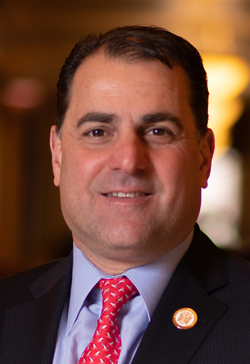
Paul Sarlo
Paul Sarlo Senate · District 36
D
Strong +
100% 10
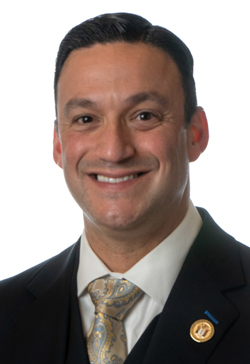
Renee Burgess
Renee Burgess Senate · District 28
D
Strong +
100% 10
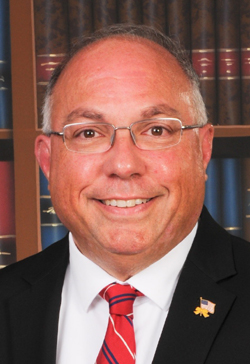
Bob Smith
Bob Smith Senate · District 17
D
Strong +
100% 9
Brian Stack
Brian Stack Senate · District 33
D
Strong +
100% 9
Joe Lagana
Joe Lagana Senate · District 38
D
Strong +
100% 9
Mike Testa
Mike Testa Senate · District 1
R
Strong −
0% 10
Kristin Corrado
Kristin Corrado Senate · District 40
R
Strong −
0% 9
Tony Bucco
Tony Bucco Senate · District 25
R
Strong −
0% 9
Carmen Amato
Carmen Amato Senate · District 9
R
Strong −
0% 7
Declan O'Scanlon
Declan O'Scanlon Senate · District 13
R
Strong −
0% 7
Showing 1–10 of 44 bills

All criminal justice bills

introduced · New Jersey · General Assembly

A 5392: "Enhanced Law Enforcement Protections Act;" upgrades penalties and eliminates presumption of pretrial release for assault against law enforcement and first responders during civil disturbance.

New Jersey Assembly Bill 5392 elevates aggravated assault against law enforcement officers, firefighters, emergency medical providers, and correctional personnel to a first-degree crime if the attack occurs during a civil disturbance and causes serious bodily injury. This change imposes a mandatory prison sentence of at least ten years with a ten-year period of parole ineligibility for such offenses. The bill also removes the legal presumption that defendants charged with this specific type of aggravated assault are eligible for pretrial release, requiring courts to justify any decision to free them before trial.
in committee · New Jersey · Senate Jun 26, 2026

S 4519: Repeals law requiring law enforcement officers to reveal facial identity during certain public interactions and to present sufficient identification prior to arresting or detaining person.

This bill in New Jersey would remove the legal requirement for law enforcement officers to show their faces and present identification when interacting with the public or making arrests. Currently, officers must reveal their identities unless they are undercover, facing safety threats, or wearing protective gear, but this legislation would eliminate those mandates entirely. By repealing the specific law that enforces these identification rules, the bill allows officers to operate without displaying their facial identity or showing ID in most situations. The change directly affects all law enforcement personnel in the state, including federal officers, by removing a layer of transparency required during official duties.
Sub-Topics Law Enforcement
in committee · New Jersey · Senate Jun 22, 2026

S 4483: Repeals law prohibiting collection and sharing of certain personal information.

This bill repeals the Privacy Protection Act, which currently restricts New Jersey government agencies and healthcare facilities from collecting specific personal data such as immigration status, citizenship, and Social Security numbers. By removing these restrictions, the legislation allows these entities to gather and share such information more freely, particularly when it may assist law enforcement or administrative processes. The act also eliminates the prohibition on selling or sharing automated license plate recognition data, while simultaneously removing the requirement for agencies to develop compliance policies and the legal ability for private citizens to sue for violations. Ultimately, the bill shifts the legal framework to permit broader data collection without the previous privacy constraints.
in committee · New Jersey · Senate Jun 26, 2026

S 4518: Repeals codification of AG directive, "Strengthening Trust Between Law Enforcement and Immigrant Communities."

This bill repeals a previous law that codified an Attorney General directive aimed at building trust between law enforcement and immigrant communities in New Jersey. The removed law had prohibited police from engaging in racially influenced policing, restricted assistance to federal immigration authorities, and required agencies to notify detained individuals of immigration-related requests. By eliminating these provisions, the bill restores the ability of local law enforcement and prosecutors to make their own decisions regarding immigration matters and removes the requirement to publish annual reports on such assistance.
in committee · New Jersey · General Assembly Jun 1, 2026

A 5177: Repeals law requiring law enforcement officers to reveal facial identity during certain public interactions and to present sufficient identification prior to arresting or detaining person.

This bill would remove a New Jersey law that currently requires law enforcement officers to show their faces and display identification when interacting with the public or making arrests. Under the proposed change, officers would no longer be legally obligated to reveal their facial identity or present specific forms of ID during these encounters, except in cases involving undercover work, tactical operations, or when safety is a concern. The legislation directly affects police officers and the individuals they interact with by eliminating mandatory transparency rules that were previously in place. By repealing the existing statute, the bill aims to give law enforcement more flexibility in how they identify themselves while performing official duties.
in committee · New Jersey · General Assembly Jun 1, 2026

A 5176: Repeals codification of AG directive, "Strengthening Trust Between Law Enforcement and Immigrant Communities."

This bill repeals a previous law that codified an Attorney General directive regarding interactions between law enforcement and immigrant communities. By removing this statute, the legislation restores the ability of New Jersey police officers to assist federal immigration authorities and engage in conduct previously restricted by the directive. The repeal also eliminates requirements for agencies to notify detained individuals of immigration requests, publish annual reports on such assistance, and inform defendants of potential immigration consequences during legal proceedings. Ultimately, the bill returns control over these specific policing and prosecutorial decisions to local authorities rather than binding them to state-mandated guidelines.
in committee · New Jersey · General Assembly Feb 19, 2026

A 4363: Creates "Punishing Rioters and Protecting Communities Act," broadens riot; enhances penalties certain riot-related criminal penalties; creates crimes of mob intimidation and cyber-intimidation by publication; establishes duty in municipality to permit law enforcement to respond appropriately.

The "Punishing Rioters and Protecting Communities Act" (A4363) amends New Jersey's riot laws to increase penalties for violent public disturbances and create two new offenses. It raises penalties for riots involving firearms or deadly weapons (to a third-degree crime) and creates aggravated riot offenses (second-degree crime) for incidents causing serious injury, property damage over $5,000, or threats to vehicle safety. The bill also establishes new crimes for "mob intimidation" (threatening violence in group settings) and "cyber-intimidation by publication" (online intimidation), while requiring municipalities to permit appropriate law enforcement responses to riots. These changes directly affect individuals committing riot-related acts, law enforcement, and local governments managing public safety.
Sub-Topics Law Enforcement
in committee · New Jersey · General Assembly Jan 13, 2026

A 2873: Upgrades penalty for assault on law enforcement to second degree crime under certain circumstances.

This bill would upgrade assaults against certain public safety and emergency personnel to a second-degree crime, increasing penalties. It directly affects anyone who assaults law enforcement officers, firefighters, school staff, healthcare workers (including at psychiatric facilities), utility workers, or emergency medical personnel while they are clearly performing their duties. Key provisions include elevating simple assault to a more serious charge when targeting these groups, and adding specific scenarios like assaulting utility workers during service repairs. The legislation aims to strengthen legal consequences for attacks on these critical workers. (Note: Bill is currently in committee review as of January 2026.)
in committee · New Jersey · General Assembly Jan 13, 2026

A 1223: Provides that person who impersonates law enforcement officer and commits crime is guilty of third degree crime.

This bill amends New Jersey law to increase penalties for impersonating a law enforcement officer who also commits another crime. Currently, impersonating an officer is a fourth-degree crime; this bill elevates the penalty to a third-degree crime if the impersonator commits a fourth-degree or more serious offense (like theft or assault) during the impersonation. A third-degree crime carries penalties of up to $15,000 in fines, 3-5 years in prison, or both. The bill directly affects individuals who impersonate officers and use that deception to commit additional crimes, making their actions subject to harsher sentencing.
in committee · New Jersey · General Assembly Feb 19, 2026

A 4430: Upgrades crime of invasion of privacy under certain circumstances; eliminates presumption of nonimprisonment.

New Jersey bill A4430 upgrades certain invasion of privacy offenses to higher criminal degrees (from third to second degree) and removes the automatic presumption against jail time for convictions. It specifically targets secretly photographing, recording, or disclosing intimate images or activities without consent - such as in fitting rooms or dressing areas - where a reasonable person wouldn’t expect observation. The bill also clarifies that disclosing such recordings (e.g., via internet or sharing) constitutes a separate offense. Retail stores can avoid liability by posting clear notices about surveillance, and law enforcement officers are exempt when performing official duties. This directly affects individuals committing non-consensual recording or disclosure of intimate moments.
Showing 1 to 10 of 44 bills
1 2 3 … 5 Next