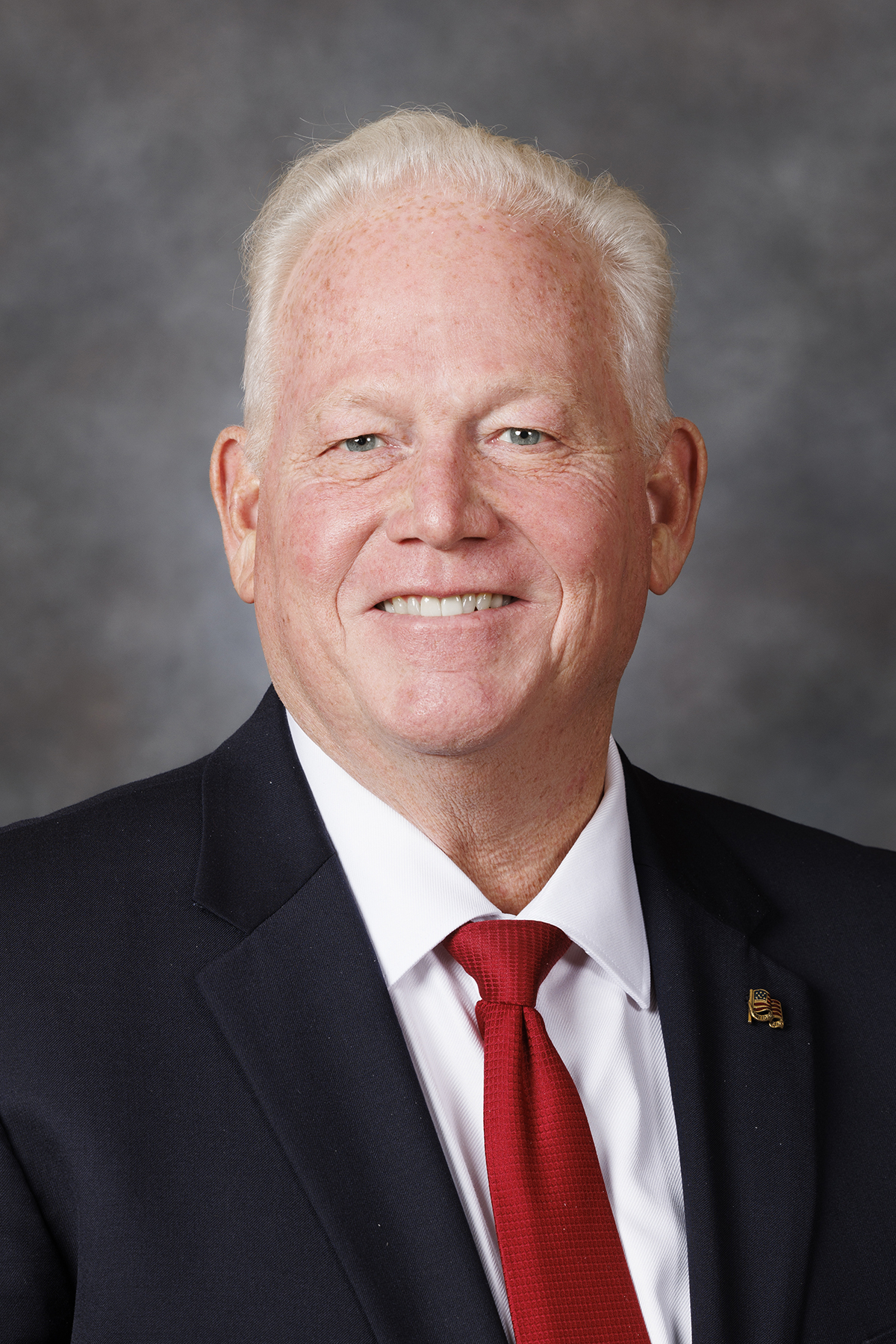
LB 50 changes how revenue from Nebraska's nameplate capacity tax on renewable energy facilities is distributed. Five percent of the tax revenue will go directly to the community college in the area where the renewable energy facility (like wind or solar farms) is located. The remaining revenue will be distributed to local governments (cities, counties) that would have collected property taxes on the facility if it weren't exempt, calculated based on each government's share of typical property tax revenue. This distribution continues until the facility's equipment is sold or removed, and the tax revenue cannot be redirected to the state General Fund.
LB 513A is a funding bill that allocates specific amounts from the General Fund and Compensation Court Cash Fund to support existing court programs in Nebraska for fiscal years 2025-26 and 2026-27. It provides funding for the Supreme Court (Programs 3, 4, 6, 7), Nebraska Workers' Compensation Court (Program 526), and the Tax Equalization and Review Commission (Program 131). The bill specifies maximum allowable expenditures for salaries and per diems for each program across both fiscal years. It directly affects these state courts and commissions by providing operational funding to carry out existing responsibilities outlined in Legislative Bill 513. The bill was approved by the Governor on May 30, 2025, and takes immediate effect.
LB 382 redirects $2 million annually from Nebraska's Medicaid Managed Care Excess Profit Fund to reimburse the state's eight Area Agencies on Aging (AAAs) for eligible activities and services defined under existing law. The bill specifically appropriates these funds for fiscal years 2025-26 and 2026-27, with an equal share distributed to each AAA. This ensures AAAs receive reimbursement for costs related to services supporting older Nebraskans, such as transportation, meals, and home care, as outlined in section 81-2222. The bill amends existing funding mechanisms to prioritize these reimbursements while maintaining current eligibility criteria.
This bill appropriates specific funds to support the implementation of Legislative Bill 288. It allocates $97,030 from the Middle Income Workforce Housing Investment Fund and $103,200 from the Affordable Housing Trust Fund for fiscal year 2025-26, and $118,110 and $126,410 respectively for 2026-27, to the Department of Economic Development’s Program 601. The funds are designated to carry out provisions of LB 288, with a cap on salary expenditures at $103,520 for 2025-26 and $138,030 for 2026-27. As a funding bill, it directly affects the Department of Economic Development’s budget execution for Program 601.
LB 380A allocates $150,000 annually from Nebraska's Health and Human Services Cash Fund for Program 33 and approximately $6.3 million in combined state/federal funds for Program 348, both for the fiscal years 2025-26 and 2026-27. The funding specifically supports the Department of Health and Human Services in implementing Legislative Bill 380 (from the 2025 session), with strict limits of $100,000 per year for employee salaries in Program 33 and no salary spending allowed for Program 348. This bill directly affects DHHS programs by providing targeted financial resources for state aid and operational needs. It does not create new policies but authorizes existing funding streams for specific state programs under a prior legislative act.
LB 382A appropriates $2 million from the Medicaid Managed Care Excess Profit Fund for each of the 2025-26 and 2026-27 fiscal years to the Department of Health and Human Services. The funds are designated for Program 571 to support the implementation of Legislative Bill 382. The bill specifies that the money must be used solely for state aid and cannot cover salaries or per diems for state employees.
LB 504A appropriates $72,149 for fiscal year 2025-26 and $147,752 for 2026-27 from Nebraska's General Fund to the Attorney General's Program 507. These funds are specifically designated to support the implementation of Legislative Bill 504, which is referenced in this appropriation bill. The bill also sets limits on salary expenditures, capping them at $50,000 for 2025-26 and $103,000 for 2026-27. This is a procedural funding measure, not a policy change, directly affecting the Attorney General's office budget for carrying out another bill's requirements.
This bill sets funding levels for Nebraska state agencies during fiscal years 2023-24 and 2024-25. It allocates specific sums for state government operations, handles unspent balances from prior years, and establishes a cap on state employee salaries and per diem payments. The bill requires agencies to operate within these budget constraints, including limits on total compensation for permanent and temporary staff. It directly affects all state agencies receiving operating funds and governs how they manage their budgets.
LB 262 appropriates $632,982 from the General Fund for each fiscal year (2025-26 and 2026-27) to pay salaries for Nebraska Legislature members, as required by law. The bill includes a spending cap of $588,000 annually for salaries and per diems, ensuring total expenditures do not exceed this amount. It becomes effective July 1, 2025, and was approved by the governor on May 21, 2025. This procedural bill directly affects legislators by funding their compensation.
Nebraska Legislative Bill LB 263 appropriates funds for the salaries and benefits of constitutional state officers for fiscal years 2025-26 and 2026-27. It directly affects Supreme Court judges, Court of Appeals judges, district/juvenile and county court judges, the Governor, Lieutenant Governor, Secretary of State, and Auditor of Public Accounts. The bill specifies exact funding amounts for each position while establishing "salary limits" that restrict total expenditures for salaries and per diems. It includes provisions for reappropriating unspent funds and transferring budgets among judicial programs to support court operations. This is a standard funding measure, not a policy change, ensuring constitutional officers receive authorized compensation for the specified fiscal periods.