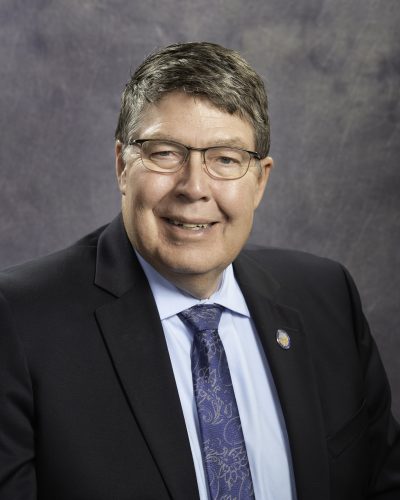
HB 924 creates the Montana Growth and Opportunity Trust, funded by half of the state's unpredictable revenue (like capital gains or oil royalties) starting in 2027. Interest income from the trust is split: half distributes $15 million annually to five specific programs (disaster resiliency, property tax relief, water development, bridge repairs, and early childhood care), while the other half reinvests in pension funds and housing infrastructure. The bill establishes new accounts for these programs and sets rules for calculating volatile revenue using historical data to stabilize budgeting. It directly affects state budgeting, early childhood services, infrastructure projects, and pension systems through mandatory funding allocations.
SB 454 proposes significant revisions to Montana's commercial tow truck regulations. It establishes new classification standards for tow trucks (Classes A-E) based on equipment capacity and chassis requirements, replacing previous ratings. The bill also mandates certification for operators (75% of employees for companies, or 1 year of experience for individuals), requires equipment to meet updated safety standards, and clarifies requirements for participating in the law enforcement rotation system. These changes directly affect tow truck operators, companies, and the Montana Highway Patrol, which oversees inspections and classification. The bill was introduced in 2025 but died in committee without becoming law.
Senate Bill 387 aimed to revise state laws concerning electrically assisted bicycles. The bill proposed providing specific definitions for these types of bicycles and amending existing sections of state law, including 61-1-101 and 61-8-102, MCA. This legislation sought to clarify how electrically assisted bicycles are classified and regulated within the state.
SB 324 revises vehicle registration fees for high-end vehicles, adding a 1% fee based on the vehicle's manufacturer's suggested retail price (MSRP) for the first year of registration after January 1, 2026, for cars over $150,000 and motorhomes over $300,000. It directly affects owners of these high-value vehicles, replacing a flat annual add-on fee with the percentage-based assessment. Revenue from these fees will fund two specific programs: grants for bridge projects through the Department of Transportation and services for crime victims via the Board of Crime Control. The bill also updates related sections of Montana law governing registration fees and special revenue accounts.
HB 848 aimed to provide dedicated funding for regional rail authorities in the state. The bill proposed creating a "Big Sky Rail Account" within the state special revenue fund, which would receive a portion of rental car sales and use tax proceeds. The Department of Transportation would then annually distribute these funds to eligible regional rail authorities. These authorities could use the money for administrative costs, matching federal grants, fostering partnerships, and planning, developing, and operating rail projects and services, such as enhancing safety, improving stations, and exploring new train routes.
HB 588 revises existing transportation laws by establishing a legal definition for "motorized scooter." The bill also provides specific regulations for the operation and use of these devices. It achieves this by amending various sections of the Montana Code Annotated to integrate motorized scooters into the state's vehicle and traffic laws.
HB 586 revises child safety restraint system laws, establishing new age-specific requirements for children traveling in motor vehicles. It mandates that children under 2 years use a rear-facing system, children aged 2-4 use a rear-facing or forward-facing system with a harness, and children aged 4-8 use a forward-facing system with a harness or a booster seat. Children 9 years or older, or those who have outgrown a booster, must use an adult safety belt. The bill also defines various restraint types and provides exemptions for certain vehicles like school buses or in emergency situations.
HB 764 revises public transit laws, affecting how urban transportation districts are established and the reach of municipal bus services. The bill allows a county commissioner to file a petition to create or enlarge an urban transportation district, offering an additional method to the existing elector-initiated process. It also permits municipal bus services to operate beyond the current 8-mile limit from a city's boundary if funded by external sources like the federal or state government, a nonprofit, or if fulfilling an interlocal agreement.
House Bill 855 establishes a dedicated funding mechanism for projects aimed at reducing wildlife-vehicle collisions across Montana. It authorizes the Fish and Wildlife Commission to create a specialty license plate, with a $20 donation from its sale and renewal deposited into a new "Big Game and Wildlife Highway Crossings and Accommodations Account." Funds in this account, which also accepts gifts and grants, are statutorily appropriated to the Department of Fish, Wildlife, and Parks. These funds will be used for the design, construction, maintenance, and study of wildlife crossings and related accommodations on state roadways, improving safety for both drivers and wildlife.
SB 428 revises how local authorities and county commissions can set speed limits on roads. It allows local authorities to adjust speed limits in various areas, such as urban districts, outside urban districts, and school zones, typically requiring an engineering and traffic investigation. A key change is that boards of county commissioners can now set certain decreased speed limits on county roads, including in school zones, without first conducting an engineering and traffic investigation. The bill also specifies signage requirements for altered limits and mandates consultation with relevant bodies for school zones.