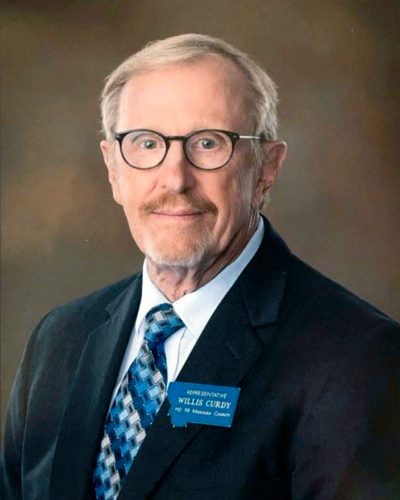
HB 511 creates a $5 million grant program to fund firefighting training facility projects for local fire departments in Montana. The bill provides grants for building, upgrading, or repairing training facilities and purchasing equipment, with limits of $250,000 per project and $500,000 per county. Applicants must provide a 1% cash or service match for grants over $25,000 and follow safety standards, while the Department of Military Affairs administers the program. Funding is authorized for the 2025-2029 biennium and expires June 30, 2031.
This bill establishes a state grant program to help Montana fire departments purchase safety equipment and improve health and safety conditions for firefighters. The program allows eligible fire departments, companies, or districts to apply for up to $10,000 in grants for items such as personal protective equipment, saunas, shower facilities, and cleaning devices for gear. Funding comes from charitable donations and a $10 nonrefundable application fee paid by each applicant, with priority given to departments with smaller budgets, those in rural areas, and those serving diverse regions of the state. The bill also authorizes the state disaster and emergency services division to administer the program and adopt rules to implement it.
SB 308 would remove Montana's current limit on workers' compensation benefits that capped payments at the state's average weekly wage. Instead, it would establish a fixed maximum benefit of $2,885 per week for all eligible injured workers. This change would directly affect higher-earning workers who previously received reduced benefits due to the wage-based cap. The bill amends specific sections of Montana's workers' compensation code to implement this fixed maximum payment structure.
SB 454 proposes significant revisions to Montana's commercial tow truck regulations. It establishes new classification standards for tow trucks (Classes A-E) based on equipment capacity and chassis requirements, replacing previous ratings. The bill also mandates certification for operators (75% of employees for companies, or 1 year of experience for individuals), requires equipment to meet updated safety standards, and clarifies requirements for participating in the law enforcement rotation system. These changes directly affect tow truck operators, companies, and the Montana Highway Patrol, which oversees inspections and classification. The bill was introduced in 2025 but died in committee without becoming law.
SB 295 would restore Montana injured workers' right to choose their own treating physician for initial treatment and ongoing care under workers' compensation, without being forced to use a managed care organization (MCO) or preferred provider organization (PPO) without consent. The bill requires insurers to allow workers to select a physician from a designated list for initial treatment and to change physicians with the insurer's approval (with mediation available if approval is denied). It also mandates that insurers provide individual written notice (not workplace postings) before referring workers to an MCO or PPO. This directly affects injured workers seeking medical treatment for work-related injuries in Montana, giving them more control over their healthcare decisions.
HB 807 amends state law to prohibit individuals from being required to receive certain vaccines. Specifically, it mandates that vaccines whose use is allowed under an emergency use authorization (EUA) or those still undergoing safety trials cannot be a requirement. This applies to persons, governmental entities, employers, and public accommodations, preventing them from denying services, employment, or access based on non-receipt of such vaccines. The bill integrates this new prohibition into existing law concerning discrimination based on vaccination status.
House Bill 620 revises state law concerning contracts that restrict a healthcare provider's ability to practice after leaving an employer or partnership. It expands existing protections, previously applicable to specific behavioral health professionals, to now include licensed physicians of all specialties. The bill amends Section 28-2-724, MCA, ensuring that contracts cannot prevent these medical professionals from practicing, providing services, or establishing patient relationships in any geographic area after their professional relationship ends.
HB 769 revises the calculation of meal allowances for certain employees, specifically those who work night-shift hours. The bill amends existing state law to establish new timeframes for evening, midnight, and early morning meal allowances for night-shift employees. These allowances are applicable when an employee is traveling for more than three continuous hours during the specified night-shift periods. The bill also maintains existing provisions for non-night-shift employees and general eligibility rules based on an employee's travel shift.
HB 563 protects individuals who file or participate in investigations related to professional licensing complaints. The bill voids any contract provisions that prohibit or discourage someone from filing a complaint or cooperating with an investigation against a licensee. It also defines being party to such a prohibitive contract or retaliating against a complainant as "unprofessional conduct" for a licensee. This measure ensures that general waivers of claims cannot be interpreted to restrict these specific types of complaints.
HB 346 exempts various grant and loan programs from environmental review requirements under the Montana Environmental Policy Act (MEPA). This bill directly affects the Department of Commerce, Board of Housing, and other commissions by removing the need for environmental assessments when authorizing or administering these specific programs. The exemptions apply to programs supporting microbusiness development, historic preservation, workforce training, housing finance, and other economic development initiatives. This aims to streamline the process for providing financial assistance through these identified programs.