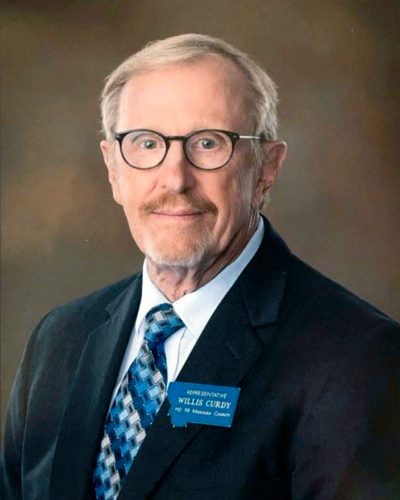
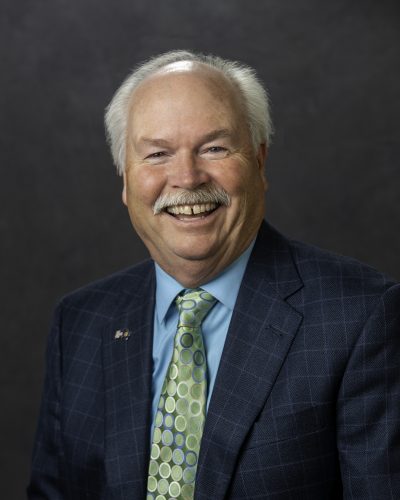
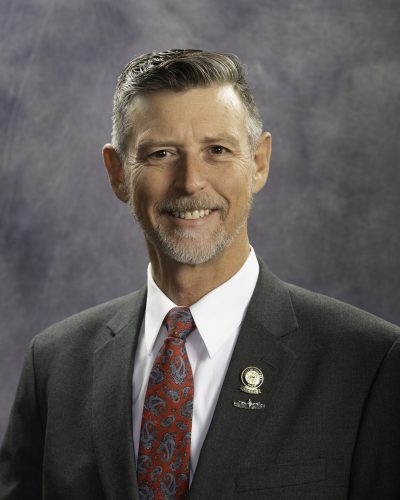
HB 779 aimed to revise discrimination laws by adopting the International Holocaust Remembrance Alliance (IHRA) working definition of "antisemitism." It would have required the Department of Labor and Industry to consider this definition when reviewing discrimination complaints. Additionally, the bill proposed that this definition be considered for sentence enhancement in cases where offenses are committed due to a victim's race, religion, or national origin. It also would have explicitly recognized antisemitism, as defined by the IHRA, as a form of discrimination under the state's civil rights laws.
HB 360 proposed establishing the Child Care Workforce Recruitment and Retention Support Payment Program, administered by the Department of Public Health and Human Services. This program would have provided monthly payments to eligible child-care facilities, including licensed day-care centers and registered family or group day-care homes, based on their number of child-care workers. The funds were intended to help these facilities recruit and retain qualified child-care workers. Day-care centers and group homes could use the money for personnel costs like wage supplements and bonuses, while family day-care homes also had options for facility costs, equipment, professional development, and mental health support for children. The bill included an appropriation of $59.9 million annually from the general fund for fiscal years 2026 and 2027.
HB 373 aimed to revise the allocation of excess state lottery revenue, dedicating it to education funding instead of the state general fund. The Office of Public Instruction would distribute these funds quarterly to school districts based on a per-quality-educator formula. Districts would deposit these funds into their school flexibility funds, which could be used for various expenditures, including teacher salaries, benefits, housing, technology enhancements, and facility improvements.
HB 452 creates a new specific criminal offense for assaulting an employee of a public utility. The bill defines different levels of assault, including causing bodily injury, causing serious bodily injury, or creating reasonable apprehension of serious bodily injury with a weapon. It establishes distinct penalties for these offenses, which include imprisonment terms ranging from 8 to 20 years and fines up to $50,000, depending on the severity of the assault. This legislation aims to provide specific legal consequences for acts of violence against individuals working for public utilities.
HB 422 proposed to amend Montana's covenant laws to allow specific types of agreements aimed at encouraging workforce housing affordability. The bill would have permitted covenants that restrict the sale, lease, or an owner's share of equity appreciation on residential properties. These restrictions would apply to individuals with specific incomes or occupations. The intent was to ensure the long-term affordability and attainability of housing for the workforce by allowing these covenants to remain with the property through future ownership.
HB 319 aimed to prohibit employers from requiring employees to attend training sessions related to "controversial social vision." The bill defined "controversial social vision" as any agenda, concept, or theory not broadly accepted in society or that generates strong opposition from mainstream political, religious, or social groups. Additionally, it sought to amend election law to prevent an elector's employer, an agent of the employer, or a union officer from being designated as an agent for a disabled elector.
HB 635 proposes to prohibit state and local government agencies from funding, establishing, or supporting Diversity, Equity, and Inclusion (DEI) programs. It would prevent these agencies from requiring employees to participate in DEI programs or spending public funds on related services or staff. The bill defines DEI programs as activities that focus on describing power structures, methods to dismantle them, or advancing theories like implicit bias or systemic oppression. However, it includes exceptions for complying with federal law, specific state human rights laws, court orders, and offering sexual harassment training. This legislation directly affects state and local government agencies and their employees in Montana.
HB 621 allows local first responder entities, including police departments, sheriff's offices, fire departments, and emergency medical service providers, to establish peer support programs. These programs must have a written policy that outlines qualifications for peer supporters, defines peer support sessions, and ensures confidentiality for participants. The bill prohibits qualified peer supporters from testifying about the content of peer support sessions, with exceptions if an employee has committed or plans a crime, or indicates intent to harm themselves or others.
HB 807 amends state law to prohibit individuals from being required to receive certain vaccines. Specifically, it mandates that vaccines whose use is allowed under an emergency use authorization (EUA) or those still undergoing safety trials cannot be a requirement. This applies to persons, governmental entities, employers, and public accommodations, preventing them from denying services, employment, or access based on non-receipt of such vaccines. The bill integrates this new prohibition into existing law concerning discrimination based on vaccination status.
House Bill 620 revises state law concerning contracts that restrict a healthcare provider's ability to practice after leaving an employer or partnership. It expands existing protections, previously applicable to specific behavioral health professionals, to now include licensed physicians of all specialties. The bill amends Section 28-2-724, MCA, ensuring that contracts cannot prevent these medical professionals from practicing, providing services, or establishing patient relationships in any geographic area after their professional relationship ends.