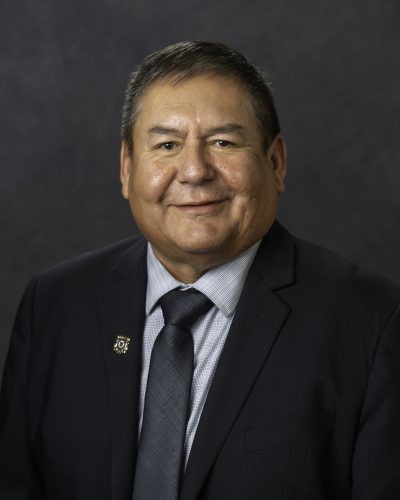
This bill updates Montana's fire suppression account by removing specific date references from statutory appropriations and establishes new reporting requirements for the Department of Natural Resources and Conservation. The legislation allows the state treasurer to automatically transfer funds to the account when the general fund balance exceeds a certain threshold, while also permitting the use of excess account balances for specific fire-related purposes such as fuel reduction, forest restoration, and equipment grants. Additionally, the department must submit annual reports detailing how funds are spent across different categories, and the changes take effect immediately upon passage.
This bill amends Montana law to revise how county planning boards are composed and who can serve on them. It requires that at least one member of a county planning board be a representative from a conservation district or state cooperative grazing district, provided that person lives in the county. Additionally, if a city or town gains representation on the planning board, its council must appoint the additional members. The changes directly affect county commissioners, conservation district officials, and local government representatives by establishing new membership requirements for planning boards.
This bill allows Montana cities and towns to independently review and approve the design and construction of public water and sewer systems, including modifications to existing infrastructure. To exercise this authority, municipalities must hire or contract with a licensed professional engineer and establish a formal review program. The bill also requires these local review processes to comply with state environmental policies, property takings rules, and water quality standards. This change gives local governments more direct control over infrastructure projects within their jurisdictions while maintaining oversight through existing state regulations.
This legislative resolution urges the U.S. Congress to amend the Radiation Exposure Compensation Act to include Montanans who were exposed to radiation from nuclear testing between 1945 and 1962. The bill identifies Montana as one of the most affected downwind states, specifically naming 15 counties with high exposure levels where residents may have developed radiation-related illnesses without knowing the cause. It requests that federal lawmakers pass changes to provide compensation funds to these individuals, directing the Secretary of State to send copies of the resolution to members of Congress. The measure does not create new funding or compensation directly but serves as a formal request for federal legislative action.
This Montana bill revises laws governing chemical abortion by establishing specific requirements for health care providers and imposing penalties for violations. It mandates that providers physically examine patients, be present during administration, schedule follow-up visits within seven days, and supply catch kits for proper disposal of medical waste. The legislation also holds drug manufacturers financially responsible for cleaning up wastewater contaminated by endocrine-disrupting chemicals from at-home abortions. While the bill imposes felony penalties on providers who fail to meet these conditions, it includes exceptions for procedures necessary to preserve a mother's life and does not allow prosecution of patients.
This bill amends Montana's energy law to update definitions related to customer-generated electricity and utility transition costs. It directly affects electric utilities, customer generators, and the state Public Service Commission by clarifying terminology for net metering systems, carbon offset providers, and electricity supply resources. The key provision expands the maximum generating capacity for net metering systems from 50 kilowatts to 100 kilowatts, allowing more residential and small business solar and wind installations to connect to the grid. The bill also adds new definitions for terms like "assignee," "fixed transition amounts," and "large customer" to improve clarity in future energy regulations. These changes take effect immediately upon passage.
This bill creates a new Montana Water Development State Special Revenue Account to fund water storage projects and dam safety initiatives. It establishes a mechanism where 90% of investment earnings from the new account go to an existing water storage fund, while 10% goes to a natural resources projects fund for pilot projects and dam inspections. The legislation also directs the state treasurer to transfer $50 million from the general fund to the new account in 2025 and another $50 million in 2026. These changes affect state budget allocations and provide dedicated funding sources for water infrastructure development and maintenance.
This bill revises Montana laws governing the independent review panel for metal mine tailings impoundment plans, directly affecting mining companies and the state Department of Environmental Quality. It updates definitions related to mining operations, tailings storage facilities, and engineering roles, while establishing clearer criteria for panel members who must be recognized experts in tailings facility design, construction, operation, and closure. The legislation also mandates written reports from review panels and grants rulemaking authority to ensure consistent oversight of tailings storage facility safety and compliance.
This bill revises Montana's lakeshore protection laws to clarify definitions and strengthen enforcement for unauthorized work near lakes. It directly affects property owners, contractors, and local governments by establishing clearer rules for what constitutes a lake and lakeshore, requiring permits for construction activities, and allowing local authorities to issue stop-work orders. Key provisions include a 90-day timeline for permit decisions, the ability to require surety bonds to cover potential restoration costs, and new penalties that can include fines up to $10,000 for repeat offenders, jail time, and property liens for unpaid restoration costs. The bill also encourages cooperation between multiple governing bodies that share jurisdiction over the same lake.
This bill prohibits the use of motorboats and personal watercraft on Class II waters in Montana, affecting public access to these designated waterways. The key provision adds a new restriction to existing state law that specifically bans motorized watercraft on Class II waters, while maintaining public rights to non-motorized recreation like kayaking or canoeing. The legislation also clarifies that public recreational use of Class II waters does not include overnight camping, big game hunting, or placing seasonal objects without landowner permission. Additionally, the bill requires the state commission to adopt rules for managing recreational use of Class I and II waters, including procedures for requesting restrictions and identifying waters with limited recreational capacity.