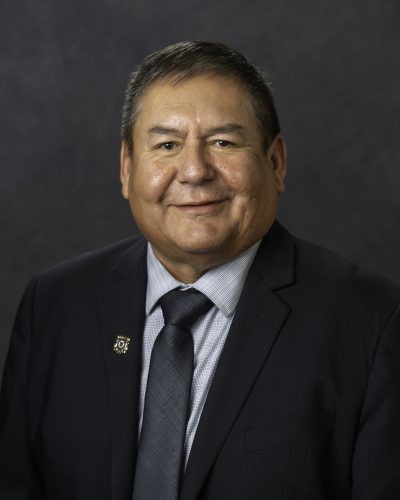
HB 31 clarifies and revises the bonding requirements for wind and solar generation facility owners in Montana to ensure proper decommissioning. It mandates that facility owners submit a decommissioning plan and provide a bond to the Department of Environmental Quality (DEQ) within specific timeframes after commencing commercial operation. The DEQ determines the bond amount based on factors like site characteristics and salvage value. The bill also outlines various exemptions for facilities already bonded elsewhere or meeting certain size and operation criteria, and establishes penalties for non-compliance.
HB 7 implements and funds the reclamation and development grants program, appropriating over $13.9 million from the natural resources projects state special revenue account. The bill allocates funds to the Department of Natural Resources and Conservation (DNRC) for grants beginning July 1, 2025. These grants support planning for reclamation and development projects, pilot water storage initiatives, and specific prioritized projects for political subdivisions and local governments. Grant recipients, which include various counties, cities, and state agencies, must meet conditions such as having an approved project scope, securing matching funds, and complying with auditing requirements.
HB 703 exempts specific state and local agencies in Montana from analyzing greenhouse gas emissions during certain environmental reviews. The bill states that the state department and local building departments are no longer required to analyze greenhouse gas emissions from covered appliances when adopting or enforcing building codes. It also exempts the state department from analyzing greenhouse gas emissions from new motor vehicles, engines, and nonroad vehicles, and emissions originating outside the state's borders. The bill cites federal preemption laws as the basis for these exemptions from environmental review.
House Bill 855 establishes a dedicated funding mechanism for projects aimed at reducing wildlife-vehicle collisions across Montana. It authorizes the Fish and Wildlife Commission to create a specialty license plate, with a $20 donation from its sale and renewal deposited into a new "Big Game and Wildlife Highway Crossings and Accommodations Account." Funds in this account, which also accepts gifts and grants, are statutorily appropriated to the Department of Fish, Wildlife, and Parks. These funds will be used for the design, construction, maintenance, and study of wildlife crossings and related accommodations on state roadways, improving safety for both drivers and wildlife.
Senate Bill 257 revises the permit laws for the Smith River waterway. It increases the cost for nonresidents to purchase a bonus point for the Smith River permit lottery from $50 to $125. This change directly affects nonresidents applying for permits to float and camp on the Smith River. The additional revenue generated from these bonus points will be deposited into the Smith River corridor enhancement account, which funds projects to protect and improve the river's natural beauty, recreational values, fisheries, and wildlife habitat.
HB 676 proposes revisions to state laws governing land and water rights. It would eliminate the Water Court's duty to complete water rights adjudication by July 1, 2030, and repeals several related statutes. The bill also prohibits the Board of Land Commissioners from acquiring private water rights for state lands. Additionally, it requires the state to sell isolated land parcels with water rights to their current lessees, impacting water rights holders, the Water Court, and state land management.
HB 580 clarifies Montana's water right abandonment laws, directly affecting individuals and entities holding water rights. The bill specifies that reducing or ceasing the use of a water right during a drought does not automatically signify an intent to abandon that right. This protection applies if the area is experiencing a moderate (D1) or worse drought, or if the nonuse aligns with an official drought plan. The legislation aims to prevent water rights from being lost solely due to conservation efforts during dry periods.
SB 46 revises the annual registration fees for owners and operators of underground petroleum or hazardous substance storage tanks. The bill increases the maximum annual fee for tanks over 1,100 gallons from $108 to $300. For tanks 1,100 gallons or less, the maximum annual fee is raised from $36 to $100. These fees help cover state and local costs associated with implementing the underground storage tank program.
HB 717 revises the process for transferring mining operation permits to successor operators, especially when an original operator has a forfeited bond and fails to complete reclamation. It grants the state's Department the power of eminent domain to acquire surface, mineral, or other property interests within a mining permit boundary under specific conditions. This power can be exercised if the department finds it is in the public interest for taxpayers and environmental protection, and a successor operator is available to take over the permit and complete reclamation. The bill also outlines how compensation is determined in these eminent domain cases, considering factors like reclamation costs and existing liabilities.
House Bill 411 (HB 411) exempts agricultural property from local property tax levies that are used to fund open space initiatives. This means that owners of land classified as agricultural will no longer be required to pay the portion of their property taxes designated for open space purposes. The bill also allows counties to reduce any open space payments made to agricultural properties that are now exempt from these levies. This change applies retroactively to property tax years beginning on or after January 1, 2025.