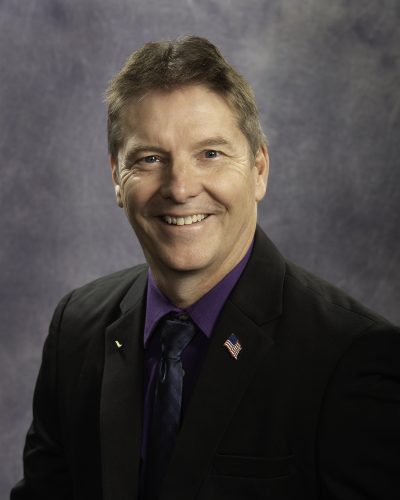
SB 369 strengthens youth suicide prevention efforts in Montana schools by revising existing laws. It requires the Office of Public Instruction to ensure low-cost and no-cost options for youth suicide awareness and prevention training for schools. Employees of school districts and certain Office of Public Instruction staff who work directly with students must complete at least one hour of this training every three years. School districts are also required to include these training requirements in their suicide prevention and response policies.
SB 177 authorizes the Community Choice School Commission to seek and receive public funding. The bill also clarifies the commission's existing ability to accept and spend gifts and donations from private individuals and entities. These changes directly impact the financial operations of the Community Choice School Commission, which is responsible for approving authorizers for choice schools across the state. This allows the commission to broaden its sources of financial support.
HB 251 revises laws concerning public charter schools, establishing a definition for "public charter school district" to clarify its governing authority as a non-taxing entity. The bill requires the Office of Public Instruction to provide a fiscal analysis for charter school applications and mandates the Board of Public Education to limit costs for new schools, prioritizing those emphasizing personalized and proficiency-based learning. It removes the Board of Public Education's authority to waive statutory requirements in charter contracts. Additionally, the bill allows public charter school districts to receive other forms of public funding and donations, and defines financial obligations for a child's resident school district when serving students with disabilities.
HB 591 establishes "Celebrate Freedom Week" in Montana public schools during the last full week of September each year, effective July 1, 2025. This bill requires social studies classes to provide at least three hours of instruction on the Declaration of Independence, the U.S. Constitution, and the Montana Constitution, including their historical context and impact on American history. Additionally, students in grades 3 through 12 are mandated to recite a specific passage from the Declaration of Independence daily during this week. Exceptions for student recitation are provided for parental requests, conscientious objections, or children of foreign diplomatic representatives.
HB 509 expands Montana's educator loan forgiveness program to cover all newly hired public school teachers in the state, with priority given to those hired in schools designated as "impacted" (where critical teacher shortages exist). It allows eligible teachers to receive up to $5,000 annually in loan repayment assistance over four years ($3,000-$5,000 per year for state-funded aid, plus an additional $5,000 from schools/districts). If funding falls short, the program prioritizes teachers in impacted schools and prorates payments proportionally among them. The bill takes effect July 1, 2025, applying to applications submitted on or after that date.
HB 631 revises student data privacy laws by amending the definition of "K-12 school purposes" in Section 20-7-1324, MCA. This change means that the existing data privacy protections for K-12 online applications will no longer apply to courses taken for postsecondary (college) credit. It also excludes work-based learning courses from these specific K-12 data privacy regulations. This bill aims to remove barriers to postsecondary opportunities by clarifying which educational activities fall under K-12 online application privacy rules.
HB 595 establishes a Montana correctional education program within the Department of Corrections, directly affecting inmates in state prisons by providing opportunities for high school equivalency and adult basic education. The bill outlines specific qualifications for instructors in these programs, requiring them to be at least 18 years old, of good moral character, and possess an associate degree, bachelor's degree, a teaching certificate from another state, or prior teaching experience. It explicitly states that the Department of Corrections cannot require these instructors to hold a Montana teacher certificate. The Department of Corrections is authorized to adopt policies determining which inmates are eligible to participate.
SB 37 revises school funding laws by clarifying how significant enrollment increases are calculated for state aid payments. The bill specifies that these calculations must be made separately for each budget unit within a school district. A district becomes eligible for additional funding if its current October enrollment count, converted to ANB, exceeds its budget limit ANB from three years prior by 110% or more. The Superintendent of Public Instruction determines the payment amount, which districts can accept fully or partially to address costs associated with the enrollment growth.
This bill clarifies how school districts count enrollment for funding purposes when children participate in early literacy jumpstart programs. It specifies that children in these programs are counted as quarter-time enrollment for a district's Average Number Belonging (ANB) calculation, which determines state funding. The bill also states that if a child attends a jumpstart program in a district other than their resident district, no out-of-district attendance agreement or tuition is required. Additionally, it outlines reporting requirements for districts on program efficacy and mandates the superintendent of public instruction to monitor and report on these interventions.
SB 211 revises the emergency use of epinephrine in school settings. The bill expands the definition of "medication" that students with asthma, severe allergies, or anaphylaxis can possess and self-administer to include epinephrine nasal spray. It also allows public and nonpublic schools to maintain a stock supply of epinephrine nasal spray, in addition to autoinjectable epinephrine, for emergency administration by school nurses or other authorized personnel. These changes provide schools with additional options for responding to severe allergic reactions.