

Issue · Criminal Justice
Criminal Justice (Law Enforcement)
Every criminal justice bill, vote, and legislator stance in Missouri, automatically classified by Maddy, our AI policy reader.
Total bills
79
2026 Regular Session
Top supporter
Adam Schnelting
100% support rate
Top opponent
Doug Beck
0% support rate
Ranked legislators
10
5 support · 5 oppose
Key legislators
Who's moving law enforcement in Missouri
| Legislator | Party | Stance | Support rate | Decisive votes |
|---|---|---|---|---|

Adam Schnelting
Senate · District 23
|
R |
Strong +
|
100% | 5 |
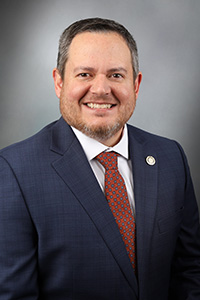
Brad Hudson
Senate · District 33
|
R |
Strong +
|
100% | 5 |

Cindy O'Laughlin
Senate · District 18
|
R |
Strong +
|
100% | 5 |
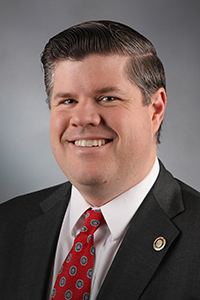
Curtis Trent
Senate · District 20
|
R |
Strong +
|
100% | 5 |

David Gregory
Senate · District 15
|
R |
Strong +
|
100% | 5 |

Doug Beck
Senate · District 1
|
D |
Strong −
|
0% | 5 |

Gregg Bush
House · District 50
|
D |
Strong −
|
0% | 5 |

Karla May
Senate · District 4
|
D |
Strong −
|
0% | 5 |

Kemp Strickler
House · District 34
|
D |
Strong −
|
0% | 5 |

Stephanie Hein
House · District 136
|
D |
Strong −
|
0% | 5 |
Showing 41–50 of 79
bills
All criminal justice bills
SB 1608: Authorizes a tax credit for contributions to certain youth police initiatives
Topics
✓ Budget & TaxesSupports Budget & TaxesCreates tax credit for donations to youth police programs, reducing taxpayer liability and incentivizing contributions to public safety initiatives.
✓ Criminal JusticeSupports Criminal JusticeCreates tax credit for youth police initiatives (community policing/youth engagement), promoting trust-building and prevention - key criminal justice reform elements.
HB 3048: Prohibits certain individuals from possessing a firearm due to domestic violence
HB 3134: Requires the POST commission to accept a diploma received from the United States Army Military Police School as credit to qualify to sit for the Missouri peace officer standards and training examination
Topics
✓ Criminal JusticeSupports Criminal JusticeEnables military veterans to bypass redundant training for law enforcement roles, strengthening officer recruitment and aligning with criminal justice workforce goals.
✓ VeteransSupports VeteransExempts veterans with USAMPS diplomas (MOS 31A/31B) from redundant training for law enforcement certification, directly facilitating veteran employment in peace officer roles.
HB 3042: Requires the Missouri state highway patrol to investigate any incident occurring in St. Louis city or St. Louis county in which a law enforcement officer is involved in a shooting or incident resulting in death
Sub-Topics
Law Enforcement
HB 2639: Authorizes tax credits for certain contributions to local law enforcement foundations
Topics
✗ Budget & TaxesOpposes Budget & TaxesCreates tax credits reducing state revenue (via deductions), weakening fiscal management by shifting funding to private donations rather than strengthening state budget.
✓ Criminal JusticeSupports Criminal JusticeFunds law enforcement through tax credits for training, equipment, and behavioral health teams, directly strengthening criminal justice infrastructure per bill's purpose.
HB 2648: Establishes the Organized Retail Theft Coordination Center in the Department of Public Safety
Sub-Topics
Law Enforcement
HB 2319: Expands the definition of special victim to include sports officials at a sporting event
Sub-Topics
Law Enforcement
HB 1911: Establishes the offense of unlawful tracking of a motor vehicle
Topics
✓ Criminal JusticeSupports Criminal JusticeBill protects vehicle owners' privacy by criminalizing unauthorized tracking, aligning with civil rights protections in criminal justice.
✓ TechnologySupports TechnologyProhibits unauthorized vehicle tracking, protecting location data privacy - directly aligns with data privacy safeguards in technology policy
✓ TransportationSupports TransportationBill regulates vehicle tracking to protect occupants from unauthorized monitoring, enhancing vehicle safety and privacy under transportation's vehicle regulations topic.
Sub-Topics
Law Enforcement
HB 1926: Creates provisions relating to the disclosure of patients' citizenship or immigration status
Topics
✓ Criminal JusticeSupports Criminal JusticeProhibits law enforcement access to immigration status in medical records, protecting patient privacy and limiting law enforcement overreach in healthcare contexts.
✓ HealthcareSupports HealthcareProhibits disclosure of immigration status to prevent patients from avoiding care due to fear of deportation, directly protecting patient rights and access to healthcare services.
✓ ImmigrationSupports ImmigrationProhibits healthcare providers from disclosing immigration status to law enforcement, protecting immigrant privacy in medical settings and limiting state cooperation with federal immigration enforcement.