Issue · Healthcare

Healthcare

Every healthcare bill, vote, and legislator stance in Michigan, automatically classified by Maddy, our AI policy reader.

Total bills
493
2025-2026 Regular Session
Top supporter
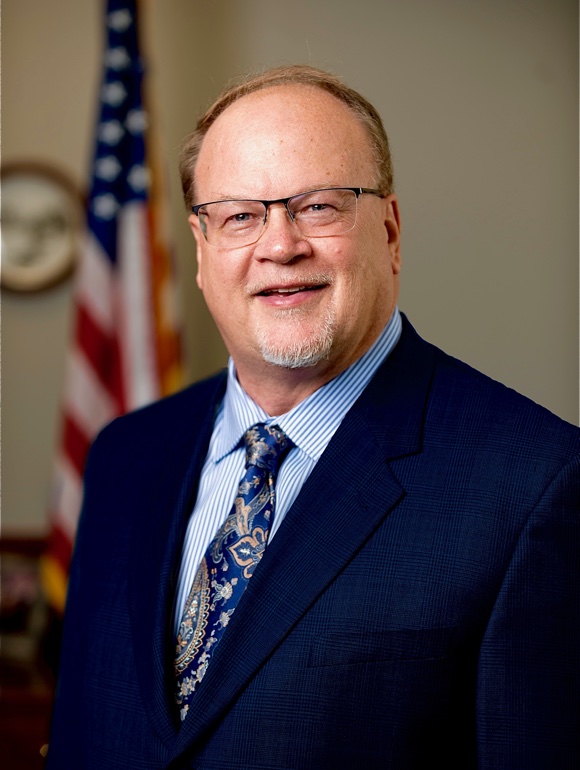
Veronica Klinefelt
96% support rate
Top opponent
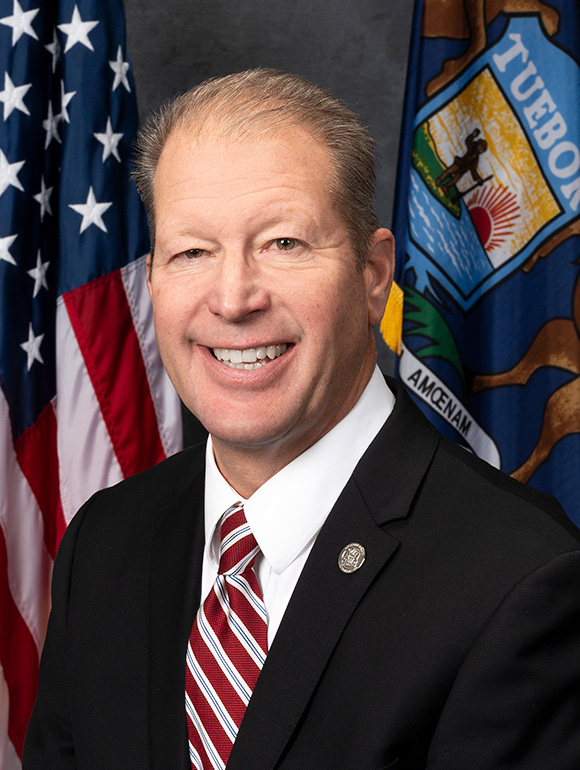
Jim Runestad
8% support rate
Ranked legislators
10
5 support · 5 oppose
Key legislators

Who's moving healthcare in Michigan

Legislators moving healthcare in Michigan
Legislator Party Stance Support rate Votes
Veronica Klinefelt
Veronica Klinefelt Senate · District 11
D
Strong +
96% 60
Winnie Brinks
Winnie Brinks Senate · District 29
D
Strong +
93% 64
Mallory McMorrow
Mallory McMorrow Senate · District 8
D
Strong +
93% 60
Kevin Hertel
Kevin Hertel Senate · District 12
D
Strong +
93% 63
Jeremy Moss
Jeremy Moss Senate · District 7
D
Strong +
93% 62
Jim Runestad
Jim Runestad Senate · District 23
R
Strong −
8% 49
Michele Hoitenga
Michele Hoitenga Senate · District 36
R
Strong −
17% 62
Dan Lauwers
Dan Lauwers Senate · District 25
R
Strong −
17% 63
Thomas Albert
Thomas Albert Senate · District 18
R
Strong −
17% 61
Lana Theis
Lana Theis Senate · District 22
R
Strong −
19% 59
Showing 101–110 of 493 bills

All healthcare bills

passed · Michigan · Senate Apr 22, 2026

SR 112: A resolution to designate April 19-26, 2026, as Infertility Awareness Week.

Senate Resolution 112 officially designates April 19-26, 2026, as Infertility Awareness Week to raise public understanding of infertility as a disease that affects people of all backgrounds. The resolution encourages state legislators and the community to participate in awareness efforts alongside the National Infertility Association. This measure does not change laws or funding but serves as a symbolic gesture to highlight the challenges faced by individuals and couples struggling with family building.
in committee · Michigan · Senate Apr 23, 2026

SB 928: Health: licensing; behavioral health transportation licensing requirements; provide for. Amends 1974 PA 258 (MCL 330.1001 - 330.2106) by adding ch. 9B. TIE BAR WITH: SB 0927'26

This bill establishes a new licensing framework for agencies that provide specialized transportation services for individuals experiencing mental health crises in Michigan. It defines specific criteria for who qualifies for these services, such as being medically stable and physically able to enter a vehicle, while mandating that those requiring medical intervention or restraints be transported by ambulance instead. The legislation requires licensed agencies to operate under medical direction, maintain detailed logs of each trip, and adhere to strict safety and hygiene protocols for their vehicles. Additionally, the bill mandates that agencies submit annual reports to the legislature detailing the number of transports, police interventions, and any investigations into staff misconduct.
Sub-Topics Mental Health
passed · Michigan · House Jun 10, 2026

HB 6022: Mental health: other; authority for prescreening individuals for mental health services; modify. Amends (See bill).

HB 6022 amends Michigan's Mental Health Code to update and clarify the definitions of key terms used throughout the state's mental health system. The bill directly affects community mental health services programs, licensed hospitals, and individuals seeking mental health care by refining how concepts like "assisted outpatient treatment," "abuse," and "adaptive skills" are understood legally. Key provisions include expanding the definition of assisted outpatient treatment to explicitly cover various support services such as vocational training and supervision of living arrangements, while also standardizing definitions for roles like child and adolescent psychiatrists. By revising multiple sections of the existing law, the legislation aims to ensure consistency in how mental health services are administered and described across different facilities and programs.
Sub-Topics Mental Health
in committee · Michigan · House Jun 24, 2026

HB 5944: Human services: medical services; coverage for behavioral health transportation; provide for. Amends 1939 PA 280 (MCL 400.1 - 400.119b) by adding sec. 109y. TIE BAR WITH: HB 5943'26

This bill proposes to expand Michigan's medical assistance program to cover transportation services for individuals with behavioral health needs. It requires the state department to pay for these transport costs for eligible people and mandates that transport providers follow existing mental health code regulations. The legislation defines behavioral health transport as travel to and from treatment facilities and specifies that only approved agencies can provide this service. Importantly, the bill will not become law unless it is passed together with a companion bill, HB 5943.
Sub-Topics Mental Health
in committee · Michigan · House May 20, 2026

HB 5988: Insurance: health insurers; coverage for step therapy; modify. Amends sec. 3406t of 1956 PA 218 (MCL 500.3406t).

This bill requires Michigan health insurers and health maintenance organizations to offer a program that synchronizes multiple maintenance prescription drugs for patients with chronic long-term conditions, provided the patient, physician, and pharmacist agree it is in the patient's best interest. The law mandates that if a step therapy protocol is used to restrict drug coverage, the criteria for these protocols must be based on high-quality clinical practice guidelines developed by an unbiased, multidisciplinary panel that includes public review opportunities. Additionally, the bill establishes specific conditions under which a step therapy exception must be granted quickly, such as when a drug is contraindicated, ineffective, or causes harm, and it ensures that all relevant clinical review criteria are transparently available to patients and healthcare providers.
Sub-Topics Prescription Drugs
passed both · Michigan · House Jun 23, 2026

HB 5814: Human services: medical services; retroactive coverage for medical assistance under the medical assistance program; modify. Amends 1939 PA 280 (MCL 400.1 - 400.119b) by adding sec. 106c.

This bill proposes to allow Michigan residents to receive medical assistance coverage retroactively for up to one month before they apply, with an extension to two months for those eligible under the non-expansion Medicaid population. The changes would take effect on January 1, 2027, and apply to individuals who meet specific citizenship and eligibility requirements defined in the state's social welfare act. By modifying the Social Welfare Act, the legislation aims to provide a grace period for applicants to access healthcare services while their applications are being processed.
Sub-Topics Medicaid
passed · Michigan · House Apr 30, 2026

HR 301: A resolution to declare May 4-10, 2026, as Maternal Mental Health Awareness Week in the state of Michigan.

This bill designates the week of May 4-10, 2026, as Maternal Mental Health Awareness Week in Michigan. It aims to highlight the importance of recognizing postpartum depression and other maternal mental health issues among women of all backgrounds. The resolution encourages the public and healthcare providers to share information about warning signs and available resources during this designated period. By setting aside this specific time frame, the bill seeks to reduce stigma and promote awareness rather than implementing new laws or funding changes.
Sub-Topics Mental Health
in committee · Michigan · House May 13, 2026

HB 5948: Health occupations: massage therapists; massage therapist licensure compact; enact. Amends sec. 17951 of 1978 PA 368 (MCL 333.17951) & adds secs. 16187e & 17953a.

This bill enacts the Interstate Massage Compact in Michigan, allowing licensed massage therapists to practice across multiple states with a single multistate license. The legislation creates an Interstate Commission to manage the compact and establishes a shared data system for tracking licenses, disciplinary actions, and background checks among member states. While the compact aims to increase mobility for therapists and improve public access to services, it maintains that each state retains the authority to enforce its own laws and regulations regarding massage therapy practice.
Sub-Topics Medical Licensing
in committee · Michigan · House Apr 21, 2026

HB 5811: Health occupations: physicians; continuing education requirements related to nutrition and metabolic health; require. Amends secs. 17033, 17060 & 17533 of 1978 PA 368 (MCL 333.17033 et seq.) & adds sec. 17233.

Michigan House Bill 5811 mandates that physicians, physician assistants, and advanced practice registered nurses complete one hour of continuing education on nutrition and metabolic health every three years to renew their medical licenses. This requirement applies to all license renewals and must be based on scientifically objective clinical evidence covering topics such as the health impacts of ultraprocessed foods, the benefits of whole foods for reversing conditions like type 2 diabetes and obesity, and methods for counseling patients on lifestyle changes. The bill directs the state health board to create specific rules outlining these educational standards, ensuring that medical professionals receive training on diet, sleep, and exercise as part of their ongoing professional development.
passed · Michigan · House Jun 25, 2026

HB 5975: Children: health; referral of certain children with elevated blood lead levels to the Early On program administered by the department of lifelong education, advancement, and potential; require. Amends sec. 5474 of 1978 PA 368 (MCL 333.5474).

This bill requires Michigan's health department to refer children under three years old with elevated blood lead levels to the Early On program, which supports early childhood development. The law mandates that when a child's blood lead level exceeds 10 micrograms per deciliter, the department must notify local health officials or the child's doctor to facilitate this referral. Additionally, the bill maintains existing requirements for the state to run a lead poisoning prevention program, including educational outreach and technical assistance for healthcare providers. The health department must also submit annual reports to the legislature detailing the number of children screened, those with confirmed high lead levels, and how program funds were spent.
Showing 101 to 110 of 493 bills
Previous 1 10 11 12 50 Next