Issue · Environment

Environment

Every environment bill, vote, and legislator stance in Michigan, automatically classified by Maddy, our AI policy reader.

Total bills
194
2025-2026 Regular Session
Top supporter
Winnie Brinks
94% support rate
Top opponent
Jonathan Lindsey
6% support rate
Ranked legislators
10
5 support · 5 oppose
Key legislators

Who's moving environment in Michigan

Legislators moving environment in Michigan
Legislator Party Stance Support rate Votes
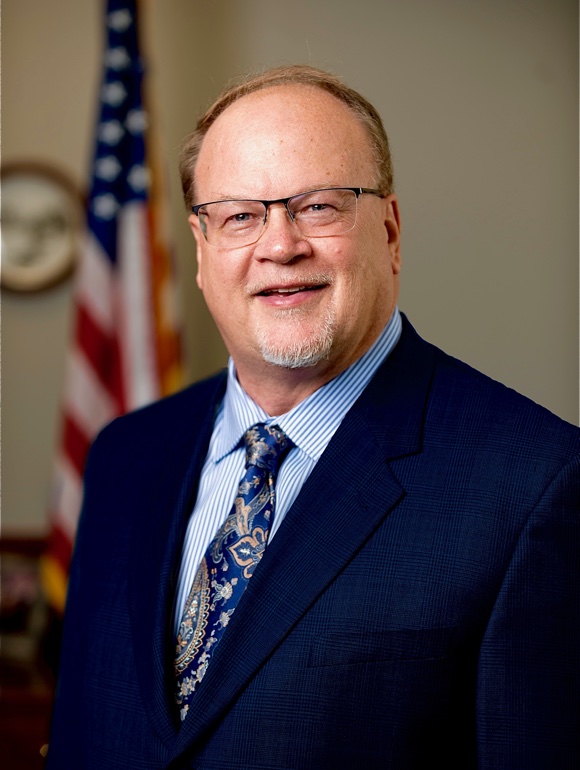
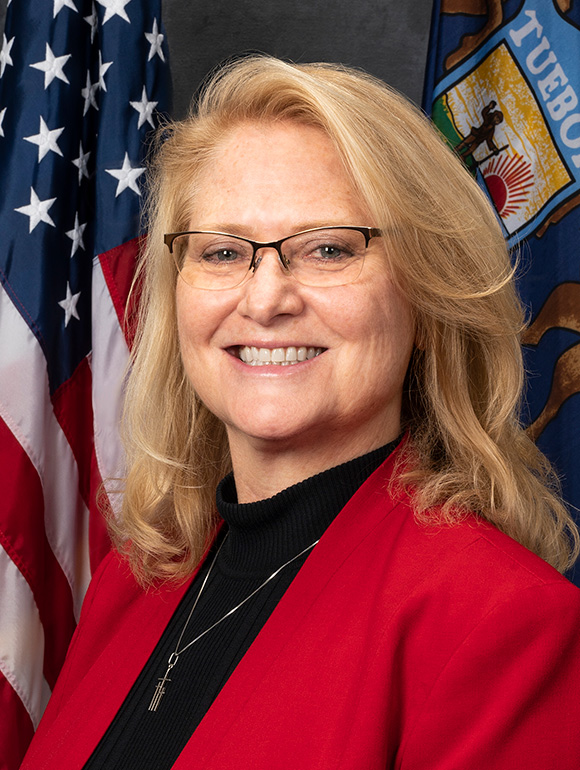
Winnie Brinks
Winnie Brinks Senate · District 29
D
Strong +
94% 29
Paul Wojno
Paul Wojno Senate · District 10
D
Strong +
94% 29
Sean McCann
Sean McCann Senate · District 19
D
Strong +
94% 29
Sylvia Santana
Sylvia Santana Senate · District 2
D
Strong +
94% 29
Mary Cavanagh
Mary Cavanagh Senate · District 6
D
Strong +
94% 29
Jonathan Lindsey
Jonathan Lindsey Senate · District 17
R
Strong −
6% 28
Jim Runestad
Jim Runestad Senate · District 23
R
Strong −
17% 23
Lana Theis
Lana Theis Senate · District 22
R
Strong −
17% 29
Ed McBroom
Ed McBroom Senate · District 38
R
Strong −
20% 26
Thomas Albert
Thomas Albert Senate · District 18
R
Oppose
22% 29
Showing 71–80 of 194 bills

All environment bills

passed both · Michigan · House Jun 10, 2026

HB 5557: Environmental protection: air pollution; calculation of emission profile data; modify. Amends sec. 5503 of 1994 PA 451 (MCL 324.5503).

HB 5557 amends Michigan's environmental law to require the state environmental agency to use the longest time period permitted under the federal Clean Air Act when calculating pollution emissions data for the state's inventory. This change directly affects the Michigan Department of Environment, Great Lakes, and Energy, which collects emissions data from businesses and industries. The bill specifically adds a requirement that the department must use the longest federal time period authorized for emissions rate calculations, aligning state reporting with federal standards. This adjustment aims to improve the accuracy and consistency of Michigan's air pollution data.
Sub-Topics Air Quality
in committee · Michigan · House Feb 26, 2026

HB 5572: Property tax: exemptions; exemption of real and personal property owned and occupied by a nonprofit corporation; modify. Amends sec. 7o of 1893 PA 206 (MCL 211.7o).

HB 5572 modifies Michigan's property tax exemption rules to expand eligibility for certain nonprofits. It adds a new exemption for conservation organizations maintaining nature areas open to the public for activities like hiking and bird watching. The bill also clarifies that nonprofits providing healthcare services (such as nursing homes, skilled nursing facilities, or adult foster care) qualify for tax exemptions if they meet specific licensing requirements. This change directly affects nonprofit hospitals, educational institutions, conservation groups, and healthcare providers seeking property tax relief.
in committee · Michigan · Senate Feb 24, 2026

SB 796: Appropriations: supplemental; funding for PFAS mitigation and water safety; provide for. Creates appropriation act.

SB 796 is a funding bill that allocates supplemental state money for fiscal year 2026 to address PFAS contamination in water. It provides direct funding to state agencies responsible for water safety and PFAS mitigation programs, primarily benefiting communities affected by PFAS ("forever chemicals") in drinking water sources. The key mechanism is creating a new appropriation within the state budget specifically for water testing, cleanup, and safety measures related to PFAS. This bill does not create new regulations but ensures dedicated funding for existing water safety efforts targeting PFAS contamination.
in committee · Michigan · Senate Dec 3, 2025

SB 727: Energy: alternative sources; renewable energy system standards; modify. Amends secs. 29 & 51 of 2008 PA 295 (MCL 460.1029 & 460.1051).

SB 727 modifies Michigan’s Clean and Renewable Energy Act by updating rules for renewable energy credits and setting stricter clean energy targets. It allows electric providers to count renewable energy credits from systems located outside Michigan (if used for regional transmission needs) and creates new pathways for businesses (like manufacturers or cooperatives) to share their renewable credits with providers to meet standards. The bill also raises the clean energy target to 80% by 2035-2039 and 100% by 2040, requiring providers to submit compliance plans and granting limited extensions (up to 2 years) under specific conditions. These changes primarily affect electric utilities, large commercial customers, and renewable energy providers in Michigan.
Sub-Topics Renewable Energy
in committee · Michigan · Senate Mar 24, 2026

SB 731: Energy: alternative sources; distributed generation, storage, and aggregation; create program for in rate cases. Amends 2008 PA 295 (MCL 460.1001 - 460.1232) by adding pt. 9. TIE BAR WITH: SB 0732'25

SB 731 creates a new program to coordinate customer-owned energy resources like rooftop solar, home batteries, and electric vehicles to provide grid services. It directly affects homeowners with these systems, energy aggregators (companies that bundle customer resources), and electric utilities. The bill requires utilities to work with third-party aggregators during specific "program events" to manage distributed energy resources (such as solar panels or batteries) and demand response (like adjusting appliance use) to support grid reliability. Key mechanisms include defining terms like "aggregator" and establishing communication systems between utilities and these third parties. The program aims to integrate small-scale energy resources into grid operations without changing utility rates or renewable energy targets.
passed · Michigan · Senate Jun 17, 2026

SB 771: Environmental protection: sewage; onsite wastewater treatment systems; regulate, and provide for assessments and evaluations. Amends secs. 12751, 12752, 12757 & 12771 of 1978 PA 368 (MCL 333.12751 et seq.) & adds pt. 128.

SB 771 regulates septic and other onsite wastewater systems to protect public health and water quality. It requires property owners with such systems to connect to public sewer lines when an "available public sanitary sewer system" is within 200 feet, unless an approved alternative system (like composting toilets) is used. Local health departments will enforce new rules under "part 128," including inspections and evaluations for non-compliant systems. The bill directly affects homeowners with septic systems, local health departments, and the Department of Environment, Great Lakes, and Energy, aiming to prevent health hazards and water pollution from poorly maintained systems.
passed · Michigan · House Aug 26, 2026

HB 5359: Individual income tax: credit; credit for certain motor fuel retail dealers; provide for. Amends 1967 PA 281 (MCL 206.1 - 206.847) by adding secs. 279 & 679.

HB 5359 creates tax credits for Michigan retail dealers selling specific ethanol-blended fuels. It provides a $0.05 per gallon credit for E15 fuel (10-15% ethanol) and $0.085 per gallon for E85 fuel (50-83% ethanol) sold through metered pumps at their retail sites. The credit applies to tax years 2026-2030 and can be refunded if it exceeds the dealer's tax liability. This directly affects motor fuel retailers who sell these ethanol blends to the public, with eligibility defined under Michigan's motor fuel tax act.
Sub-Topics Income Tax Tax Credits
passed both · Michigan · House Jul 29, 2026

HB 5485: Natural resources: inland lakes; dam safety regulations; provide for. Amends secs. 31502, 31503, 31504, 31505, 31506, 31507, 31508, 31509, 31510, 31511, 31513, 31515, 31516, 31517, 31518, 31520, 31521 & 31523 of 1994 PA 451 (MCL 324.31502 et seq.) & adds secs. 31506a, 31509a, 31509b, 31517a, 31518a, 31518b, 31518c, 31518d, 31528a & 31528b.

HB 5485 updates Michigan's dam safety regulations for inland lakes by revising definitions and adding new sections to the Natural Resources and Environmental Protection Act. The bill directly affects dam owners, operators, and the state agency responsible for dam safety oversight. Key changes include updated terms like "spillway capacity" and "emergency action plan," alongside new regulatory sections (e.g., 31506a, 31509a) to modernize safety standards. These amendments clarify requirements for dam maintenance, flood management, and structural integrity without altering existing enforcement procedures.
in committee · Michigan · House Jan 21, 2026

HB 5454: Environmental protection: hazardous products; use of perchloroethylene in dry cleaning solvents; prohibit. Amends 1994 PA 451 (MCL 324.101 - 324.90106) by adding subpt. 3 to pt. 147.

HB 5454 prohibits the use of perchloroethylene (PCE) in dry cleaning solvents in Michigan, directly affecting dry cleaning businesses, manufacturers, and sellers. The bill bans manufacturing PCE solvents after December 1, 2031; selling them after June 1, 2032; and using them after December 1, 2032. It creates a state fund to provide grants and resources for dry cleaners transitioning to safer alternatives, including cost-share programs and a buy-back program for existing PCE products. The Department of Environment, Great Lakes, and Energy will administer the fund and cost-share program. Violations could result in civil fines up to $10,000.
passed both · Michigan · House May 7, 2026

HB 5308: Watercraft: registration; invasive species prevention and remediation watercraft decals; provide for. Amends sec. 80124a of 1994 PA 451 (MCL 324.80124a).

HB 5308 requires Michigan watercraft owners to purchase an annual $35 "Great Lakes protection" decal. Revenue from these decals funds invasive species prevention and remediation efforts under Section 80124b. The bill mandates that the state agency discontinue sales if fewer than 2,000 decals are sold by September 2006, then fewer than 500 annually after that. It directly affects recreational boat owners in Michigan who must buy the decal to legally operate watercraft. The decal design is specified but placement rules allow flexibility for law enforcement.
Showing 71 to 80 of 194 bills
Previous 1 7 8 9 20 Next