

Issue · Budget & Taxes
Budget & Taxes
Every budget & taxes bill, vote, and legislator stance in Michigan, automatically classified by Maddy, our AI policy reader.
Total bills
561
2025-2026 Regular Session
Top supporter
Chedrick Greene
100% support rate
Top opponent
Jim Runestad
6% support rate
Ranked legislators
10
5 support · 5 oppose
Key legislators
Who's moving budget & taxes in Michigan
| Legislator | Party | Stance | Support rate | Decisive votes |
|---|---|---|---|---|
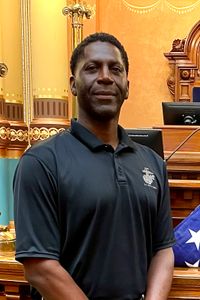
Chedrick Greene
Senate · District 35
|
D |
Strong +
|
100% | 8 |

John Cherry
Senate · District 27
|
D |
Strong +
|
97% | 62 |
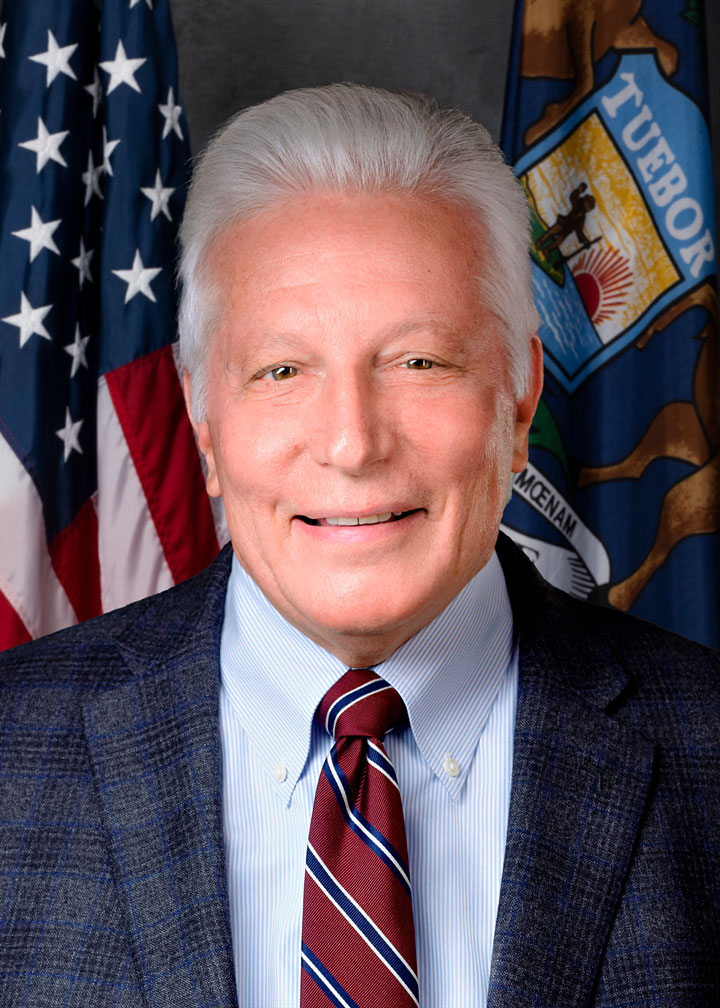
Paul Wojno
Senate · District 10
|
D |
Strong +
|
97% | 61 |

Dayna Polehanki
Senate · District 5
|
D |
Strong +
|
97% | 60 |
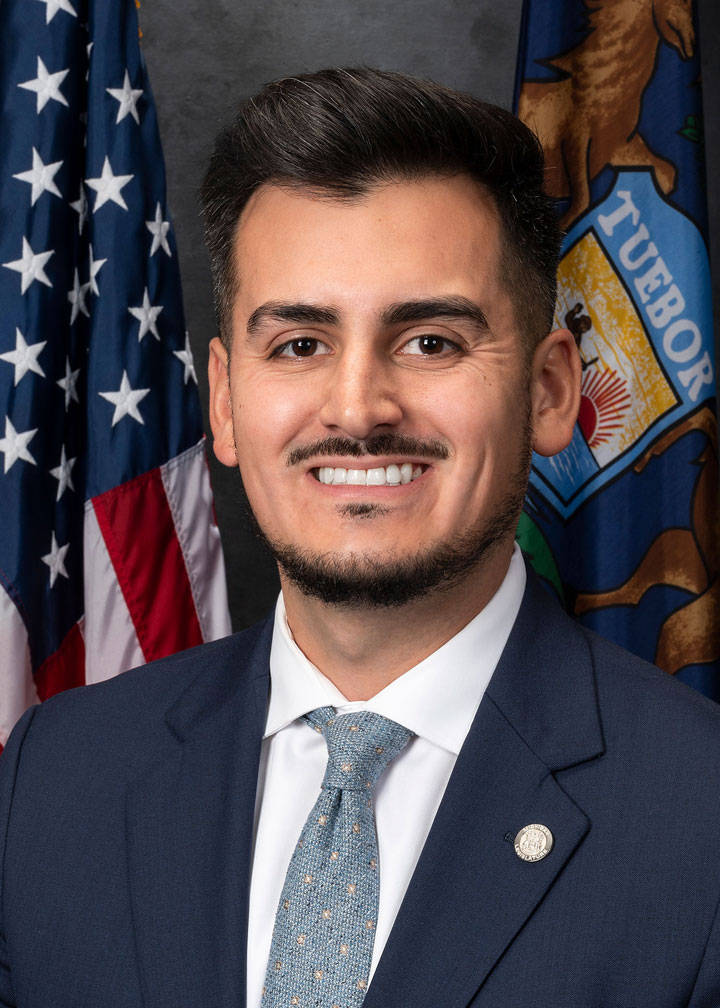
Darrin Camilleri
Senate · District 4
|
D |
Strong +
|
95% | 64 |
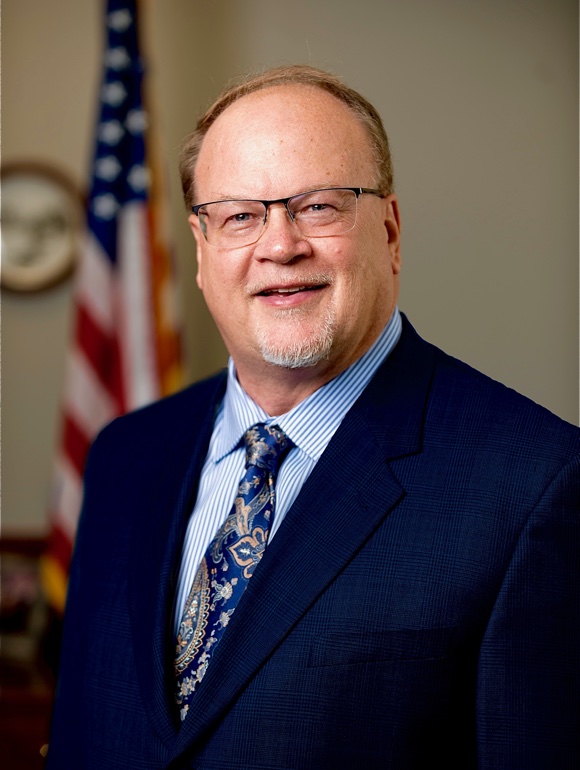
Jim Runestad
Senate · District 23
|
R |
Strong −
|
6% | 49 |

Lana Theis
Senate · District 22
|
R |
Strong −
|
10% | 61 |

Jonathan Lindsey
Senate · District 17
|
R |
Strong −
|
11% | 62 |

Michele Hoitenga
Senate · District 36
|
R |
Strong −
|
11% | 62 |

Thomas Albert
Senate · District 18
|
R |
Strong −
|
11% | 62 |
Showing 281–290 of 561
bills
All budget & taxes bills
HB 5286: Economic development: brownfield redevelopment authority; environmental brownfield redevelopment program; modify. Amends secs. 19608a, 19608b, 19609, 19610, 19610a, 19611, 19612, 19613, 20108b & 21506a of 1994 PA 451 (MCL 324.19608a et seq.) & adds pt. 192.
Topics
✓ Budget & TaxesSupports Budget & TaxesBill establishes state-funded grant/loan program for brownfield redevelopment, allocating budget resources to stimulate economic growth and tax revenue through cleanup projects.
✓ EnvironmentSupports EnvironmentFunds brownfield cleanup requiring environmental benefits, advancing remediation standards to protect natural resources and reduce contamination.
✓ Labor & EmploymentSupports Labor & EmploymentBill requires projects to demonstrate job creation as a measurable economic benefit, directly advancing employment opportunities through redevelopment funding.
SB 571: Occupations: licensing fees; increasing fees collected under this act; provide authority for. Amends sec. 5 of 1979 PA 152 (MCL 338.2205).
SB 26: Traffic control: driver license; reference to fire protection fund in the natural resources and environmental protection act; remove. Amends sec. 52706 of 1994 PA 451 (MCL 324.52706).
Topics
✓ Budget & TaxesSupports Budget & TaxesDirects 50% of municipal forestland sale proceeds to state treasury (first $18M to general fund, excess to fire protection fund), promoting fiscal responsibility in budget allocation.
✓ EnvironmentSupports EnvironmentBill mandates forestry/recreation use of municipal forestland and directs 50% sale proceeds to environmental funds, conserving natural resources per amended Natural Resources Act.
SB 59: School aid: membership; requirements concerning counting pupils in membership; modify for pupils enrolled in certain work-based learning experiences. Amend secs. 6 & 11 of 1979 PA 94 (MCL 388.1606 & 388.1611) & adds sec. 61e.
Topics
✓ Budget & TaxesSupports Budget & TaxesAdjusts school funding calculations to include work-based learning students, ensuring full state aid allocation for eligible districts, directly increasing school aid appropriations.
✓ EducationSupports EducationEnsures work-based learning students count toward school funding, preventing underfunding of districts serving these students and strengthening educational program access.
HB 4106: Appropriations: supplemental; funding for small business payroll; provide for. Creates appropriation act.
Sub-Topics
Appropriations
SB 108: Economic development: downtown development authorities; certain requirements for initial assessed value; modify. Amends sec. 201 of 2018 PA 57 (MCL 125.4201).
Sub-Topics
Tax Incentives
HB 4112: Economic development: Michigan economic growth authority; definition of new construction under the Michigan economic growth authority act; modify. Amends sec. 3 of 1995 PA 24 (MCL 207.803). TIE BAR WITH: HB 4111'25
Tags
Economic Development
HB 4143: Corporate income tax: revenue distribution; earmark to the Michigan transportation fund; provide for. Amends sec. 695 of 1967 PA 281 (MCL 206.695).
Topics
✓ Budget & TaxesSupports Budget & TaxesDirects $500M annually to transportation funds for road projects, ensuring dedicated tax revenue allocation for infrastructure, aligning with funding essential public services.
✓ TransportationSupports TransportationDirects $500M annually to local road projects and state transportation fund, explicitly earmarking corporate tax revenue for transportation infrastructure funding.
HB 4172: Appropriations: supplemental; funding for bird flu testing; provide for. Creates appropriation act.
Topics
✓ Budget & TaxesSupports Budget & TaxesBill creates specific supplemental appropriation for essential public health testing, directly advancing budget allocation for critical state services without tax changes.
✓ HealthcareSupports HealthcareFunds bird flu testing for public health, directly supporting state health department's pandemic response through supplemental appropriation.
Sub-Topics
Appropriations