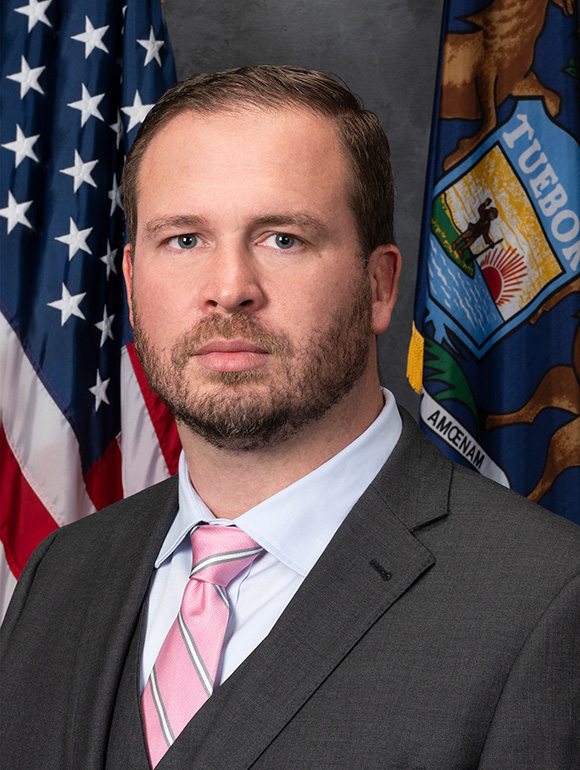
HB 5878 eliminates the personal property tax in Michigan for all items that do not qualify for an existing specific exemption, effective for taxes levied after December 31, 2026. Owners of such property must annually file a statement with their local tax collector to claim this new exemption, while property that already has a designated exemption cannot be claimed under this new rule. The bill also requires local tax units to send summary data to the state Department of Treasury by April 1 each year to track the revenue impact of these new exemptions. This legislation directly affects business owners and individuals holding personal property by removing a tax burden on eligible assets, provided they complete the necessary filing requirements.
This bill repeals Michigan's state real estate transfer tax, which previously applied to the sale of property. It includes a provision to ensure that any resulting loss in state revenue is compensated by transferring funds from the state general fund to the school aid fund. The law will only take effect if a separate companion bill, HB 5880, is also passed.
This bill repeals Michigan's 1993 State Education Tax Act, which previously imposed a tax on property owners to fund public schools. The legislation is contingent upon the simultaneous passage of a companion bill (HB 5880) that mandates the state to use general funds to fully replace any revenue lost from eliminating the tax. If enacted, the change would remove the specific tax requirement while ensuring that school funding levels remain unchanged through state appropriation. The law is scheduled to take effect 90 days after it is signed into law.
HB 5504 proposes creating a State Digital Service Office within Michigan's Department of Technology, Management, and Budget. The office would review software projects costing $1 million or more, advise state agencies on modern development practices (like user-centered design and agile methods), and require annual reports on progress and cost savings. It directly affects state departments and agencies developing digital services, mandating collaboration with the new office for projects over $500,000 and requiring transparency through public reporting on outcomes like time saved and error reduction. The bill aims to improve digital service efficiency and user experience across state government.
HB 4572 is an appropriations bill that allocates funding for Michigan's Department of Military and Veterans Affairs for the fiscal year ending September 30, 2026. It establishes the specific budget amount the department can spend on military and veterans programs during this period. The bill directly affects the department's operations and the veterans and military personnel it serves through its funded services. As a routine budget measure, it creates the legal framework for spending but does not change existing programs or policies.
HB 5331 prohibits state agencies, local governments, universities, community colleges, and other entities receiving state funds from purchasing certain drones. It extends the same drone purchase restrictions that apply to the federal government to these Michigan entities. The bill amends Michigan's Management and Budget Act to require these organizations to follow federal guidelines when acquiring drones with state money. This directly affects any state-funded organization that might otherwise buy drones for operations.
This bill modifies Michigan's sales tax rules for online marketplace facilitators, requiring them to collect and remit sales tax on all taxable sales made through their platforms regardless of whether the individual sellers have a physical presence in the state. It establishes that marketplace facilitators are responsible for auditing only their own facilitated sales unless sellers fail to provide necessary information, while also protecting facilitators from liability when sellers provide incorrect data or pay the tax directly. The legislation creates a special provision for delivery network companies, allowing them to deduct or exclude from their tax liability the sales tax they paid to marketplace sellers for qualified delivery services, such as those performed by couriers using personal vehicles or walking for distances under 75 miles.
HB 5032 amends Michigan's Revised School Code to prohibit using state school aid funds for special elections. It directly affects school districts and local governments that receive state school aid, preventing them from allocating those funds toward special election costs. The bill specifically amends Section 1361 of the School Code (MCL 380.1361) to add this restriction. This change clarifies that school aid funds must be used solely for educational purposes, not for election-related expenses.
HB 4080 reinstates a program deferring property tax special assessments for eligible Michigan homestead owners. It applies to assessments due before October 1, 2020, or on/before October 1, 2022, for primary residences owned by qualifying individuals (including those who are totally and permanently disabled). The bill allows owners to defer payments until death, sale, or transfer of the property, with up to four annual partial payments (minimum $500 or 5% of the balance) and interest accruing on unpaid amounts. Full payment becomes due upon sale, transfer, or death, and the bill requires the state to notify owners of these terms. This amendment to Michigan’s 1976 property tax law (MCL 211.761-762) is contingent on HB 4079 passing.
HB 4079 adjusts the income limit for homeowners aged 65 or older, or those totally and permanently disabled, who qualify for a property tax deferment on special assessments. Currently set at $34,900 as of October 2022, the bill replaces this fixed amount with an annual adjustment based on the Detroit-area Consumer Price Index (CPI), meaning the limit will rise or fall each year with local inflation. The state treasurer will calculate the new limit annually using the prior year's CPI data, rounding to the nearest dollar. This change directly affects eligible homeowners seeking to defer special assessments on their primary residences without immediate payment.