Issue · Technology

Technology (Artificial Intelligence)

Every technology bill, vote, and legislator stance in Maryland, automatically classified by Maddy, our AI policy reader.

Total bills
24
2026 Regular Session
Top supporter
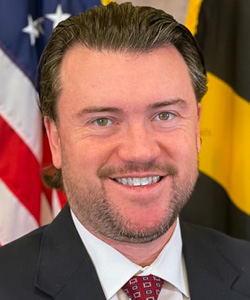
Caylin Young
100% support rate
Top opponent
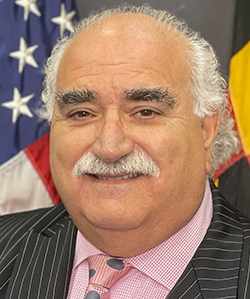
Mike Griffith
33% support rate
Ranked legislators
10
5 support · 5 oppose
Key legislators

Who's moving artificial intelligence in Maryland

Legislators moving artificial intelligence in Maryland
Legislator Party Stance Support rate Votes
Caylin Young
Caylin Young House · District 45
D
Strong +
100% 3
Nicole Williams
Nicole Williams House · District 22
D
Strong +
100% 3
Kevin Hornberger
Kevin Hornberger House · District 35B
R
Strong +
86% 7
Seth Howard
Seth Howard House · District 30B
R
Strong +
83% 6
Cheryl Pasteur
Cheryl Pasteur House · District 11A
D
Strong +
80% 5
Mike Griffith
Mike Griffith House · District 35A
R
Oppose
33% 6
Jeff Long
Jeff Long House · District 27B
D
Oppose
40% 5
Kevin Anderson
Kevin Anderson House · District 38A
R
Oppose
40% 5
Ric Metzgar
Ric Metzgar House · District 6
R
Oppose
40% 5
Barrie Ciliberti
Barrie Ciliberti House · District 4
R
Mixed −
43% 7
Showing 1–10 of 24 bills

All technology bills

in committee · Maryland · House of Delegates Feb 5, 2026

HB 924: Child Exploitation Material - Civil and Criminal Actions (Safe Kids Act)

HB 924, the "Safe Kids Act," creates a new civil legal remedy allowing parents or legal guardians of minors depicted in or exposed to child exploitation material to sue online platforms directly. It prohibits platforms from knowingly distributing such material - including AI-generated images defined as "computer-generated" under the law - and requires them to remove it. The bill updates definitions to explicitly include AI-created images in child pornography laws and increases the age threshold for victims in certain criminal cases. This allows civil lawsuits for damages (including attorney fees) without needing prior criminal convictions, targeting platforms that facilitate distribution rather than just criminalizing possession.
in committee · Maryland · Senate Feb 12, 2026

SB 827: Consumer Protection and Product Liability - Chatbots

SB 827 regulates chatbot design, operation, and safety in Maryland, directly affecting chatbot developers, operators (like companies offering AI assistants), and all users - including minors. Key provisions require clear warnings before use, enhanced privacy protections for minors, strict rules for handling user data (including de-identifying personal information), and treating chatbots as "products" for liability claims. Violations are enforced as unfair trade practices under Maryland’s Consumer Protection Act, with additional penalties. The bill also mandates the Behavioral Health Administration to create educational materials about behavioral health services.
in committee · Maryland · House of Delegates Feb 18, 2026

HB 1261: Consumer Protection - Artificial Intelligence Toys (Artificial Intelligence Toy Safety Act)

HB 1261, the Artificial Intelligence Toy Safety Act, requires manufacturers of AI toys marketed to children in Maryland to include specific safety features and data privacy protections. It mandates parental consent mechanisms, age-appropriate content filters to block harmful or inappropriate material (like violence or emotional manipulation), automatic "safe mode" that disables the toy during risky interactions, and prohibitions on using child data for marketing. The law directly affects toy manufacturers selling AI toys in Maryland, requiring them to conduct safety assessments and update software for vulnerabilities. Violations are treated as unfair trade practices under Maryland's Consumer Protection Act, with enforcement handled by a new Review Panel under the Attorney General's office.
in committee · Maryland · Senate Feb 13, 2026

SB 826: Income Tax – Angel Investor Tax Credit for Investments in Emergent Technology

SB 826 creates a tax credit for Maryland investors who fund qualified early-stage companies developing emergent technology like artificial intelligence, quantum computing, or cybersecurity. Investors must contribute at least $25,000 in cash to a Maryland company meeting specific criteria, with the credit covering a percentage of that investment. The state establishes an Angel Investor Tax Credit Reserve Fund to manage the program, requiring investors to make qualifying investments within a set timeframe after certification. This credit directly affects individual investors and Maryland-based tech startups in designated fields, aiming to boost local investment in emerging technology sectors.
in committee · Maryland · House of Delegates Feb 12, 2026

HB 1128: Income Tax – Angel Investor Tax Credit for Investments in Emergent Technology

HB 1128 creates a state income tax credit for individuals or entities investing in Maryland-based companies developing emergent technologies like artificial intelligence, quantum computing, or cybersecurity. To qualify, investors must contribute at least $25,000 before July 1, 2029, in exchange for equity (not debt), and the company must meet specific criteria for "emergent technology" development. The credit is funded through a dedicated Angel Investor Tax Credit Reserve Fund, which earns interest and is managed by the Department of Commerce. This policy directly affects early-stage tech investors and qualifying Maryland companies seeking capital to grow.
passed · Maryland · House of Delegates Mar 23, 2026

HB 952: Consumer Protection - Companion Chatbots - Regulation

HB 952 requires operators of "companion chatbots" (AI systems designed to meet social needs through human-like interactions) to establish safety protocols, including preventing harmful content like self-harm discussions and sexually explicit material for minors. Operators must publish these protocols online, display clear warnings that chatbots are AI (not human), and provide crisis resource referrals for users expressing suicidal thoughts. The bill also mandates that operators of chatbots used by minors display mandatory break reminders after 3 hours of continuous use. It excludes business customer service bots, video game features, and basic voice assistants from these requirements.
signed · Maryland · House of Delegates Apr 28, 2026

HB 895: Food Retailers and Third-Party Delivery Service Providers - Dynamic Pricing and Personal Data (Protection From Predatory Pricing Act)

HB 895 prohibits large food retailers (defined as those with at least 15,000 square feet selling tax-exempt food) from using dynamic pricing (real-time price changes based on demand or AI) or consumer surveillance data to set prices for individual shoppers. It also bans retailers from using data about protected characteristics (like race or gender) to deny discounts or services to specific customers. The bill further protects union rights by preventing retailers from weakening employee benefits under existing collective bargaining agreements without negotiation. Violations would be treated as unfair trade practices under Maryland’s Consumer Protection Act, subject to enforcement and penalties.
signed · Maryland · Senate May 26, 2026

SB 597: Higher Education - Maryland Artificial Intelligence Partnership

SB 597 establishes the Maryland Artificial Intelligence Partnership within the University System of Maryland to serve as a central hub for coordinating AI initiatives across the state. It creates an Artificial Intelligence Incubation Lab to help state agencies adopt AI responsibly, and redesignates the Cybersecurity Public Service Scholarship Program as the Emerging Technology Public Service Scholarship Program to include AI training. The bill also requires Morgan State University's Center for Equitable AI to support state agencies with AI research. These changes directly affect Maryland public university students (through expanded scholarship eligibility), state agencies (via lab support), and the University System of Maryland (as host for the Partnership and Lab).
passed · Maryland · House of Delegates Apr 13, 2026

HB 1057: Education - Artificial Intelligence - Guidelines, Professional Development, and Collaborative (Artificial Intelligence Ready Schools Act)

This bill requires Maryland's State Department of Education to create online resources for schools, teachers, and students on the safe, ethical, and equitable use of artificial intelligence in education. It mandates that school districts develop AI policies by December 2027, appoint AI coordinators, and use only AI tools certified by Morgan State University as meeting state guidelines. The law also requires statewide teacher training on AI literacy by July 2027 and includes AI education in workforce preparation standards. These requirements directly affect public K-12 schools, educators, students, and administrators across Maryland.
in committee · Maryland · House of Delegates Feb 13, 2026

HB 1385: Health Insurance - Use of Artificial Intelligence - Human Evaluation

HB 1385 requires health insurers and pharmacy benefit managers using artificial intelligence (AI) for medical treatment reviews (utilization review) to include licensed healthcare professionals in key evaluations. Specifically, it mandates that AI decisions must be reviewed by a licensed professional who can question, modify, or override AI determinations based on a patient’s full medical history and individual circumstances. The bill also requires quarterly reviews of AI performance using human assessments of real-world health outcomes to improve accuracy and safety. These provisions apply to all AI tools used in utilization review processes within Maryland’s health insurance system, effective October 1, 2026.
Showing 1 to 10 of 24 bills
1 2 3 Next