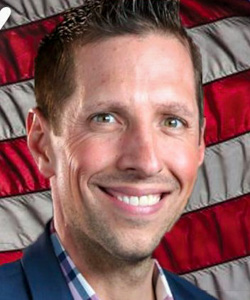
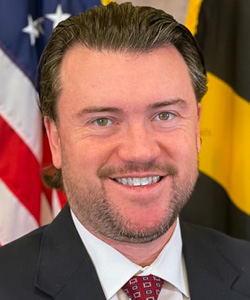
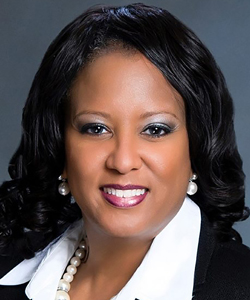
Key legislators
Who's moving immigration in Maryland
Showing 4 of 4
bills
All immigration bills
HB 1530 repeals a requirement that undocumented students (or their parents/guardians) must file Maryland income tax returns annually for three years to qualify for in-state tuition rates at public colleges. The bill directly affects undocumented students who attended Maryland high schools and meet other existing criteria (graduation from a Maryland school, applying within six years). Instead of tax filings, students must now submit an affidavit committing to apply for permanent residency within 30 days of eligibility, plus proof of Selective Service compliance if required. The bill maintains other eligibility conditions like Maryland high school attendance but removes the tax documentation burden, aiming to simplify access to in-state tuition rates.
HB 1017 prohibits Maryland state or local governments from approving private entities to operate immigration detention facilities unless the facility’s use is explicitly permitted under applicable zoning laws. It defines such facilities as buildings housing individuals for immigration violations (including those with security features like perimeter fencing or locked areas), and clarifies that general "government/institutional" zoning does not cover them. Private operators violating this face civil penalties up to $10,000 per day, and the Attorney General can enforce the law through court actions. The law applies retroactively to existing agreements for facilities intended for immigration detention, regardless of prior permits or investments.
HB 598 creates a temporary license for internationally trained physicians to practice medicine in Maryland under specific conditions. It allows the State Board of Physicians to issue a 3-year license (non-renewable) to doctors who hold a WHO-recognized medical degree outside the U.S., completed 2 years of equivalent postgraduate training, practiced medicine for 5 of the last 7 years abroad, passed U.S. medical exams (USMLE Steps 1-3), and meet other criteria like English proficiency and Maryland residency. The license requires physicians to pursue full licensure through board-established pathways after the temporary period ends. This directly affects internationally trained doctors seeking to work in Maryland’s healthcare system, providing a structured but limited pathway to practice.
HB 444 prohibits Maryland state and local governments, including county sheriffs and agencies, from entering into new agreements with federal authorities to enforce civil immigration law. It requires existing agreements to be terminated by July 1, 2026, or immediately upon the law’s effective date (June 1, 2026). The bill specifically targets contracts, memorandums, or agreements that allow local entities to assist in federal immigration enforcement under federal laws like 8 U.S.C. § 1103 or § 1357. This directly affects local law enforcement agencies and government bodies that previously collaborated with federal immigration authorities. The law aims to prevent state/local resources from being used for immigration enforcement under federal programs.