Issue · Housing

Housing

Every housing bill, vote, and legislator stance in Maryland, automatically classified by Maddy, our AI policy reader.

Total bills
139
2026 Regular Session
Top supporter
Cheryl Kagan
100% support rate
Top opponent
Johnny Mautz
0% support rate
Ranked legislators
10
5 support · 5 oppose
Key legislators

Who's moving housing in Maryland

Legislators moving housing in Maryland
Legislator Party Stance Support rate Votes
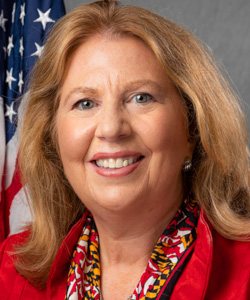
Cheryl Kagan
Cheryl Kagan Senate · District 17
D
Strong +
100% 82
Kevin Harris
Kevin Harris Senate · District 27
D
Strong +
100% 82
Craig Zucker
Craig Zucker Senate · District 14
D
Strong +
100% 85
Dalya Attar
Dalya Attar Senate · District 41
D
Strong +
100% 47
Dawn Gile
Dawn Gile Senate · District 33
D
Strong +
100% 83
Johnny Mautz
Johnny Mautz Senate · District 37
R
Strong −
0% 85
Jack Bailey
Jack Bailey Senate · District 29
R
Strong −
0% 80
Paul Corderman
Paul Corderman Senate · District 2
R
Strong −
3% 85
Johnny Salling
Johnny Salling Senate · District 6
R
Strong −
3% 85
Mary Beth Carozza
Mary Beth Carozza Senate · District 38
R
Strong −
3% 85
Showing 111–120 of 139 bills

All housing bills

in committee · Maryland · House of Delegates Jan 29, 2026

HB 213: Evidence – Interception of Oral Communications – Fair Housing Testing

HB 213 allows fair housing testers working for qualified programs (federal, state, local governments, or nonprofit civil rights organizations with specific experience) to legally record oral conversations when testing for housing discrimination. It permits this only if the tester is a party to the conversation and the recording is solely to gather evidence of a fair housing violation under federal, state, or local law. The bill strictly limits the use of such recordings - they cannot be admitted as evidence in court but may only be used to enforce fair housing laws. This directly affects fair housing organizations and their testers by creating a legal pathway to collect evidence of discrimination in housing. The law takes effect October 1, 2026.
Sub-Topics Tenant Rights
signed · Maryland · House of Delegates Apr 28, 2026

HB 220: Environment - Water - Individual Submeters

HB 220 requires apartment buildings with multiple units to install individual water meters for each dwelling unit, replacing bulk meters. It prohibits landlords from charging tenants for leaks they caused, common-area usage, or maintenance costs, and mandates that charges reflect actual water use. Tenants gain the right to inspect leak detection monitors and review billing records, while unpaid water bills cannot be used to evict tenants for nonpayment. The bill also establishes a complaint process for tenants to address billing disputes with local housing authorities or consumer protection offices.
signed · Maryland · Senate May 26, 2026

SB 335: Landlord and Tenant - Discrimination in Housing for Income-Based Housing Subsidies and Positive Rental History Reporting

This bill prohibits landlords from refusing to rent to potential tenants who use income-based housing subsidies (like federal housing vouchers) based on the tenant's income, credit score, or past credit history that occurred before they received the subsidy. It directly affects landlords and tenants using such subsidies, ensuring they cannot be discriminated against for relying on government assistance to pay rent. The law amends Maryland's housing discrimination statutes to clarify that such refusals constitute a discriminatory practice enforceable by the Maryland Commission on Civil Rights, with a limited exception for properties receiving funding that requires income verification for tenant eligibility.
signed · Maryland · Senate Apr 28, 2026

SB 130: Environment - Water - Individual Submeters

SB 130 requires landlords in multi-unit apartment buildings (with more than two dwelling units) to install individual water meters for each unit instead of using bulk billing. It prohibits landlords from charging tenants for leaks, poor maintenance, or common areas, and mandates that meters include leak detection monitors that tenants can inspect. Landlords must maintain clear records of water costs and usage for tenant review, and unpaid water bills cannot be used as grounds for eviction. The law, effective October 1, 2026, also allows a $1 monthly administrative fee to cover billing costs.
in committee · Maryland · House of Delegates Jan 29, 2026

HB 579: Baltimore County - Property Tax - Partial Exemption and Credits for Seniors

HB 579 creates a property tax exemption for Baltimore County homeowners aged 65+ who already qualify for the homestead property tax credit. It exempts the first $50,000 of a home's assessed value from state property tax and sets the homestead credit percentage at 100% (instead of the standard 110%) for county and municipal taxes. The bill requires Baltimore County's governing body to implement this credit and specifies that applicants must indicate their age (65+) on the credit application form. This directly affects Baltimore County seniors meeting the existing homestead credit eligibility criteria. The policy changes are limited to Baltimore County and do not alter statewide tax rates or credit calculations for other jurisdictions.
in committee · Maryland · House of Delegates Mar 11, 2026

HJ 2: United States of America - National Infrastructure Bank

HJ 2 is a Maryland legislative resolution urging the U.S. Congress to pass H.R. 5356, which would establish a federal National Infrastructure Bank. The resolution highlights Maryland’s urgent infrastructure needs, including repairing 1,563 bridges, fixing aging water systems, addressing housing shortages, and reducing traffic congestion. It requests Congress create a $5 trillion bank modeled on historical infrastructure financing, projected to fund repairs and new projects without new taxes while creating jobs and growing the economy. The resolution does not create the bank itself but formally asks Congress to enact the supporting federal legislation.
Sub-Topics Bridges
in committee · Maryland · House of Delegates Jan 28, 2026

HB 434: Residential Leases - Use of Algorithmic Device by Landlord to Determine Rent, Occupancy, and Lease Terms - Prohibition

HB 434 prohibits Maryland landlords from using computer programs (algorithmic devices) that rely on nonpublic competitor data - like actual rent prices or occupancy rates - to set rent, lease renewal terms, or occupancy levels for new residential leases. It directly affects residential landlords who might use such tools to adjust pricing or lease conditions. The law defines "nonpublic competitor data" as information not widely available, such as rivals' rent amounts or tenant turnover rates, and excludes tools used for affordable housing programs or anonymized industry reports. Violations would be treated as unfair trade practices under Maryland's consumer protection law, with enforcement starting October 1, 2026, for new leases only.
died · Maryland · House of Delegates Feb 17, 2026

HB 453: Real Property - Insufficient Condominium Reserve Account Grant Fund - Establishment

HB 453 establishes the Insufficient Condominium Reserve Account Grant Fund to provide grants to low-income condominium owners (defined as households earning ≤80% of area median income) who face increased assessments needed to meet reserve account requirements. The fund, which automatically earns interest and continues year-to-year, covers these costs directly and prioritizes applicants aged 65 or older. Condominium associations must report annual reserve balance updates to the Department of Housing and Community Development for grant recipients. This policy change directly affects qualifying condominium residents and associations in Maryland, ensuring financial assistance without replacing other funding sources.
passed both · Maryland · Senate Apr 13, 2026

SB 389: Land Use - Transit-Oriented Development - Alterations (Maryland Transit and Housing Opportunity Act)

SB 389, the Maryland Transit and Housing Opportunity Act, automatically designates transit-oriented development (TOD) areas near rail stations with hourly weekday service (8 a.m.-6 p.m.) as enterprise zones - bypassing normal limits on such designations. It requires Maryland’s development corporation to prioritize loans for projects redeveloping state-owned land near rail stations and delays development taxes/fees for qualifying residential projects. The bill also adds project labor agreements as a scoring factor for TOD funding and adjusts local land-use regulations to support transit-focused development. Directly affecting developers, local governments, and communities near transit hubs, it aims to accelerate housing and infrastructure near rail corridors.
signed · Maryland · House of Delegates Apr 14, 2026

HB 243: Land Use - Comprehensive and General Plans - Alteration of Elements

HB 243 modifies Maryland's requirements for local governments' comprehensive and general plans. It adds new mandatory elements like Resilience, Place, and Ecology while replacing older terms (e.g., "Water Resources" becomes "Equity"). The bill requires charter counties and other local jurisdictions to include these updated elements in their plans, detailing goals for economic, social, and environmental development. State agencies must also provide data and guidance to help local governments meet these new standards. This affects how local governments structure long-term planning for land use, housing, transportation, and community facilities.
Showing 111 to 120 of 139 bills
Previous 1 11 12 13 14 Next