Issue · Education

Education

Every education bill, vote, and legislator stance in Maryland, automatically classified by Maddy, our AI policy reader.

Total bills
247
2026 Regular Session
Top supporter
Nick Charles
100% support rate
Top opponent
Robin Grammer
6% support rate
Ranked legislators
10
5 support · 5 oppose
Key legislators

Who's moving education in Maryland

Legislators moving education in Maryland
Legislator Party Stance Support rate Votes
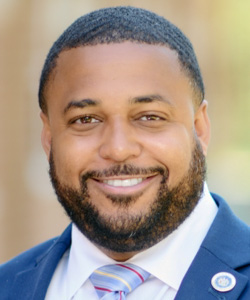
Nick Charles
Nick Charles Senate · District 25
D
Strong +
100% 48
Denise Roberts
Denise Roberts House · District 25
D
Strong +
96% 92
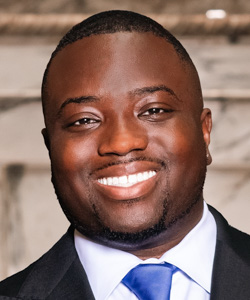
Adrian Boafo
Adrian Boafo House · District 23
D
Strong +
96% 48
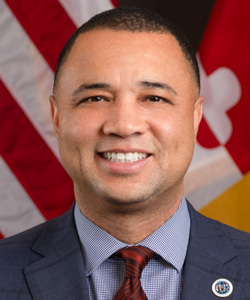
Antonio Hayes
Antonio Hayes Senate · District 40
D
Strong +
95% 50
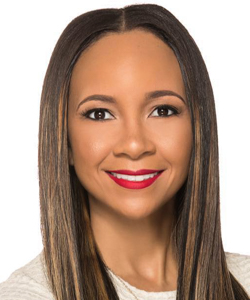
Shaneka Henson
Shaneka Henson Senate · District 30
D
Strong +
95% 51
Robin Grammer
Robin Grammer House · District 6
R
Strong −
6% 85
Matt Morgan
Matt Morgan House · District 29A
R
Strong −
9% 98
Mark Fisher
Mark Fisher House · District 27C
R
Strong −
9% 98
Nic Kipke
Nic Kipke House · District 31
R
Strong −
9% 100
Lauren Arikan
Lauren Arikan House · District 7B
R
Strong −
9% 98
Showing 61–70 of 247 bills

All education bills

in committee · Maryland · House of Delegates Feb 16, 2026

HB 1202: Public Schools – Content Standards, Curriculum, and Bullying Policies – Culture and History of Palestine

HB 1202 requires Maryland's State Board of Education to develop content standards on Palestinian culture and history for inclusion in social studies curriculum standards by December 2026. These standards must cover historical presence, cultural traditions, impacts of displacement, and Palestinian identity as a distinct ethnic group, while emphasizing factual, nonpartisan teaching and critical thinking. Starting in the 2027-2028 school year, all public schools must integrate this content into social studies. The bill also updates bullying policies to explicitly prohibit anti-Palestinian bias and mandates county boards to create age-appropriate curriculum guides in collaboration with educators and community stakeholders.
in committee · Maryland · Senate Feb 11, 2026

SB 502: Language Acquisition Tracking Program for Deaf and Hard of Hearing Children - Establishment

SB 502 establishes a statewide program to track language development for deaf or hard of hearing children under age 9. The bill creates a State Coordinator within the Maryland Department of Education to oversee the program, requiring annual assessments using an approved tool every six months starting from diagnosis. These assessments, administered by teachers or specialists, track progress toward language milestones and integrate results into existing plans (like IEPs or 504 plans), with parents able to opt out via written notice. The program directly affects eligible children (defined as having permanent hearing loss), their families, and educators, aiming to ensure language skill development aligns with peers through standardized tracking.
in committee · Maryland · House of Delegates Feb 16, 2026

HB 1528: Education - Homeschool Students - Extracurricular Activities

HB 1528 would allow Maryland public schools to permit homeschool students to participate in school-sponsored extracurricular activities (like sports or clubs) under specific conditions. It requires homeschool students to follow Maryland’s COMAR guidelines for home instruction and gives public school students priority over homeschoolers if spaces are limited. The bill does not require schools to offer participation but establishes clear rules for when it may occur. This directly affects homeschool families seeking access to public school activities and public school administrators managing program enrollment.
in committee · Maryland · Senate Feb 14, 2026

SB 977: Maryland Positive Youth Development Commission and Fund – Establishment

SB 977 establishes the Maryland Positive Youth Development Commission within the State Department of Education and creates a permanent fund to support community-based youth programs. The bill directs the Commission to award grants to eligible organizations (including after-school programs, mentoring initiatives, and summer learning opportunities) that provide evidence-based programming for youth aged birth through 25 outside regular school hours. The fund, financed by legal settlement proceeds and other revenue, will provide sustainable funding for these programs, which aim to reduce social media dependency and build social-emotional skills. This directly affects community organizations delivering youth development services and the young people they serve across Maryland.
signed · Maryland · Senate Apr 28, 2026

SB 810: Immigration Enforcement - Expanding Sensitive Locations, Notification, and Guidance (Maryland Values Act of 2026)

SB 810 prohibits public school security personnel (including school resource officers, security employees, and certain off-duty officers providing school coverage) from engaging in federal immigration enforcement or sharing student/employee information for immigration purposes. The bill specifically bans using school staff for Section 287(g) federal immigration investigations and restricts sharing educational or personnel records related to immigration enforcement, except when presented with a valid judicial warrant, subpoena, or legal order. School security personnel must immediately contact the county superintendent and legal counsel if shown such legal documents. This law directly affects all Maryland public schools and their security staff, taking effect July 1, 2026, and aligns with existing privacy laws.
in committee · Maryland · House of Delegates Feb 26, 2026

HB 1491: Education - Interjurisdictional Safe Pathways Commission - Establishment

HB 1491 establishes the Interjurisdictional Safe Pathways Commission to coordinate and secure funding for safe routes for Maryland public school students traveling to and from school. The commission, made up of state education and transportation officials, school system representatives, local government members, students (including those with IEPs), parents, and infrastructure experts, will identify gaps in existing pathways, evaluate funding options, and develop strategic plans. It must submit annual reports to the governor and legislative committees by December 1st, detailing current conditions, funding opportunities, and recommendations for infrastructure improvements. This bill directly affects public school students, their families, school systems, and local governments responsible for transportation infrastructure.
passed both · Maryland · House of Delegates Apr 13, 2026

HB 1341: Immigration Enforcement - Expanding Sensitive Locations, Notification, and Guidance (Maryland Values Act of 2026)

HB 1341 prohibits public school security personnel - including school resource officers, security employees, and certain law enforcement officers - from engaging in federal immigration enforcement or sharing student/employee records for immigration purposes. The bill requires security staff to immediately contact school officials if presented with a valid judicial warrant, subpoena, or legal order for immigration-related information. It amends Maryland's Education Code to clarify that school security cannot be used for immigration investigations under federal §287(G) and must comply with state privacy laws. This directly affects school security staff and protects students, employees, and their families from immigration enforcement activities within public schools.
in committee · Maryland · House of Delegates Feb 13, 2026

HB 1534: Data Centers - Standards for Operation and Siting

HB 1534 establishes new operational and siting standards for data centers in Maryland, directly affecting data center owners and operators. It requires data centers within 2,500 feet of schools to maintain 1,000-foot setbacks from high-voltage power lines, fund school air filtration systems, and install public air quality sensors monitoring pollutants like particulate matter. The Department of the Environment must create regulations limiting sound levels (to 45 DBA or 55 DBC near schools), requiring backup generators to meet strict emissions standards, and banning non-emergency testing during school hours. Violations incur a $10,000 civil penalty per offense, with repeated violations risking permit revocation for the data center.
Sub-Topics Air Quality
in committee · Maryland · House of Delegates Mar 11, 2026

HB 1231: Washington County - Dually Enrolled Students

HB 1231 expands eligibility for two Maryland higher education grant programs to include Washington County homeschool students and students at nonpublic secondary schools. The bill amends definitions in Maryland law to explicitly include these students in the terms "dually enrolled student" and "full-time equivalent enrollment." This change allows them to qualify for the Part-Time Grant Program and the Early College Access Grant, which previously only covered students from public schools. The legislation updates specific sections of the Education Article (5-201(g), 15-127, 18-1401, and 18-14A-01) to reflect these eligibility changes.
Sub-Topics Higher Education
in committee · Maryland · House of Delegates Feb 11, 2026

HB 868: Baltimore City - Public Middle Schools - Instruction on the Consequences of a Conviction for Felony Murder

This bill requires Baltimore City public middle schools (grades 6-8) to teach students about the legal consequences of a felony murder conviction. The Baltimore City Board of School Commissioners must develop age-appropriate curriculum resources by 2027, defining these consequences as loss of freedom, rights, and access to programs/services after conviction. Starting in the 2027-2028 school year, schools must incorporate this instruction at least once during grades 6-8. The law applies exclusively to Baltimore City public schools and does not alter criminal law.
Sub-Topics Curriculum
Showing 61 to 70 of 247 bills
Previous 1 6 7 8 25 Next