Issue · Education

Education

Every education bill, vote, and legislator stance in Maryland, automatically classified by Maddy, our AI policy reader.

Total bills
247
2026 Regular Session
Top supporter
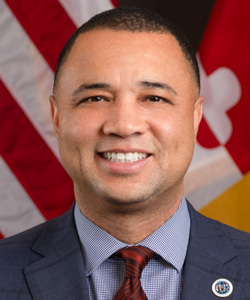
Nick Charles
100% support rate
Top opponent
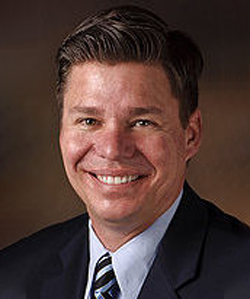
Robin Grammer
6% support rate
Ranked legislators
10
5 support · 5 oppose
Key legislators

Who's moving education in Maryland

Legislators moving education in Maryland
Legislator Party Stance Support rate Votes
Nick Charles
Nick Charles Senate · District 25
D
Strong +
100% 48
Denise Roberts
Denise Roberts House · District 25
D
Strong +
96% 92
Adrian Boafo
Adrian Boafo House · District 23
D
Strong +
96% 48
Antonio Hayes
Antonio Hayes Senate · District 40
D
Strong +
95% 50
Shaneka Henson
Shaneka Henson Senate · District 30
D
Strong +
95% 51
Robin Grammer
Robin Grammer House · District 6
R
Strong −
6% 85
Matt Morgan
Matt Morgan House · District 29A
R
Strong −
9% 98
Mark Fisher
Mark Fisher House · District 27C
R
Strong −
9% 98
Nic Kipke
Nic Kipke House · District 31
R
Strong −
9% 100
Lauren Arikan
Lauren Arikan House · District 7B
R
Strong −
9% 98
Showing 191–200 of 247 bills

All education bills

in committee · Maryland · House of Delegates Jan 21, 2026

HB 128: County Boards of Education - Therapy Dogs - Policy for Handling and Use in Schools

HB 128 requires Maryland county school boards to permit therapy dogs in public schools, subject to specific policies they must create. The bill mandates that all therapy dogs must be certified, accompanied by a handler, and used only in designated areas with clear guidelines for managing allergies or discomfort among students and staff. Each county board must adopt a policy covering certification standards, handler responsibilities, allowed locations, and allergy protocols. The law takes effect on July 1, 2026, and directly affects county school systems, therapy dog handlers, and students with allergies.
passed · Maryland · House of Delegates Mar 19, 2026

HB 29: Public High Schools - Post College and Career Readiness Pathways - Alterations

HB 29 requires Maryland county school boards to provide free access to three types of post-college and career readiness pathways for students who meet statewide college and career readiness standards: competitive college prep programs (like IB or AP), early college/dual enrollment options, and career/technology education programs. It allows counties to set income eligibility guidelines for the college prep pathway costs (but mandates free access for students at or below federal poverty level), while requiring all other pathways to be free for all qualifying students. The bill also mandates schools to offer counseling to help students choose pathways, ensure graduation requirements are met through these pathways, and maintain full student services regardless of pathway enrollment. This applies to all Maryland public high school students meeting the readiness standards, effective July 1, 2026.
in committee · Maryland · House of Delegates Feb 11, 2026

HB 704: Community Eligibility Provision Expansion Program - Establishment

HB 704 establishes Maryland's Community Eligibility Provision Expansion Program within the State Department of Education. It provides state funding to cover the difference between federal reimbursement rates for free and paid school meals, directly supporting Maryland schools with high poverty rates (25%+ students qualifying for free meals) that participate in the federal child nutrition program. The state will appropriate $10 million annually starting in fiscal year 2028 to complement federal funds, with funds distributed based on school poverty concentration and geographic diversity. Schools must report on program outcomes, meal debt resolution, and reasons for opting out of federal eligibility, with annual reports published online.
Sub-Topics Student Health
signed · Maryland · House of Delegates May 26, 2026

HB 168: Housing and Community Development - Affordable Housing - Educator Workforce Housing and Municipal Corporations

HB 168 allows Maryland school districts to use state housing funds for developing housing specifically for teachers and school staff (called "educator workforce housing"). It explicitly states that such housing qualifies as an eligible use of state financial assistance under housing programs and ensures teachers are recognized as a "specified group" for federal low-income housing tax credits. The bill modifies existing laws to clarify that school districts can repurpose unused school properties for this housing and that state housing agencies must inform applicants about this eligibility. This directly affects school districts seeking to address housing needs for educators and teachers applying for federal housing tax credits.
signed · Maryland · House of Delegates May 26, 2026

HB 57: Public Schools - Maryland Civic Excellence Program - Established

HB 57 establishes the Maryland Civic Excellence Program within the State Department of Education to recognize public school students demonstrating proficiency in civics and civic literacy. Local school systems may voluntarily participate to award a "Seal of Civic Excellence" on students' high school diplomas based on criteria developed by the Department by the 2027-2028 school year. Schools must submit annual reports to the Department starting July 1, 2028, detailing program implementation. The bill directly affects Maryland public schools and students, creating a formal recognition system without mandating curriculum changes or altering existing civics education requirements.
signed · Maryland · House of Delegates May 26, 2026

HB 3: Higher Education - Student Financial Assistance - Dependents of State or Local Public Safety Employees (Maryland Fallen Heroes Tuition Benefits Act)

HB 3, the Maryland Fallen Heroes Tuition Benefits Act, exempts financially dependent children of state or local public safety employees who died while on duty from paying out-of-state or out-of-county tuition at Maryland public colleges. It directly affects children of firefighters, police officers, EMTs, correctional officers, and Maryland National Guard members who were residents of Maryland at the time of their death. The bill amends Maryland law to define "public safety employee" broadly and requires the Commission to create implementing regulations. The exemption applies to public higher education institutions statewide and takes effect July 1, 2026.
Sub-Topics Higher Education
signed · Maryland · House of Delegates May 26, 2026

HB 6: Public Institutions of Higher Education - Pregnant and Parenting Students - Plan and Reporting

HB 6 requires Maryland's public colleges and universities to collect and report data on students' parental status, including whether they are parents, guardians, or caregivers of children. Public institutions must adopt a plan by October 2026 that provides referrals to government assistance programs (like WIC, child care scholarships, and Medicaid), campus accommodations, and health services for pregnant and parenting students. The Maryland Higher Education Commission will collect this data annually starting in 2027 and submit reports to legislative committees. This bill directly affects all students enrolled at Maryland's public higher education institutions (including University System schools, Morgan State, and St. Mary’s College) who are pregnant or parenting.
signed · Maryland · House of Delegates May 12, 2026

HB 501: Criminal Law - Sexual Offense by a Person in a Position of Authority

HB 501 amends Maryland law to prohibit individuals in positions of authority (such as teachers, coaches, or school staff working with minors) from engaging in sexual contact with minors who are at least six years younger. It increases penalties for violations: first offenses carry up to one year in jail or a $1,000 fine, while repeat offenders face up to three years in jail or a $1,000 fine. The bill also adds this offense as a predicate crime for sexual solicitation of minors and updates definitions related to sex offender registry tiers. It directly affects educators, program leaders, and others in supervisory roles working with minors under age 18.
Sub-Topics Corrections
signed · Maryland · Senate May 26, 2026

SB 486: Higher Education - Maryland Graduate and Professional Scholarship Program - Eligible Institutions

SB 486 expands Maryland's Graduate and Professional Scholarship Program to include students at the University of Maryland Eastern Shore (UMES) in specific graduate programs. It adds UMES as an eligible institution for students enrolled in four programs: Master of Medical Science in Physician Assistant Studies, Doctor of Pharmacy, Doctor of Physical Therapy, and Doctor of Veterinary Medicine. This change directly affects UMES students in these fields who previously could not access the scholarship. The bill amends existing law to update the list of qualifying institutions without changing scholarship amounts ($1,000-$5,000 per year) or other program rules. The change takes effect July 1, 2026.
passed · Maryland · House of Delegates Mar 26, 2026

HB 531: State Department of Education - Public Schools STEM and Robotics Program - Study

HB 531 establishes a task force to study existing STEM and robotics programs in Maryland public schools and other states. The task force, composed of state officials, school representatives, and nonprofit leaders, will collect data on program structures, funding, and impacts to assess the feasibility of creating statewide competitive robotics programs in public high schools. It must submit recommendations by December 15, 2026, including whether robotics should be established as a varsity sport in all public high schools. The bill directly affects Maryland public schools by initiating a formal review process for potential program expansion.
Showing 191 to 200 of 247 bills
Previous 1 19 20 21 25 Next