Issue · Education

Education (Higher Education)

Every education bill, vote, and legislator stance in Maryland, automatically classified by Maddy, our AI policy reader.

Total bills
63
2026 Regular Session
Top supporter
Courtney Watson
100% support rate
Top opponent
April Miller
0% support rate
Ranked legislators
10
5 support · 5 oppose
Key legislators

Who's moving higher education in Maryland

Legislators moving higher education in Maryland
Legislator Party Stance Support rate Votes
Courtney Watson
Courtney Watson House · District 9B
D
Strong +
100% 16
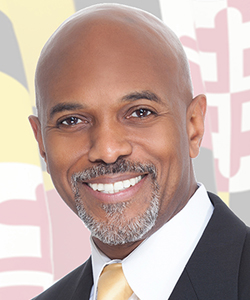
Ron Watson
Ron Watson Senate · District 23
D
Strong +
100% 16
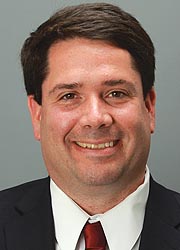
Aaron Kaufman
Aaron Kaufman House · District 18
D
Strong +
100% 10
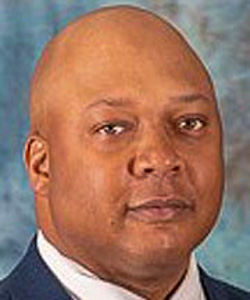
Andre Johnson
Andre Johnson House · District 34A
D
Strong +
100% 10
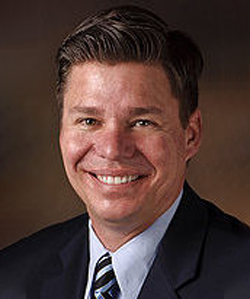
Andrew Pruski
Andrew Pruski House · District 33A
D
Strong +
100% 10
April Miller
April Miller House · District 4
R
Strong −
0% 10
Chris Adams
Chris Adams House · District 37B
R
Strong −
0% 10
Jesse Pippy
Jesse Pippy House · District 4
R
Strong −
0% 10
Lauren Arikan
Lauren Arikan House · District 7B
R
Strong −
0% 10
Mark Fisher
Mark Fisher House · District 27C
R
Strong −
0% 10
Showing 11–20 of 63 bills

All education bills

in committee · Maryland · House of Delegates Feb 16, 2026

HB 1077: Education - Career and Technical Education - Workgroup to Study Tiered Stackable Credentials Framework

HB 1077 requires Maryland's State Department of Education and Career and Technical Education Committee to form a workgroup by July 2026 to study how high school students can earn portable, industry-recognized credentials that build toward college degrees. The workgroup will review models from South Carolina and Arkansas, examine student planning tools starting in 8th grade, and explore flexible credit systems allowing course substitutions for graduation requirements. It will also analyze credential portability across schools and propose a standardized "list of valuable credentials" for high-demand fields, with a final report due December 2026. This bill does not enact changes but studies potential reforms to align with Maryland's existing education framework.
signed · Maryland · Senate May 26, 2026

SB 769: University System of Maryland - Academic Facilities Bonding Authority

This bill authorizes the University System of Maryland to issue $50 million in bonds ($26 million for specific projects and $24 million for systemwide facility renewals) to fund academic facility improvements. It directly affects three University System of Maryland campuses (Towson University, University of Maryland College Park, and the System Office) by financing projects like electrical upgrades, a new health complex, and deferred maintenance repairs. The bonds are explicitly non-state debt, meaning they do not count as Maryland's obligation or require state funding. The bill approves specific construction and renewal projects to modernize academic infrastructure without creating new state liabilities. It takes effect June 1, 2026.
Sub-Topics Higher Education
signed · Maryland · Senate May 26, 2026

SB 728: Higher Education - Student Financial Assistance - Alterations to Scholarship Programs

SB 728 amends Maryland's Community College Promise Scholarship eligibility to include graduates of Delmar High School in Delmar, Delaware, who reside in Delmar, Maryland. The bill adds a new eligibility criterion requiring applicants to have graduated from Delmar High School (Delaware) and to be Maryland residents of Delmar. This change applies to students pursuing vocational certificates, certificates, associate's degrees, or registered apprenticeships at eligible Maryland community colleges. The amendment takes effect July 1, 2026, expanding existing scholarship access for this specific group without altering other program requirements.
signed · Maryland · House of Delegates May 26, 2026

HB 845: Higher Education - Student Financial Assistance - Alterations to Scholarship Programs

HB 845 amends Maryland's Community College Promise Scholarship program to include residents of Delmar, Maryland who graduated from Delmar High School in Delmar, Delaware. Currently, the scholarship requires applicants to have graduated from a Maryland high school or completed a Maryland GED, but this bill adds a new eligibility pathway for students meeting both conditions: graduation from Delmar High School (Delaware) and residency in Delmar, Maryland. The change would allow these students to qualify for the scholarship without needing to meet the standard Maryland graduation requirement. The bill takes effect July 1, 2026.
signed · Maryland · Senate May 26, 2026

SB 864: Higher Education - Tuition Exemption for Foster Care Recipients - Eligibility

SB 864 changes Maryland's eligibility rules for a tuition exemption at public colleges and universities for individuals who were in foster care. It lowers the required age for qualifying foster care placement from 13 to 8 years old, meaning youth must have been in out-of-home placement since age 8 (or older) and later placed in guardianship, adoption, or reunification with a parent. The bill modifies existing law (Section 15-106.1) to adjust the definition of "foster care recipient" for this benefit. The exemption remains available for those enrolled in eligible programs by age 25, who apply for financial aid, and who meet the revised placement timeline.
signed · Maryland · House of Delegates May 26, 2026

HB 1075: Higher Education - Maryland Graduate and Professional Scholarship Program - Eligible Institutions

HB 1075 expands eligibility for Maryland's Graduate and Professional Scholarship Program to include students at the University of Maryland Eastern Shore (UMES) enrolled in four specific degree programs: Master of Medical Science in Physician Assistant Studies, Doctor of Pharmacy, Doctor of Physical Therapy, and Doctor of Veterinary Medicine. This change directly affects UMES students in these fields who previously could not qualify for the scholarship. The bill amends the existing law by adding UMES to the list of eligible institutions under the program's criteria, which requires applicants to be Maryland residents attending approved institutions in designated health-related fields. The policy change takes effect July 1, 2026, allowing UMES students to access this financial aid for the first time.
in committee · Maryland · House of Delegates Mar 11, 2026

HB 1231: Washington County - Dually Enrolled Students

HB 1231 expands eligibility for two Maryland higher education grant programs to include Washington County homeschool students and students at nonpublic secondary schools. The bill amends definitions in Maryland law to explicitly include these students in the terms "dually enrolled student" and "full-time equivalent enrollment." This change allows them to qualify for the Part-Time Grant Program and the Early College Access Grant, which previously only covered students from public schools. The legislation updates specific sections of the Education Article (5-201(g), 15-127, 18-1401, and 18-14A-01) to reflect these eligibility changes.
Sub-Topics Higher Education
signed · Maryland · Senate May 26, 2026

SB 509: Higher Education - Workforce Pell Grant Program - Implementation

This bill establishes Maryland's framework for implementing the federal Workforce Pell Grant Program. It requires the Governor, after consulting with workforce and education entities, to approve short-term education programs (150-600 hours, 8-15 weeks) that align with high-skill occupations and employer hiring needs. Approved programs must offer stackable credentials, provide academic credit transferability toward further education, and prepare students for in-demand careers. Institutions cannot disburse funds or advertise these programs to Maryland students without state approval, with biennial compliance reviews mandated for ongoing eligibility.
signed · Maryland · House of Delegates May 26, 2026

HB 1305: State Child Welfare System - Reporting

HB 1305 requires Maryland's State Department of Education to annually report specific data on students in the state's child welfare system, including school stability, graduation rates, college enrollment, and disciplinary rates. The report must break down data by county, age, gender, race, and ethnicity while protecting student confidentiality. Additionally, the Department of Education and Department of Human Services must submit a 2026 report identifying service gaps, best practices from other states, and recommendations to improve educational outcomes for foster youth. This bill directly affects foster youth in Maryland's child welfare system and the state agencies responsible for their education and care.
Sub-Topics Higher Education
signed · Maryland · House of Delegates May 26, 2026

HB 1530: Higher Education - Undocumented Students - Out-of-State Tuition Exemption Eligibility

HB 1530 repeals a requirement that undocumented students (or their parents/guardians) must file Maryland income tax returns annually for three years to qualify for in-state tuition rates at public colleges. The bill directly affects undocumented students who attended Maryland high schools and meet other existing criteria (graduation from a Maryland school, applying within six years). Instead of tax filings, students must now submit an affidavit committing to apply for permanent residency within 30 days of eligibility, plus proof of Selective Service compliance if required. The bill maintains other eligibility conditions like Maryland high school attendance but removes the tax documentation burden, aiming to simplify access to in-state tuition rates.
Showing 11 to 20 of 63 bills
Previous 1 2 3 7 Next