Issue · Budget & Taxes

Budget & Taxes (Tax Incentives)

Every budget & taxes bill, vote, and legislator stance in Maryland, automatically classified by Maddy, our AI policy reader.

Total bills
36
2026 Regular Session
Top supporter
Nicole Williams
100% support rate
Top opponent
Ric Metzgar
0% support rate
Ranked legislators
10
5 support · 5 oppose
Key legislators

Who's moving tax incentives in Maryland

Legislators moving tax incentives in Maryland
Legislator Party Stance Support rate Votes
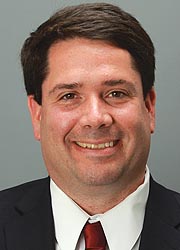
Nicole Williams
Nicole Williams House · District 22
D
Strong +
100% 3
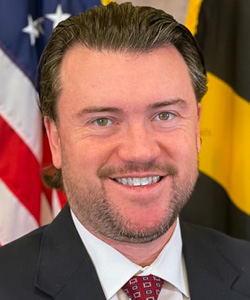
Chris Adams
Chris Adams House · District 37B
R
Strong +
80% 5
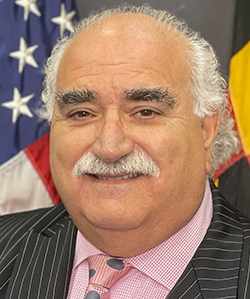
Josh Stonko
Josh Stonko House · District 42C
R
Strong +
80% 5
Kevin Hornberger
Kevin Hornberger House · District 35B
R
Strong +
80% 5
Sheree Sample-Hughes
Sheree Sample-Hughes House · District 37A
D
Strong +
80% 5
Ric Metzgar
Ric Metzgar House · District 6
R
Strong −
0% 3
April Rose
April Rose House · District 5
R
Strong −
20% 5
Barrie Ciliberti
Barrie Ciliberti House · District 4
R
Strong −
20% 5
Barry Beauchamp
Barry Beauchamp House · District 38B
R
Strong −
20% 5
Jeff Ghrist
Jeff Ghrist House · District 36
R
Strong −
20% 5
Showing 21–30 of 36 bills

All budget & taxes bills

signed · Maryland · House of Delegates May 12, 2026

HB 135: Economic Development - Tax Increment Financing - Noncontiguous Areas

HB 135 allows local governments in Maryland to designate *noncontiguous* areas as development districts for tax increment financing (TIF). This means political subdivisions (like counties or cities) can now create TIF zones that include separate, disconnected parcels of land - not just connected areas - under new provisions in Section 12-201(i)(1). The bill modifies existing law to explicitly permit this by redefining "development district" to include noncontiguous areas and updating related sections (e.g., 12-203). It directly affects local governments seeking to use TIF for economic development projects across multiple, non-adjacent sites. The law takes effect October 1, 2026.
Sub-Topics Tax Incentives Tags Economic Development
in committee · Maryland · House of Delegates Feb 3, 2026

HB 729: Sales and Use Tax - Precious Metal Bullion or Coins - Exemption

HB 729 removes two requirements for a sales tax exemption on precious metal bullion or coins. Currently, the exemption only applies if the sale price exceeds $1,000 and occurs at the Baltimore Convention Center. This bill repeals both conditions, making the exemption available for all qualifying sales regardless of price or location. It specifically defines "precious metal bullion or coins" to exclude jewelry and art, ensuring the exemption applies only to investment-grade metal products. The change takes effect July 1, 2026.
signed · Maryland · Senate May 26, 2026

SB 309: Sales and Use Tax - Precious Metal Bullion or Coins - Exemption

SB 309 expands Maryland's sales tax exemption for precious metal bullion or coins by removing two current requirements: a $1,000 minimum sale price and the need for sales to occur at the Baltimore Convention Center. The bill clarifies that the exemption applies to refined precious metal products (like gold or silver bars) and coins used as currency, excluding jewelry or art made from precious metals. This change directly affects buyers purchasing investment-grade bullion or coins, making the exemption available for more transactions regardless of price or location. The policy update takes effect July 1, 2026, broadening access to the tax break for eligible purchases.
passed · Maryland · Senate Mar 24, 2026

SB 455: Economic Development - Transformational Project Financing Program - Establishment

SB 455 establishes the Transformational Project Financing Program to help local governments fund large-scale development projects in designated areas. It allows counties or cities to apply to the Maryland Economic Development Corporation for "State-supported development district" status, requiring them to redirect property tax increases (tax increment) from these areas into a special fund instead of the general budget. This fund finances projects in priority areas like sustainable communities, transit-oriented developments, and designated enterprise zones. The bill creates new rules for calculating state revenue contributions and managing bond proceeds specifically for these designated districts.
in committee · Maryland · House of Delegates Jan 29, 2026

HB 5: Community Development - Maryland New Markets Development Program - Establishment

HB 5 establishes Maryland's New Markets Development Program, administered by the Department of Housing and Community Development. It allows businesses to claim tax credits against certain state insurance taxes (like premium receipts tax) for equity investments in qualifying community development entities that serve low-income areas. The credit equals 0% of the investment amount for the first three years and 12.5% for the next four years, applicable to investments made on or after July 1, 2026. This directly affects investors in qualifying community development entities and businesses meeting the "qualified active low-income community business" criteria, including those relocating operations to Maryland.
in committee · Maryland · Senate Feb 3, 2026

SB 372: Community Development - Maryland New Markets Development Program - Establishment

SB 372 establishes Maryland's New Markets Development Program to incentivize private investment in low-income communities. It creates a refundable tax credit against state income tax and certain insurance taxes for investors who make qualified equity investments in Maryland-based community development entities serving low-income areas. The credit provides 5% of the investment amount for the first three years and 8.75% for the next four years, totaling seven years. This directly affects investors, community development entities, and qualifying low-income businesses that receive capital to support job creation and economic development in underserved areas.
signed · Maryland · Senate May 31, 2026

SB 148: Income Tax - Credit for 9-1-1 Specialist Retirement Income (Supporting Our 9-1-1 Specialists Act)

SB 148 expands Maryland's income tax break for retired public safety employees to include 9-1-1 specialists. The bill modifies the tax code to allow retired 9-1-1 specialists - defined as those working at county emergency call centers handling emergency requests - to subtract up to $15,000 of their retirement income from taxable income, just like correctional officers and emergency medical personnel. This change applies to retirees aged 55+ who receive retirement income attributable to their work as 9-1-1 specialists. The law takes effect for tax years beginning after December 31, 2025.
Sub-Topics Income Tax Tax Incentives Tags Public Safety
signed · Maryland · House of Delegates May 26, 2026

HB 359: Property Tax Credit - Urban Agricultural Property - Alterations

HB 359 amends Maryland's property tax credit for urban agricultural property, clarifying eligibility and adding procedural requirements for jurisdictions granting the credit. It defines "urban agricultural property" as land between 1/8 and 5 acres in priority areas (not assessed as agricultural) used for activities like crop production, beekeeping, environmental mitigation, community programs, or agritourism. The bill requires jurisdictions to evaluate the credit's effectiveness after 3 years and, if terminating it, must provide the public with at least one year's notice and an opportunity to comment or appeal. This directly affects Baltimore City, counties, and municipalities that administer the tax credit for qualifying urban farms and agricultural operations.
Sub-Topics Property Tax Tax Credits Tax Incentives Tags Agriculture
in committee · Maryland · House of Delegates Jan 28, 2026

HB 560: Sales and Use Tax and Property Tax - Exemptions for Data Centers - Repeal

HB 560 repeals two tax exemptions for data centers in Maryland: one that exempted sales and use tax on qualifying equipment purchases and another that allowed local governments to reduce property tax on data center equipment. This bill directly affects data centers previously eligible for these breaks, requiring them to pay standard sales and use tax on equipment and full property tax on their assets. The repeal removes Sections 11-239 (Tax-General) and 7-248 (Tax-Property) from Maryland law, eliminating the eligibility requirements and certification process for these exemptions. As a result, data centers will no longer qualify for these specific tax benefits under current law.
signed · Maryland · Senate Apr 28, 2026

SB 403: Sales and Use Tax - Elementary or Secondary School Book Fairs - Exemption

SB 403 exempts sales tax on in-person book fairs held at Maryland elementary and secondary schools. It applies to sales by schools, parent-teacher organizations (PTOs), or other nonprofit groups operating these events on school premises. The exemption covers sales where students, staff, or PTO members act as agents for vendors, with all net proceeds used solely for the school's educational benefit. This bill adds a new tax exemption provision (Section 11-204(b)(9)) to Maryland’s tax code, effective July 1, 2026.
Showing 21 to 30 of 36 bills
Previous 1 2 3 4 Next