

Maddy summaryThis bill creates a low-interest loan program for graduates of accredited colleges entering trade professions, offering up to $20,000 at 2% annual interest with a maximum 10-year repayment term, plus potential loan forgiveness after five years of full-time employment in the trade. It also establishes a 25% tax credit for employers who reimburse trade tool costs for eligible employees within their first year of employment, subject to certification by Maine's Finance Authority. The program is funded through a dedicated nonlapsing "Loans for Trade Tools Fund" that receives state appropriations and loan repayments. The Finance Authority of Maine will administer both the loan program and employer certification process, with outreach efforts to inform students, families, and colleges about the initiative.
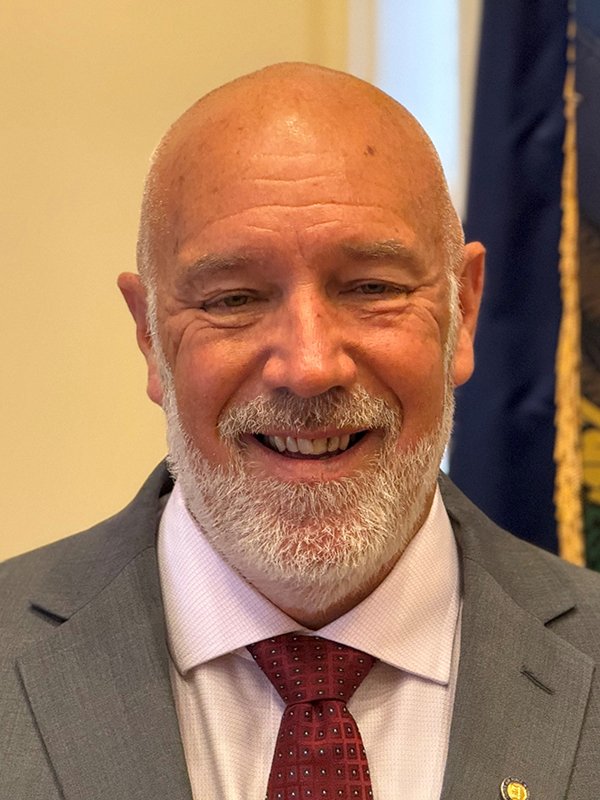
Rep. Russ White
Sponsored bills
Maddy summaryThis bill provides a one-time $750,000 appropriation from the General Fund to reimburse the City of Ellsworth for 50% of the costs incurred in building an access road to the new Hancock County courthouse site. The reimbursement is capped at $750,000 and applies specifically to infrastructure supporting the courthouse construction project. The bill directly affects Ellsworth City and Hancock County by covering half the road construction costs, with no ongoing obligations beyond this single payment.
Maddy summaryLD 1766 establishes a statewide Probate Court with full-time judges, ending the current system where part-time probate judges may practice law. The bill amends Maine law to incorporate probate courts under the Supreme Judicial Court's oversight and include probate judges in the judicial responsibility committee. It also triggers the repeal of a 1967 constitutional provision requiring a new Probate Court system with full-time judges, which was approved by Maine voters. This structural change aims to eliminate ethical conflicts by making probate judges full-time judicial officers.
Maddy summaryThis bill designates a specific segment of Route 3 in the Town of Trenton as the "Deputy Luke Gross Memorial Highway." It directs the Maine Department of Transportation to officially rename the road and install commemorative signs. The resolution affects only Route 3 in Trenton, with no funding, regulatory changes, or broader policy impacts. It is a purely symbolic tribute honoring Deputy Luke Gross, with no substantive legislative action beyond the highway designation.
Maddy summaryLD 957 requires Maine's public and private K-12 schools to integrate Asian American, Native Hawaiian, and Pacific Islander (AANHPI) history into existing history and social studies curriculum. It mandates that AANHPI history be included in curriculum reviews alongside American history, Wabanaki studies, and Maine studies, focusing on regional/US history and contributions to civil rights, government, arts, and economic development. The Maine Department of Education must develop teaching resources, form an advisory group with AANHPI community representatives, and create guidance for equitable curriculum integration. Schools will conduct internal curriculum audits to ensure accurate representation, with a progress report due by April 2030. The law takes effect July 1, 2029.
Maddy summaryLD 1876 establishes a 17-member Working Group to study how to increase use of four specific Maine state tax credits: the earned income credit, property tax fairness credit, dependent exemption credit, and sales tax fairness credit. The group includes balanced representation from both legislative parties, tax experts, low-income community members (with direct experience claiming these credits), advocates, and municipal representatives. The Working Group must complete its study and submit a report to the next legislative session before the 90-day emergency period expires. This bill does not change the tax credits themselves but creates a process to identify barriers to their use and recommend strategies for greater utilization.
Maddy summaryLD 1877 increases penalties for human trafficking offenses in Maine, specifically targeting aggravated sex trafficking (involving minors under 14) and standard sex trafficking (promoting prostitution). It raises minimum prison sentences to 20 years for aggravated trafficking and 4 years for standard trafficking, with higher terms for repeat offenders (up to 20 years). The bill also imposes enhanced minimum sentences of 7-23 years for violations near schools, shelters, youth facilities, and other protected locations. Additionally, it increases mandatory assessments (fines) for trafficking convictions, ranging from $1,000 to $6,000, which fund the Victims' Compensation Fund.
Maddy summaryLD 1232 requires radon testing and mitigation permits for new commercial construction, residential construction, and major commercial renovations needing a building permit. It mandates that registered professionals test for radon gas before construction begins, and if elevated levels are found, registered specialists must install mitigation systems. Homeowners acting as their own general contractor who provide over 50% of the framing and finishing labor are exempt, as are residential projects in municipalities without a building code. Violations incur penalties of $1,000 for commercial projects and $500 for residential projects, payable to Maine's Department of Health and Human Services.
Maddy summaryLD 1430 allows disabled veterans in Maine to receive moose hunting permits from specific eligible groups, including individual permit holders, nonprofit veteran aid organizations, their employees/volunteers, and registered Maine guides. The bill establishes a process for these groups to transfer permits to a disabled veteran who meets state eligibility requirements, either directly or by returning the permit to the state department for redistribution. Crucially, the transferor (the individual or organization giving the permit) will be eligible to apply for a new permit and restart accumulating points for the public drawing the year following the transfer. This policy change provides disabled veterans with access to moose hunting opportunities while maintaining future permit eligibility for transferors.
Maddy summaryLD 1330 clarifies that business software licenses and subscriptions are not considered "leases" for Maine's sales and use tax purposes. The bill amends Maine's tax code (36 MRSA §1752) to explicitly exclude business software access fees from the definition of "lease or rental." This change applies only to transactions entered into or renewed after the law takes effect, directly affecting businesses that pay for software access rather than purchasing it outright. The policy change simplifies tax treatment for these business software agreements, ensuring they are not subject to lease-based taxation.