Issue · Criminal Justice

Criminal Justice

Every criminal justice bill, vote, and legislator stance in Louisiana, automatically classified by Maddy, our AI policy reader.

Total bills
186
2026 Regular Session
Top supporter
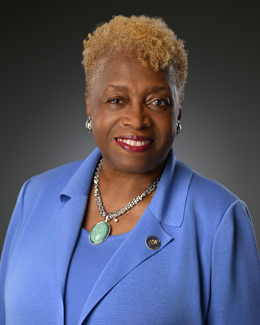
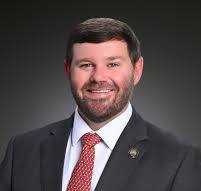
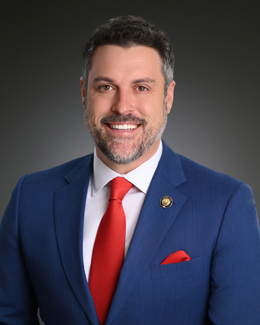
Barbara Carpenter
73% support rate
Top opponent
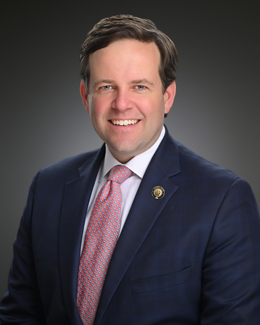
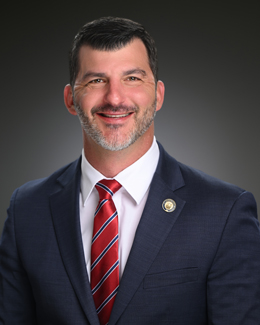
Robert Allain
30% support rate
Ranked legislators
10
5 support · 5 oppose
Key legislators

Who's moving criminal justice in Louisiana

Legislators moving criminal justice in Louisiana
Legislator Party Stance Support rate Votes
Barbara Carpenter
Barbara Carpenter House · District 63
D
Support
73% 121
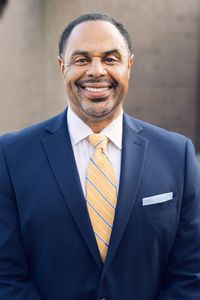
Dana Henry
Dana Henry House · District 100
D
Support
73% 143
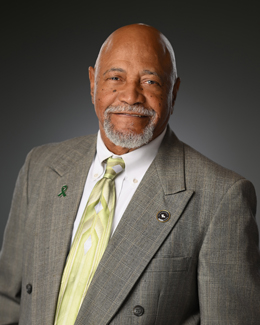
Wilford Carter
Wilford Carter House · District 34
D
Support
71% 98
Aimee Freeman
Aimee Freeman House · District 98
D
Support
71% 120
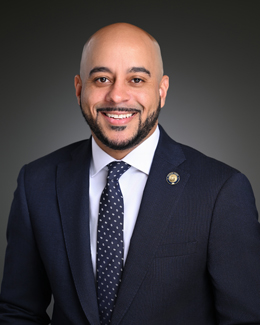
Royce Duplessis
Royce Duplessis Senate · District 5
D
Support
69% 69
Robert Allain
Robert Allain Senate · District 21
R
Oppose
30% 73
Thomas Pressly
Thomas Pressly Senate · District 38
R
Oppose
31% 73
Caleb Kleinpeter
Caleb Kleinpeter Senate · District 17
R
Oppose
31% 71
Blake Miguez
Blake Miguez Senate · District 22
R
Oppose
33% 64
Dennis Bamburg
Dennis Bamburg House · District 5
R
Oppose
34% 138
Showing 51–60 of 186 bills

All criminal justice bills

in committee · Louisiana · House Mar 24, 2026

HB 994: CRIMINAL/RESTITUTION: Provides relative to the payment of restitution from offenders convicted of vehicular homicide under certain circumstances

This bill allows courts to order restitution payments to the minor children of victims in vehicular homicide cases, ensuring financial support until the child turns eighteen. It establishes that restitution amounts should be calculated based on the deceased parent's lost income using existing state guidelines. The law also outlines how payments will be enforced, including provisions for defendants released from prison or placed in work release programs to begin payments within one year. Additionally, the bill clarifies that any civil judgment against the offender can include these restitution deductions and permits indigent defendants to enter payment plans.
passed · Louisiana · House May 18, 2026

HB 986: CHILDREN/SUPPORT: Requires child support payments by persons convicted of vehicular homicide

This bill requires individuals convicted of vehicular homicide where the victim is a parent with a minor child to pay child support to the surviving child. The law mandates that offenders follow the existing child support payment schedule outlined in state law. It applies specifically to cases where a parent dies due to a vehicle-related crime, ensuring financial support for the remaining child. The measure adds a financial obligation to the criminal penalties already imposed for this offense.
Sub-Topics Violent Crime
in committee · Louisiana · House Mar 10, 2026

HR 2: LAW ENFORCEMENT: To demand the United States Department of Justice, the Federal Bureau of Investigation, and all appropriate federal agencies to immediately release to the public all records, investigative files, correspondence, agreements, and related materials concerning Jeffrey Epstein and any co-conspirators, facilitators, and affiliated individuals

This resolution calls on federal agencies to immediately release all public records related to the Jeffrey Epstein investigation, including files, correspondence, and agreements. It requires that only redactions strictly necessary to protect victims and survivors be made, prohibiting any concealment of information due to embarrassment or political concerns. The measure is intended to restore public trust by ensuring transparency in how federal authorities handled the case. It does not create new laws but formally demands existing records be made available to the public.
Sub-Topics Law Enforcement Tags Government Transparency
signed · Louisiana · Senate May 29, 2026

SB 410: CRIME/PUNISHMENT: Provides enhanced penalties for accessories after the fact to sex offenses. (8/1/26) (EN SEE FISC NOTE GF EX)

This bill amends Louisiana law to impose stricter penalties on individuals who help sex offenders avoid arrest or punishment after a crime has occurred. It directly affects people who harbor, conceal, or assist sex offenders with the intent to help them escape legal consequences. Under the new provisions, anyone convicted of being an accessory to a sex offense must receive a mandatory minimum sentence equal to at least half of the minimum sentence the principal offender would face, with no parole or probation allowed for cases involving life imprisonment. The law also clarifies that accessories can be prosecuted even if the original offender has not yet been caught or tried.
signed · Louisiana · House Jun 9, 2026

HB 1038: LAW ENFORCEMENT: Provides relative to the authority of a marshal to issue commissions to deputy marshals

This bill amends Louisiana law to clarify how marshals can appoint deputy marshals and outlines the rules for their compensation and oversight. It allows marshals to issue commissions to deputy marshals who will have the same powers as the marshal, but this appointment requires approval from the local governing authority where the marshal has jurisdiction. The bill also establishes that the local governing authority must insure approved deputy marshals and determine their salary, which cannot exceed the marshal's salary. Additionally, it specifies that the marshal remains responsible for the actions of their deputies and allows marshals to use certain office funds to pay deputy salaries or hire additional deputies.
Sub-Topics Law Enforcement
signed · Louisiana · Senate May 15, 2026

SB 416: STATE EMPLOYEE RET: Provides relative to reemployment of retirees to fill critical shortage positions within the Department of Public Safety and Corrections, corrections services. (2/3-CA10s(29)(F)) (8/1/26) (EN SEE ACTUARIAL NOTE FC)

This bill allows retired state employees to return to work in specific critical shortage positions within the Department of Public Safety and Corrections, overriding the usual two-year reemployment ban for those who retired under early retirement incentive plans. To qualify, positions must be full-time roles that have been advertised through civil service rules but received too few applicants, including leadership roles like majors and captains, as well as nurses and social workers. Retirees who return to these positions can keep their full retirement benefits while both they and the department continue making required contributions to the retirement system, though they do not earn additional service credit or benefits. The department secretary must certify the need for each position and review annually whether reemployment remains necessary, while disability retirees are excluded from returning under this provision.
in committee · Louisiana · House Apr 1, 2026

HB 1106: CRIMINAL/PROCEDURE: Provides relative to the custodial interrogation of children

This bill establishes that children aged 15 and younger cannot waive their right to have an attorney present during custodial interrogations, meaning law enforcement must ensure an attorney is available before questioning these minors. It makes any statements made by children during such interrogations inadmissible in court unless their counsel was present at the time. The law also reinforces existing protections by clarifying that confessions from children must be voluntary and not obtained through coercion or improper inducements. These changes directly impact police procedures and the admissibility of evidence in cases involving minors.
Sub-Topics Courts Juvenile Justice Law Enforcement Tags Children
signed · Louisiana · Senate Jun 1, 2026

SB 422: CRIME/PUNISHMENT: Provides for unsupervised probation in certain circumstances for fourth offense operating while impaired. (8/1/26) (EN SEE FISC NOTE GF EX)

This bill modifies Louisiana's penalties for a fourth offense of driving while impaired by allowing courts to order unsupervised probation in certain cases. It requires offenders to complete treatment programs, drug division probation, or supervised probation after release from incarceration, with the probation period lasting until the original sentence ends or for twenty years, whichever is longer. Additionally, the bill authorizes prosecutors to request the seizure and auction of vehicles used during the offense. These changes directly affect repeat offenders charged with operating a vehicle while impaired and aim to balance rehabilitation with accountability through structured probation requirements.
signed · Louisiana · House Jun 1, 2026

HB 1064: COURTS: Provides relative to a domestic violence intervention court pilot program in the Nineteenth Judicial District Court (EN SEE FISC NOTE SG EX)

This bill establishes a two-year pilot program for a Domestic Violence Intervention Court within the Nineteenth Judicial District Court in Louisiana. The program targets defendants convicted of domestic abuse-related offenses who are assessed as at-risk of reoffending, offering them voluntary participation in a specialized court track that combines judicial supervision with treatment and accountability measures. Key provisions include mandatory batterer intervention programming using evidence-based cognitive behavioral therapy, regular court appearances, compliance with individualized case plans, and access to services such as mental health screening, substance abuse referrals, and victim safety planning. The court will operate with a coordinated team including judges, prosecutors, defense attorneys, probation officers, and victim advocates, while collecting data on recidivism and program outcomes to evaluate effectiveness for potential statewide expansion.
passed · Louisiana · House May 21, 2026

HB 1009: CRIME: Provides relative to reckless operation of a vehicle (EG SEE FISC NOTE LF EX)

This bill proposes to update Louisiana's laws regarding reckless operation of a vehicle by clarifying what behaviors constitute the offense. It directly affects drivers and operators of motor vehicles, aircraft, vessels, and other conveyances by defining specific actions as reckless. The key provision expands the definition to include operating any vehicle in a criminally negligent or reckless manner, as well as driving a motor vehicle at or above 100 miles per hour. These changes aim to provide clearer legal standards for prosecutors and courts when handling cases involving dangerous vehicle operation. The bill would apply to anyone operating a vehicle in violation of these new or clarified standards.
Showing 51 to 60 of 186 bills
Previous 1 5 6 7 19 Next