Issue · Criminal Justice

Criminal Justice (Corrections)

Every criminal justice bill, vote, and legislator stance in Louisiana, automatically classified by Maddy, our AI policy reader.

Total bills
43
2026 Regular Session
Top supporter
Regina Barrow
80% support rate
Top opponent
Larry Bagley
0% support rate
Ranked legislators
10
5 support · 5 oppose
Key legislators

Who's moving corrections in Louisiana

Legislators moving corrections in Louisiana
Legislator Party Stance Support rate Votes
Regina Barrow
Regina Barrow Senate · District 15
D
Strong +
80% 5
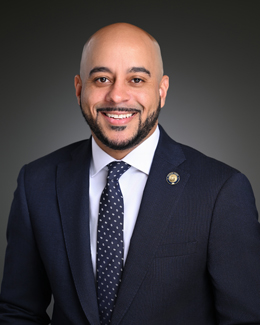
Royce Duplessis
Royce Duplessis Senate · District 5
D
Strong +
80% 5
Sam Jenkins
Sam Jenkins Senate · District 39
D
Strong +
80% 5
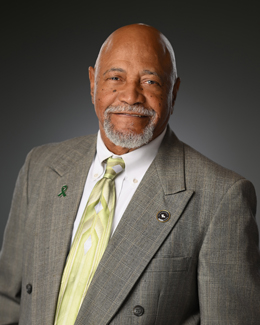
Wilford Carter
Wilford Carter House · District 34
D
Support
78% 9
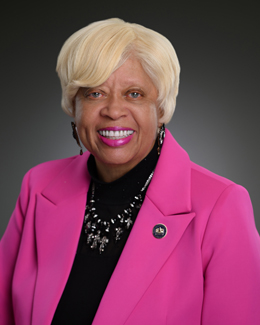
Sylvia Taylor
Sylvia Taylor House · District 57
D
Support
75% 12
Larry Bagley
Larry Bagley House · District 7
R
Strong −
0% 6
Beth Mizell
Beth Mizell Senate · District 12
R
Strong −
20% 5
Bill Wheat
Bill Wheat Senate · District 37
R
Strong −
20% 5
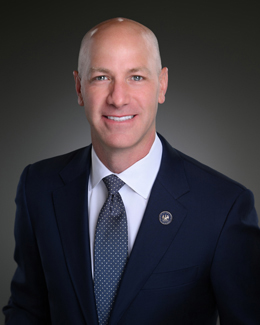
Brach Myers
Brach Myers Senate · District 23
R
Strong −
20% 5
Franklin Foil
Franklin Foil Senate · District 16
R
Strong −
20% 5
Showing 11–20 of 43 bills

All criminal justice bills

in committee · Louisiana · House Apr 22, 2026

HB 458: CORRECTIONS/PRISONERS: Provides relative to inmates who participate in work release programs (EG SEE FISC NOTE LF EX)

HB 458 modifies Louisiana's work release program rules for inmates, directly affecting incarcerated individuals participating in approved work programs. It requires that inmates pay no more than 33% of their gross wages toward room, board, and basic expenses, with all remaining earnings disbursed in a specific order: first for the inmate's basic needs, then travel and employment costs, dependents' support, court-ordered debts, and finally the leftover balance to the inmate. The bill also clarifies eligibility, allowing certain inmates convicted of serious offenses (like rape, armed robbery, or drug trafficking) to participate only in the final months of their sentences after meeting minimum service requirements. All wages must be paid at standard rates for similar work, and funds are managed by the sheriff with strict disbursement rules.
in committee · Louisiana · Senate Mar 9, 2026

SB 373: SHERIFFS: Provides relative to state inmates housed in a parish jail or institution and establishes criteria for additional per diem funding. (gov sig)

SB 373 requires Louisiana's Department of Public Safety and Corrections to pay parish sheriffs or jail operators a daily fee (currently $25.39) for housing state inmates in local jails when state facilities are unavailable or court orders delay transfer. It also establishes a new Transitional Workforce and Vocational Training Pilot Program within the department, providing job training in high-demand trades to inmates held in parish custody. The bill sets criteria for future funding increases tied to jail safety, sanitation, facility upgrades, and reporting requirements. This directly affects parish sheriffs (who receive payments) and inmates held in local jails instead of state facilities.
signed · Louisiana · House Apr 30, 2026

HB 111: CRIMINAL/SENTENCING: Provides relative to diminution of sentence for the earning of an associate's degree (EN SEE FISC NOTE GF EX)

HB 111 would allow incarcerated individuals in Louisiana to earn an additional 90 days of credit toward their parole supervision date if they obtain an associate's degree from a regionally accredited, department-approved educational institution while serving their sentence. This policy directly affects people in Louisiana state prisons who complete such a degree program. The key provision adds this specific credit to existing good time calculations under Louisiana law, reducing the time they must serve under parole supervision. The bill does not alter prison sentences but shortens the parole period for eligible individuals who earn the degree.
in committee · Louisiana · House Apr 13, 2026

HB 773: PROCUREMENT: Establishes priorities and requirements for purchases by the state and participating local governments from certain providers including prison enterprises and nonprofits assisting persons with disabilities. (EG NO IMPACT See Note)

HB 773 requires Louisiana state agencies and local governments to prioritize purchasing goods and services from prison enterprises (like prison-manufactured products) and nonprofits assisting people with disabilities, when prices are competitive with standard procurement. It sets specific pricing rules: prison-made items must cost no more than the lowest cooperative purchasing price, while disability nonprofit services must match quality and pricing of alternatives. The bill exempts these purchases from standard competitive bidding requirements and establishes a council within the Department of Health to coordinate these programs. This directly affects state/local buyers, prison industries, and disability-focused nonprofits by creating new procurement pathways.
Sub-Topics Corrections Tags People with Disabilities
in committee · Louisiana · House Mar 9, 2026

HB 479: CRIMINAL/JUSTICE: Creates the Fiscal Truth in Sentencing Act (OR INCREASE GF EX See Note)

HB 479, the Fiscal Truth in Sentencing Act, requires Louisiana district clerks of court to provide quarterly reports to the legislative auditor containing sentencing data, including the number of sentences and total confinement years per judge, excluding traffic cases. It specifically mandates reporting on juvenile cases sentenced to incarceration (20+ years) starting in 2026. The legislative auditor uses this data, combined with annual budget figures from criminal justice agencies, to create annual reports projecting five-year incarceration costs and average per-person costs. This law aims to improve budget transparency for the criminal justice system by standardizing data collection and reporting.
signed · Louisiana · House May 15, 2026

HB 76: CORRECTIONS/PRISONERS: Provides relative to notification of inmates released from a parish prison or jail or state correctional facility (EN NO IMPACT See Note)

HB 76 requires sheriffs or their designated staff to immediately notify specific parties when an inmate is improperly released from a parish prison or jail due to administrative errors, mismanagement, or staff mistakes. It mandates notification to law enforcement agencies, the victim of the inmate’s crime, any known witness (regardless of testimony), and individuals specified by the district attorney. The bill defines "improper release" broadly to include clerical errors or facility mismanagement, and clarifies that "local media outlets" may also be notified. This law directly affects parish prison staff, victims, witnesses, law enforcement, and prosecutors in Louisiana.
in committee · Louisiana · House Mar 9, 2026

HB 86: DOMESTIC ABUSE: Creates a statewide registry for individuals convicted of multiple domestic abuse offenses

HB 86 creates a statewide registry for individuals convicted of two or more domestic abuse offenses in Louisiana, directly affecting repeat offenders convicted under specific laws (such as battery, aggravated assault, stalking, or violating protective orders). The bill requires these individuals to register with local law enforcement upon release or as a probation/parole condition, providing detailed personal information including addresses, employment, vehicles, and physical descriptions. Offenders must pay a $250 annual fee ($100 of which funds domestic abuse programs), and failure to register or provide false information is punishable by fines up to $1,000 or up to one year in jail. The registry, maintained by the state bureau, will be publicly accessible to enhance community safety awareness.
in committee · Louisiana · House Mar 9, 2026

HB 298: CRIME/SEX OFFENSES: Provides relative to conduct that constitutes third degree rape

HB 298 expands Louisiana's definition of third-degree rape to include non-consensual sexual acts committed when a victim is confined in a correctional facility (such as a jail, prison, or detention center). This specifically affects victims held in such facilities by making their exploitation a distinct criminal offense under third-degree rape. The bill adds a new provision (Section A(5)) to the law, clarifying that confinement in a correctional facility is one circumstance where rape is deemed non-consensual. It also defines "correctional facility" broadly and states that "simple rape" and "third-degree rape" are now synonymous under this law.
Sub-Topics Corrections
in committee · Louisiana · House Apr 1, 2026

HB 270: VOTERS/VOTING: Provides for absentee voting by mail by qualified incarcerated voters (OR SEE FISC NOTE GF EX)

HB 270 allows qualified incarcerated individuals in Louisiana to vote by mail absentee ballot. It amends voting law to specifically permit people held in any Louisiana correctional facility (or outside their parish) to request mail-in ballots after registering, removing a prior barrier. This directly affects incarcerated voters who meet eligibility requirements (like not being convicted of a felony disenfranchisement offense) but were previously unable to vote by mail under existing rules. The key provision adds an exception to registration rules, enabling them to formally request absentee ballots via mail under new Section R.S. 18:115(F)(2)(f). The bill does not change voting eligibility but provides a voting method for those already qualified.
Sub-Topics Corrections Tags Elections
in committee · Louisiana · House Mar 9, 2026

HB 523: PARDON/PAROLE: Provides relative to parole eligibility for certain individuals (OR SEE FISC NOTE GF EX)

HB 523, the "Hope For Redemption Act," creates new parole eligibility for individuals convicted of second-degree murder (R.S. 14:30.1) if they were aged 17-24 at the time of the offense. To qualify, they must have no prior felony convictions, have served at least 30 years of their life sentence, and not fall under specific exclusions (e.g., first-degree murder, sex offenses, or crimes against children under 13). The bill directly affects eligible life-sentenced individuals who committed second-degree murder as young adults, altering parole consideration criteria under Louisiana law. It does not change sentencing but establishes new pathways for parole review after lengthy incarceration. The law would apply only to those meeting all specified conditions, excluding certain high-risk offenses from eligibility.
Showing 11 to 20 of 43 bills
Previous 1 2 3 5 Next